
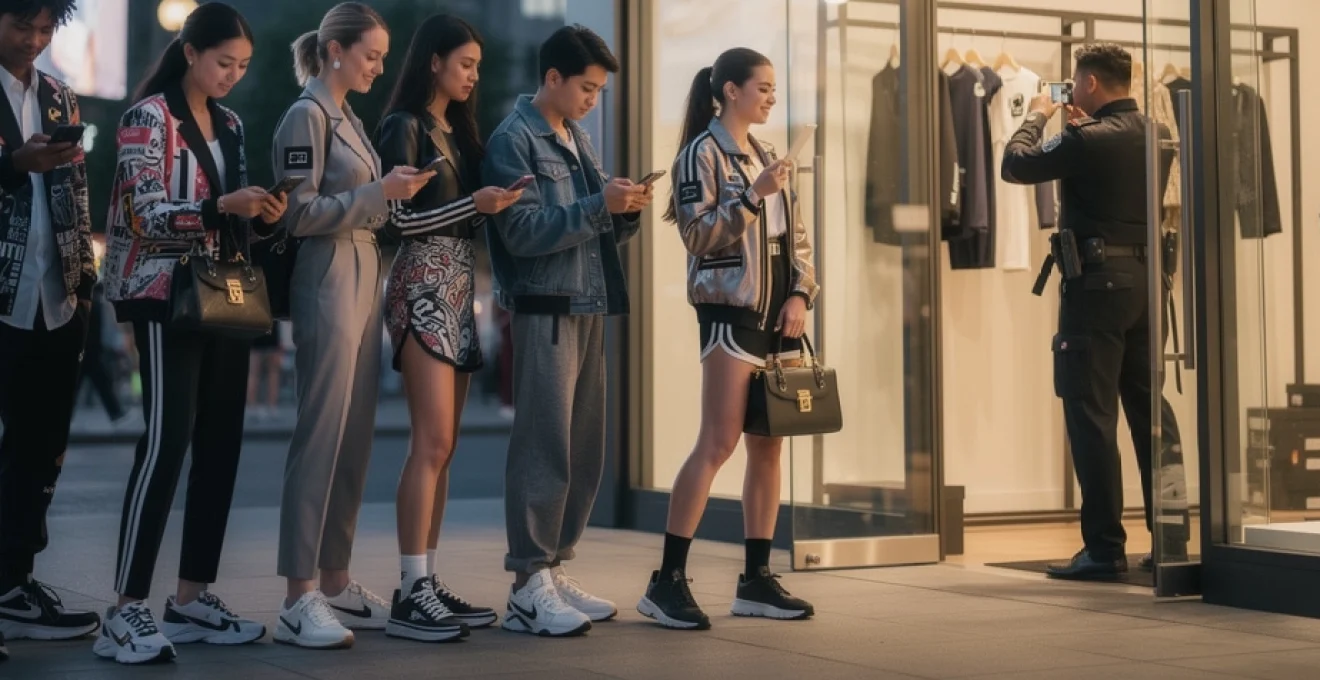
The fashion industry has witnessed an unprecedented surge in collaborative partnerships over the past decade, transforming the way brands create buzz and capture consumer attention. These strategic alliances between established luxury houses, emerging designers, streetwear brands, and even unexpected cross-industry partners have redefined market dynamics and consumer behaviour. Fashion collaborations now represent more than simple marketing tactics – they’ve become sophisticated trend-creation mechanisms that can instantly elevate brand visibility, drive sales, and reshape cultural conversations around style and exclusivity.
What makes these partnerships particularly fascinating is their ability to generate instant cultural moments that transcend traditional fashion boundaries. From Supreme’s groundbreaking collaboration with Louis Vuitton to H&M’s ongoing designer partnerships, these strategic alliances have proven their capacity to create viral moments that extend far beyond fashion weeks and traditional media coverage. The phenomenon speaks to deeper psychological triggers that drive consumer desire and purchasing behaviour in today’s digital-first marketplace.
Psychology behind consumer desire for Limited-Edition collaborative pieces
The human psyche contains inherent mechanisms that make collaborative fashion pieces irresistible to consumers across diverse demographics. Understanding these psychological drivers reveals why collaborations consistently outperform regular collections in terms of both media attention and sales velocity. The convergence of multiple brand identities creates a unique value proposition that taps into several cognitive biases simultaneously, making these pieces particularly compelling to modern consumers.
Scarcity marketing principles in luxury fashion partnerships
Scarcity operates as one of the most powerful psychological triggers in fashion collaborations, creating an artificial limitation that dramatically increases perceived value. When Louis Vuitton announced its Supreme collaboration would only be available at eight global pop-ups, the resulting frenzy demonstrated how strategic scarcity can transform ordinary products into coveted collectibles. This principle leverages loss aversion – the psychological tendency for people to prefer avoiding losses over acquiring equivalent gains.
The effectiveness of scarcity marketing in collaborative pieces stems from its ability to create temporal urgency combined with social exclusivity. Consumers understand that once these limited runs sell out, the only way to acquire them is through secondary markets at significantly inflated prices. This knowledge transforms the purchasing decision from a want-based transaction into a perceived investment opportunity, fundamentally altering how consumers evaluate the product’s worth.
Social proof mechanisms through celebrity endorsement collaborations
Celebrity involvement in fashion collaborations provides immediate social validation that accelerates trend adoption across consumer segments. When Virgil Abloh designed pieces for Louis Vuitton or when Rihanna launched Fenty collaborations, their personal brand equity transferred directly to the collaborative pieces, creating instant desirability. This phenomenon operates through social proof – the psychological principle where people assume the actions of others reflect correct behaviour for a given situation.
The celebrity endorsement effect in collaborations extends beyond simple brand ambassadorship. These partnerships often involve genuine creative input from the celebrity, creating authentic narratives that resonate with their fan bases. This authenticity amplifies the social proof mechanism, as consumers perceive they’re not just buying into a marketing campaign but acquiring pieces that genuinely reflect their idol’s creative vision and personal style preferences.
Exclusivity perception and brand equity enhancement
Collaborative pieces inherently possess dual brand equity – borrowing prestige from both participating brands while creating something entirely new. This combination effect often results in perceived value that exceeds the sum of individual brand contributions. When Adidas collaborates with high-fashion designers like Stella McCartney, the resulting pieces benefit from both Adidas’s technical innovation reputation and McCartney’s luxury fashion credentials.
The exclusivity perception operates on multiple levels within collaborative releases. Beyond the limited production runs, these pieces often incorporate unique design elements, special packaging, and exclusive colourways unavailable in regular collections. This multi-layered exclusivity approach ensures that collaborative pieces maintain their special status even after the initial hype subsides, contributing to their long-term collectibility and resale value.
Fear of missing out (FOMO) triggers in drop culture
Contemporary fashion collaborations have perfected the art of FOMO creation through strategic “drop” culture adoption. This approach, pioneered by streetwear brands like Supreme, involves releasing collaborative pieces with minimal advance notice, creating urgency that compels immediate purchasing decisions. The psychological pressure intensifies when consumers witness real-time social media posts showing items
disappearing from websites and appearing on resale platforms within minutes. This real-time visibility of scarcity, amplified by countdown timers, waitlists and “last chance” notifications, taps into deep-seated anxieties about being left out of a cultural moment. In many ways, each collaborative drop functions like a one-night-only concert: if you are not “in the room” when it happens, you can never truly experience it in the same way again.
Brands intentionally design the full ecosystem around the drop to heighten FOMO. Teaser posts, cryptic campaign visuals and limited-access lookbooks build anticipation weeks in advance, while strict purchase limits and online queues reinforce the idea that only a select group will secure the product at retail price. This combination of countdown-driven urgency and visible social proof explains why collaborative pieces often sell out faster than a brand’s core line, even when price points are higher and designs are more experimental.
Strategic brand partnership models in contemporary fashion
Behind every headline-making collaboration lies a clear strategic model that defines how two brands share equity, risk and reward. While each partnership is unique, most successful fashion collaborations fall into recognisable frameworks that can be replicated and refined. Understanding these models helps us see why certain partnerships become instant trends while others barely make a ripple in the market.
From high-low designer capsules to long-term athleisure partnerships, each approach leverages different strengths: distribution, creative direction, technical expertise or cultural cachet. The brands that consistently win in this space treat collaborations not as one-off stunts, but as carefully engineered brand-building tools aligned with long-term positioning. Let’s break down the most influential models shaping today’s collaboration landscape.
High-low collaborations: H&M x balmain success framework
The H&M x Balmain collaboration remains a benchmark for high-low fashion partnerships, illustrating how luxury fashion houses can reach mass audiences without diluting prestige. Launched in 2015 under creative director Olivier Rousteing, the collection translated Balmain’s embellished, hyper-glam aesthetic into accessible price points while preserving the brand’s core visual codes. The result was overnight queues, website crashes, and resale prices that rivalled – and sometimes surpassed – Balmain’s mainline pieces.
The success framework behind this high-low collaboration rested on three pillars: rigorous design curation, tight production caps and integrated storytelling. Rousteing worked closely with H&M’s design team to reinterpret signature pieces rather than create watered-down basics, ensuring that even entry-level garments felt authentically “Balmain.” Limited inventory and a global, same-day launch maximised hype and prevented overexposure, while a celebrity-heavy campaign featuring Kendall Jenner and Gigi Hadid delivered instant social proof to H&M’s mainstream consumers.
For brands considering similar high-low collaborations, the key lesson is to maintain clear creative leadership and protect brand DNA. When the luxury partner sets decisive design parameters and the high-street partner leverages its production and retail muscle, both sides benefit. The luxury player gains cultural visibility among younger shoppers who may become future full-price clients, while the retailer enjoys a spike in traffic, media coverage and perceived fashion authority.
Streetwear x luxury convergence: supreme and louis vuitton case study
The Supreme x Louis Vuitton partnership in 2017 crystallised a shift that had been brewing for years: the full convergence of streetwear and luxury fashion. What once might have been dismissed as brand dilution became, instead, a masterclass in modern brand positioning. By placing Supreme’s box logo alongside Louis Vuitton’s monogram, the collaboration fused youth-driven skate culture with century-old French heritage, creating a product that felt both disruptive and inevitable.
Strategically, this collaboration allowed Louis Vuitton to tap into a younger, hype-driven audience that had grown sceptical of traditional luxury signals, while Supreme gained institutional validation and access to a global luxury clientele. The limited pop-up strategy – only a handful of locations worldwide – turned each store into a cultural event, with lines wrapping around blocks and pieces selling out in hours. On the secondary market, items commanded prices many times over retail, reinforcing the perception of these products as cultural investment pieces rather than simple garments.
This case study illustrates how streetwear x luxury collaborations can act as a shortcut to cultural relevance when executed with mutual respect. Louis Vuitton did not attempt to “tame” Supreme; instead, it allowed the streetwear label’s visual language and drop culture to take centre stage within a luxury context. For legacy houses navigating generational shifts, this model shows how partnering with a credible, community-driven streetwear brand can inject authenticity into youth marketing efforts far more effectively than traditional advertising.
Cross-industry collaborations: adidas x stella McCartney athleisure model
Cross-industry collaborations take trend creation beyond the runway by merging distinct domains of expertise. The long-running partnership between Adidas and Stella McCartney exemplifies this model in the athleisure space, blending high-performance sportswear technology with luxury fashion design and sustainability-minded values. What started as a capsule has evolved into a robust sub-brand, influencing how consumers think about gym wear, everyday style and eco-conscious fashion.
The strategic power of this model lies in the complementary capabilities each partner brings to the table. Adidas contributes research and development, global distribution and technical fabrics, while Stella McCartney offers design credibility, fashion-forward silhouettes and a strong ethical stance. Together, they have helped normalise the idea that performance wear can be both functional and fashion-led, accelerating the broader athleisure trend that now dominates off-duty wardrobes worldwide.
For brands exploring cross-industry fashion collaborations, Adidas x Stella McCartney underlines the importance of long-term commitment and shared values. A single drop can create buzz, but it’s ongoing product evolution that truly shapes consumer habits. When a sportswear giant and a luxury designer align around sustainability, performance and style, their collaboration becomes more than a marketing moment: it becomes a new product category standard.
Artist collaborations: uniqlo x KAWS creative partnership strategy
Artist-driven collaborations introduce a different type of cultural capital into fashion trends: art world credibility and collectability. Uniqlo’s ongoing partnership with artist KAWS demonstrates how mass retailers can democratise access to contemporary art while driving massive retail traffic. Limited-edition T-shirts and accessories featuring KAWS’s Companion character and signature motifs have routinely sold out within hours, with some drops causing near riotous scenes in stores across Asia.
The Uniqlo x KAWS strategy hinges on treating apparel as a canvas for accessible art ownership. Rather than simply printing logos, the collections showcase full-bleed artwork, curated colour palettes and thoughtful packaging that echo gallery editions. For consumers, buying a KAWS T-shirt at Uniqlo becomes a way to participate in an art movement otherwise reserved for collectors bidding on high-priced sculptures and paintings.
This model reveals how brands can collaborate with artists to generate instant trends that cross fashion and culture. When executed respectfully – with fair compensation and creative autonomy for the artist – such partnerships create win-win outcomes: artists expand their audience, retailers boost footfall and brand heat, and consumers gain entry-level collectible pieces. In a world where visual culture spreads at high speed on social media, an artist collaboration can turn a simple graphic tee into a global talking point overnight.
Digital amplification mechanisms for collaborative launches
Even the most innovative collaboration will struggle to create instant trends without a robust digital amplification strategy. Today, social platforms function as both the runway and the marketplace, where collaborations are teased, discovered, debated and resold in real time. Brands that understand how to orchestrate influencer seeding, short-form video, hashtag ecosystems and social listening can turn a limited drop into a global event within hours.
Rather than relying solely on traditional press, leading fashion labels now architect their collaborative launches like multi-platform content campaigns. They consider how each touchpoint – from Instagram Stories to TikTok transitions – can build anticipation and convert attention into sell-through. The common thread is intentionality: every post, partnership and hashtag is designed to reinforce the narrative and urgency of the collaboration.
Instagram influencer seeding strategies for maximum reach
Instagram remains the visual backbone of fashion collaboration marketing, and influencer seeding is one of its most potent tools. Instead of simply sending product to a long list of creators, successful brands map out tiers of influence – from mega-celebrities to micro-influencers with tight-knit communities – and stage content releases over several phases. Early seeding to a small group of tastemakers creates intrigue; broader seeding closer to the drop date drives mainstream awareness and desire.
One effective tactic is exclusive pre-launch gifting, where influencers are the first to reveal the collaboration through unboxings, styling reels and “get ready with me” content. Because audiences perceive this content as more authentic than polished campaign imagery, it often outperforms paid placements in engagement and saves. You can think of it as a digital version of seeing an It-girl wearing a new bag at fashion week: the sighting alone triggers curiosity and future purchase intent.
For brands, the key is to brief creators with a clear narrative but allow room for personal interpretation. When influencers integrate collaborative pieces into their own aesthetic and lifestyle, the campaign feels less like an ad and more like a genuine style moment. This balance between control and creativity is what turns influencer seeding into a scalable engine for trend formation on Instagram.
Tiktok viral marketing tactics in fashion collaboration campaigns
If Instagram is the lookbook, TikTok is the runway where collaborations go viral. The platform’s algorithm rewards engaging, repeatable content formats, making it ideal for building hype around limited-edition fashion drops. Successful campaigns often revolve around a simple challenge, transition or sound that users can easily replicate while showcasing their collaborative pieces – or their attempts to get them.
Brands have used tactics like “outfit transition” challenges, styling glow-ups, and “shopping vlog” narratives to capture the emotional arc of the hunt: queuing for a release, unboxing the product, and styling it multiple ways. This narrative structure taps into the experiential side of fashion consumption, turning a purchase into a shareable story. When thousands of users document their journey to secure a collaboration, the campaign essentially crowdsources its own advertising.
To maximise impact on TikTok, it’s crucial to participate in existing cultural codes rather than forcing branded ones. Collaborating with native TikTok creators early in the planning process ensures that the concept fits the platform’s humour, pacing and trends. In many cases, the most successful collaborative videos are not heavily branded but instead focus on reactions, styling hacks and the relatable chaos of trying to beat the drop timer.
User-generated content acceleration through hashtag campaigns
User-generated content (UGC) is the fuel that keeps a collaboration trending beyond launch day, and hashtag campaigns act as the organisational backbone for that content. Well-chosen hashtags are short, intuitive and specific enough to be ownable – think #HMOSCHINO or #NikexOffWhite – making it easy for users to discover each other’s posts and for brands to track organic reach. When consumers see thousands of others sharing their looks under the same tag, they perceive the collaboration as a genuine movement rather than a top-down marketing push.
UGC also extends the lifespan of a collaboration by encouraging post-purchase participation. Styling challenges, “how I wear it” carousels and collection haul posts give owners a reason to share their pieces repeatedly, turning a one-time purchase into ongoing content. For shoppers who missed out, this flood of imagery reinforces the item’s desirability and can even drive demand in the resale market, further cementing the collaboration’s status as a trend-defining moment.
From a strategic perspective, brands should make it easy – and rewarding – for customers to participate. Simple prompts, occasional reposts from the brand account and spotlighting creative styling in Stories or newsletters all strengthen the sense of community around the collaboration. In essence, every buyer becomes a micro-influencer, helping to amplify the drop’s cultural impact.
Real-time social listening and trend monitoring tools
Real-time social listening has become essential for managing the volatile attention cycles around fashion collaborations. Using tools that analyse mentions, sentiment, and share of voice across platforms, brands can see how their drop is performing within hours of launch. Are consumers raving about a particular piece? Are there complaints about sizing or access? This data allows teams to adjust messaging, allocate inventory for restocks, or refine strategy for future collaborations.
Beyond reactive management, trend monitoring helps identify the next promising partnership before competitors move in. By tracking conversation spikes around emerging designers, artists or even niche subcultures, brands can spot potential collaborators whose communities show strong engagement and growth. In this sense, social listening functions like a radar: it doesn’t just measure the impact of today’s collaboration – it guides where you fly next.
For marketing teams, integrating these insights into planning cycles is critical. A collaboration that generates unexpected enthusiasm in a particular region or demographic may warrant targeted follow-up capsules or localised pop-ups. Conversely, lukewarm reception can be an early warning that a certain partnership model is losing relevance, signalling the need for bolder creative risks or a shift in collaborator profile.
Manufacturing and distribution logistics for trend acceleration
Behind the glossy campaigns and viral moments lies a complex logistical engine that can make or break a fashion collaboration. Trend acceleration depends not only on demand generation, but also on a brand’s ability to deliver product at the right time, in the right quantities, and through the right channels. When manufacturing and distribution are tightly aligned with marketing, a collaboration can move from announcement to sell-out in a matter of days without collapsing under operational strain.
Successful brands treat collaborative drops almost like limited tech launches: production is carefully forecasted using historical data, pre-launch signals and social listening insights. Many adopt agile manufacturing models, working with flexible suppliers who can handle smaller, more frequent runs rather than traditional seasonal bulk orders. This reduces the risk of overproduction while preserving the scarcity that makes limited-edition fashion so compelling.
Distribution strategy is equally critical. Some collaborations rely on a “halo” effect by limiting availability to flagship stores and select online channels, reinforcing exclusivity and driving traffic to key locations. Others use a wider distribution network but stagger releases by region or retailer, creating rolling waves of hype. In both cases, synchronising inventory drops with digital campaigns and influencer content ensures that when consumers decide to buy, the product is actually available – at least for a brief, carefully controlled window.
Revenue impact analysis of High-Profile fashion collaborations
While collaborations are often framed in terms of culture and visibility, their financial impact is increasingly measurable and significant. For many brands, a single high-profile partnership can generate a notable share of annual revenue, not only through direct sales but also via halo effects on core lines. McKinsey has reported that limited-edition capsules can lift full-price sell-through rates by double digits, as increased traffic and brand heat spill over into non-collaborative categories.
Direct revenue from collaborative capsules tends to benefit from premium pricing, fast sell-out rates and minimal markdowns. Because production runs are small and demand is pre-stimulated through marketing, inventory risk is lower than for standard seasonal collections. On the resale market, the performance of collaborative pieces – often trading at multiples of retail – further reinforces their perceived value and can, indirectly, justify higher price points for future drops.
However, revenue analysis must also account for intangible returns. Collaborations can accelerate brand awareness in new markets, as seen with Alexander Wang’s China-focused McDonald’s partnership or Sabyasachi’s global exposure through H&M. They can also attract new customer cohorts: younger, streetwear-oriented shoppers for luxury houses, or aspirational fashion fans for mass retailers. When evaluated over a multi-year horizon, these expanded audiences often represent the most valuable outcome of collaboration-led strategies.
Cultural zeitgeist capitalisation through strategic timing
Finally, the collaborations that truly become instant trends are those that plug directly into the cultural zeitgeist. It is not enough for a partnership to be aesthetically appealing; it must also feel timely, answering a question consumers are already asking about identity, sustainability, nostalgia or technology. When brands align launch dates with cultural events – from major streaming releases to global sports tournaments or even viral internet phenomena – they dramatically increase the odds that their collaboration will dominate the conversation.
Consider how Johnnie Walker’s Squid Game collaboration leveraged the anticipation around Season 2, or how GoPro and Red Bull’s record-breaking space jump captured a moment of collective fascination with extreme feats. In fashion, the same principle applies: a capsule timed to coincide with the resurgence of Y2K aesthetics, the rise of athleisure, or a renewed focus on gender-fluid dressing stands a far better chance of cutting through. Strategic timing turns a collaboration into a commentary on what matters right now.
For brands, this means looking beyond internal calendars and fashion weeks to the broader cultural timeline. What films, games, social movements or technological shifts are shaping your audience’s tastes and values? Which of these could be meaningfully connected to your brand through a thoughtful partnership, rather than a superficial logo mash-up? As the industry moves deeper into the era of collaborative creativity, the winners will be those who not only design desirable products, but also read the cultural room – and launch at the exact moment the world is ready to wear the story they are telling.