
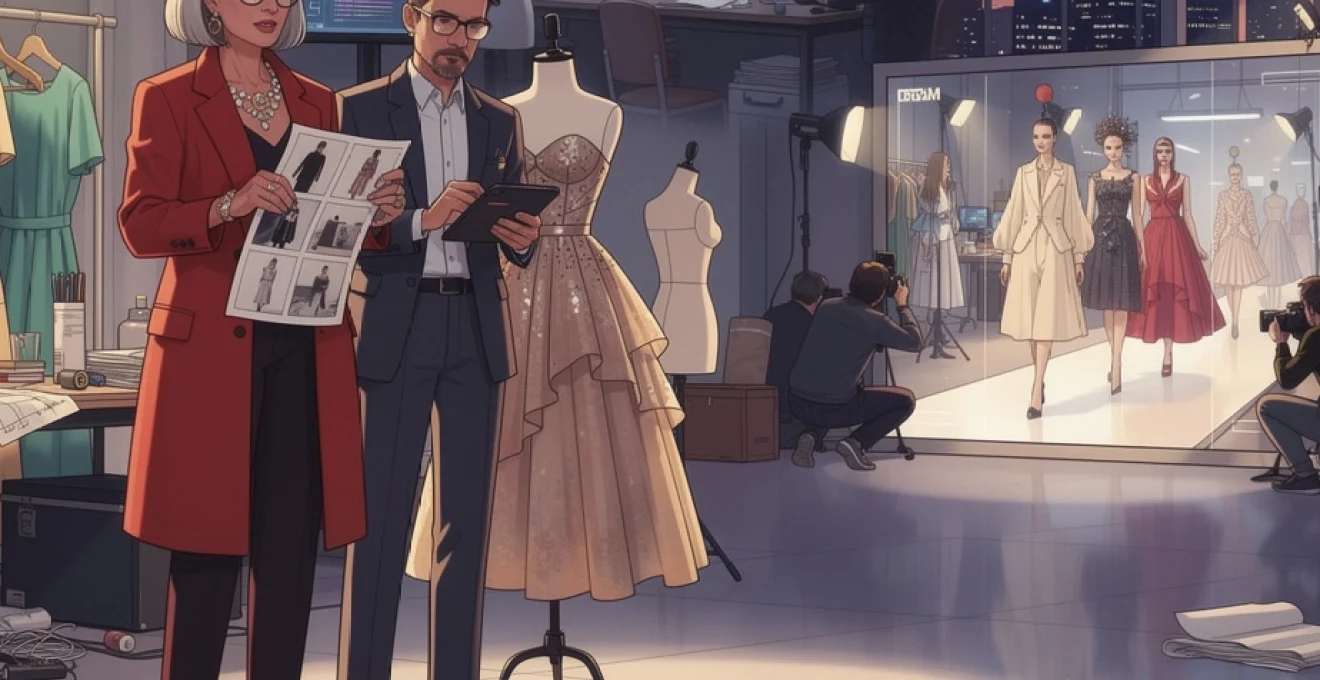
Fashion documentaries offer an unparalleled window into the creative minds behind some of the world’s most influential designers, editors, and style icons. These cinematic explorations reveal the intricate processes, personal struggles, and artistic visions that shape contemporary fashion culture. From intimate portraits of legendary couturiers to behind-the-scenes access to fashion’s most prestigious houses, documentary filmmaking has captured the essence of an industry built on dreams, artistry, and relentless pursuit of beauty.
The power of fashion documentaries lies in their ability to demystify an often exclusive world whilst celebrating the craftsmanship and creativity that defines haute couture and ready-to-wear collections. These films document not just clothing, but the cultural movements, social changes, and individual stories that fashion represents. Whether you’re seeking creative inspiration, industry insights, or simply appreciate the artistry of exceptional filmmaking, fashion documentaries provide a rich tapestry of visual storytelling that continues to influence designers, stylists, and fashion enthusiasts worldwide.
Iconic fashion documentary pioneers: diana vreeland and the september issue legacy
Diana vreeland: the eye has to travel – editorial vision and artistic direction
Diana Vreeland transformed fashion journalism from mere documentation into artistic expression through her revolutionary editorial approach at Harper’s Bazaar and Vogue. The documentary « Diana Vreeland: The Eye Has to Travel » reveals how this legendary editor’s unconventional background and eccentric personality shaped modern fashion photography and styling. Vreeland’s ability to spot emerging talent and her fearless approach to pushing creative boundaries established the template for contemporary fashion editorials.
Her collaborative relationships with photographers like Richard Avedon and Irving Penn demonstrate the importance of visual storytelling in fashion media. The film showcases Vreeland’s method of creating fantasy through fashion, turning simple clothing into aspirational lifestyle concepts. This approach fundamentally changed how consumers engage with fashion content, moving beyond product showcasing to emotional connection and cultural commentary.
R.J. cutler’s the september issue – anna wintour’s creative editorial process
The September Issue provides unprecedented access to Vogue’s most important annual publication, documenting the meticulous planning and creative decisions behind the fashion industry’s most influential magazine. Anna Wintour’s leadership style and editorial philosophy are revealed through months of preparation, from initial concept meetings to final layout approvals. The documentary demonstrates how fashion journalism operates as both commercial enterprise and cultural arbiter.
Grace Coddington’s creative partnership with Wintour illustrates the collaborative nature of high-level fashion production, showing how artistic vision must balance with commercial considerations. The film captures the intense pressure of maintaining Vogue’s cultural relevance whilst meeting advertising revenue expectations, providing valuable insights into fashion media economics and creative decision-making processes.
Advanced fashion photography techniques in vogue documentary filmmaking
Documentary filmmakers studying fashion media have developed sophisticated techniques for capturing the creative process of fashion photography. These films reveal how lighting, composition, and styling decisions translate into iconic fashion imagery. The collaborative relationship between photographers, stylists, models, and art directors becomes a central narrative element, showing how multiple creative perspectives contribute to singular fashion moments.
Behind-the-scenes footage demonstrates the technical precision required for professional fashion photography, from studio setup to post-production editing. This transparency has influenced fashion education and inspired countless photographers to pursue careers in fashion imagery, whilst also revealing the commercial pressures that shape editorial content in contemporary fashion media.
Behind-the-scenes fashion week production and editorial decision making
Fashion week documentaries capture the logistical complexity of producing multiple fashion shows whilst maintaining editorial standards under extreme time pressure. These films reveal how fashion editors make split-second decisions about trend identification, designer coverage, and story selection during fashion’s most intense periods. The coordination between photographers, writers, stylists, and digital teams demonstrates the evolution of fashion media in the digital age.
The competitive atmosphere between fashion publications becomes apparent through documentary footage, showing how exclusive access and unique perspectives drive editorial strategy. This content provides aspiring fashion professionals with realistic expectations about industry demands whilst highlighting the creative satisfaction that comes from successful fashion storytelling and trend forecasting.
Designer profile
Designer profile documentaries: McQueen, westwood, and saint laurent case studies
Mcqueen documentary analysis: creative process and avant-garde design philosophy
The documentary McQueen offers one of the most compelling case studies of a designer’s creative process captured on film. Through archive footage, show recordings, and intimate interviews, we see how Lee Alexander McQueen built each collection like a cinematic narrative, starting from a single emotional idea and developing it into a fully immersive world. Rather than treating garments as isolated objects, he approached fashion design as storytelling, using cut, fabric, and show choreography to evoke shock, beauty, and sometimes discomfort.
For viewers seeking style inspiration, McQueen demonstrates how to translate personal history into powerful visual language. His East London upbringing, fascination with history, and love of the macabre all appear in his tailoring details, silhouettes and dramatic runway staging. The film also highlights the discipline behind the drama: repeated fittings, meticulous pattern-cutting, and constant refinement. It’s a reminder that avant-garde fashion is not random provocation but the result of rigorous craft and a clear, if unconventional, design philosophy.
Vivienne westwood’s punk aesthetic revolution in fashion film
Westwood: Punk. Icon. Activist. traces Vivienne Westwood’s evolution from anti-establishment provocateur to globally recognised fashion figure. The documentary shows how her punk aesthetic was never just about ripped T-shirts and safety pins; it was a visual language for resistance, rooted in political conviction and British subculture. By juxtaposing archive footage from the 1970s with more recent runway shows, the film reveals how Westwood kept reworking the codes of rebellion while maintaining a strong identity.
For anyone building a personal style, Westwood’s example illustrates how a consistent visual vocabulary can evolve over decades without losing its edge. Her use of tartan, exaggerated tailoring, and historical references becomes a toolkit for self-expression and social critique. The film also dives into her sustainability activism, showing that a punk attitude can coexist with a deep commitment to ethical production. Watching Westwood rail against consumerism while creating couture-level garments is like seeing a live masterclass in making fashion both beautiful and meaningful.
Saint laurent documentary examination: haute couture construction methods
Documentaries focusing on Yves Saint Laurent and his maison – such as L’Amour Fou and various YSL-focused films and series – provide rare insight into haute couture construction at the highest level. We see ateliers draping fabric directly on the body, sculpting garments in toiles before cutting into precious silk, satin or mousseline. Close-up shots of hand-stitched seams, embroidered motifs, and perfectly balanced jackets show why couture is often described as “architecture in fabric”.
These films are especially valuable if you’re interested in how timeless style is built. Saint Laurent’s clean lines, precision tailoring and restrained colour palettes demonstrate that enduring elegance often comes from impeccable cut rather than over-decoration. Viewers can observe how muslins are adjusted millimetre by millimetre, how fittings with clients refine posture and proportion, and how finishing techniques—hand-sewn hems, bound buttonholes, invisible zips—elevate even the simplest silhouette into a lifetime piece.
Dior and I: raf simons’ architectural approach to fashion design
Dior and I is essential viewing for understanding how a designer with a modern, almost minimalist background can reinterpret a storied couture house. Raf Simons approaches Dior’s archives like an architect studying historic plans: respectful of the original structure but unafraid to redesign the facade. The documentary follows his first couture collection for the house, revealing how he translates mid-century Dior codes—nipped waists, full skirts, floral motifs—into clean, graphic shapes and unexpected fabric combinations.
What makes this film so instructive is its focus on process under extreme time pressure. Simons and his team must deliver an entire haute couture collection in just eight weeks, an almost impossible schedule given the level of craftsmanship required. We watch moodboards evolve into fabric choices, fittings, and finally a show set covered floor to ceiling in fresh flowers. For style enthusiasts, the takeaway is clear: a sharp, contemporary wardrobe can still draw on classic references, as long as the proportions, materials and context feel true to the present.
Valentino: the last emperor – italian craftsmanship and atelier techniques
Valentino: The Last Emperor offers an emotionally rich portrait of Italian couture at its most opulent. The film centres on Valentino Garavani’s final years at his house, focusing on his relationship with longtime business partner Giancarlo Giammetti and the artisans who bring his designs to life. We see seamstresses hand-sewing hundreds of tiny ruffles, embroiderers applying crystals with microscopic precision, and fitters perfecting gowns destined for red carpets and royal events.
From a technical perspective, the documentary is a masterclass in draping, bias cutting, and finishing techniques that create Valentino’s signature lightness and movement. Even extravagant ballgowns seem to float because of how carefully the internal construction supports the body. Style-wise, it’s also a lesson in the power of consistency: Valentino red, graceful necklines and fluid silhouettes form a recognisable aesthetic language across decades. For viewers, it’s a reminder that cultivating a “signature look” can be as impactful as constantly chasing new trends.
Fashion industry business documentaries: brand building and commercial strategy
Beyond creativity and craft, the best fashion documentaries also reveal how brands survive and grow in an increasingly competitive market. Films such as Jeremy Scott: The People’s Designer, Very Ralph, and series like Kingdom of Dreams lift the curtain on the commercial realities behind runway glamour. They show how licensing deals, department store relationships, influencer partnerships, and social media strategy can make or break even the most visionary designer.
One recurring theme is the tension between artistic integrity and financial sustainability. We see creative directors juggling multiple collections per year, pre-collections, collaborations, and fragrance launches, all while trying to maintain a coherent brand identity. These documentaries make clear that modern fashion houses operate more like global media companies than small studios. For aspiring designers or entrepreneurs, they provide both inspiration and a realistic sense of the operational scale required to build a label that lasts.
Several films also track how American designers turned personal narratives into powerful global brands. Ralph Lauren, for example, used cinematic advertising and store design to sell not just clothes but an entire lifestyle, from ranch dressing to Upper East Side elegance. Jeremy Scott flipped mass culture on its head, transforming emoji graphics and fast-food logos into luxury runway pieces that generated viral attention and strong accessories sales. Watching how these figures built and protected their brand equity can help you think more strategically about your own visual identity, even if it’s just your Instagram feed or portfolio.
Sustainable fashion and ethical production documentary analysis
As conversations around climate change and labour rights intensify, sustainability-focused fashion documentaries have become essential viewing. Films like The True Cost, Invisible Beauty, and Westwood: Punk. Icon. Activist. examine what really happens behind low price tags and rapid trend cycles. They introduce us to garment workers, cotton farmers, and activists, connecting our shopping habits with environmental and social impact. Once you’ve seen footage from factories or polluted river systems, it becomes harder to treat clothing as disposable.
These documentaries are particularly effective at breaking down complex supply chains into human stories. Instead of abstract statistics, we meet individual workers sharing their experiences, or designers explaining the challenges of switching to organic fibres and fair-wage production. The analogy many filmmakers return to is that of food: just as the farm-to-table movement made us care about where our meals come from, slow fashion storytelling invites us to ask who made our clothes, under what conditions, and with which materials.
For viewers looking to align style with values, the practical takeaways are clear. You can start by buying less but better, prioritising brands that publish transparent supply chain information or third-party certifications. Documentaries also spotlight alternative models, from upcycling and rental platforms to community-based production. Are these solutions perfect? Not yet—but the films encourage us to experiment, question, and support innovators who are trying to recalibrate an industry often built on overproduction and waste.
Fashion photography and styling masterclasses through documentary cinema
Many fashion documentaries function as informal masterclasses in photography and styling, even when that’s not their primary focus. Films centred on image-makers—such as Bill Cunningham: New York, Helmut Newton: The Bad and the Beautiful, and Made in Milan—show how framing, light, and attitude can transform an outfit into an unforgettable image. Watching Bill Cunningham wait on a street corner for the perfect moment, or Helmut Newton direct a model into a bold pose, teaches you more about visual impact than any textbook.
Styling-focused documentaries, or those with extensive behind-the-scenes footage, also reveal how editors and stylists build a narrative through clothing. In The September Issue and Diana Vreeland: The Eye Has to Travel, we see how a single accessory can change the mood of a look, or how unexpected combinations—couture gowns with simple flats, eveningwear shot in daylight—create tension and interest. If you pay attention to the racks, fittings, and moodboards, you effectively get front-row access to some of the best fashion styling minds in the world.
How can you apply these insights to your own style? Think of each outfit as a still from your personal documentary. Consider the “story” you want to tell that day: minimalist and architectural, romantic and layered, or bold and graphic. Then use the techniques you see on screen—contrasting textures, thoughtful colour palettes, proportion play—to refine your look. Just as a great documentary editor decides which scenes make the cut, you can learn to edit your wardrobe, keeping only the pieces that support the narrative you want to project.