
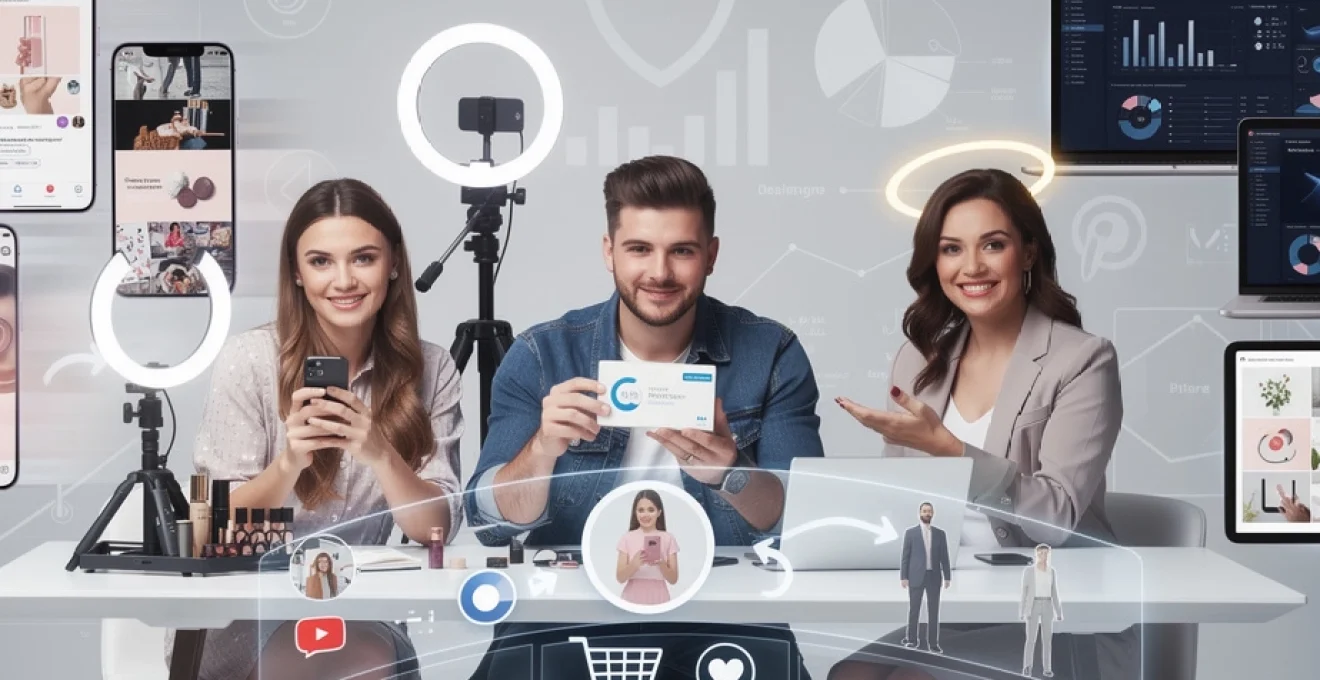
Social media has fundamentally transformed the marketing landscape, shifting power from traditional advertising channels to individual content creators who wield unprecedented influence over consumer purchasing decisions. Influencer marketing has evolved from a niche strategy to a £1.7 billion industry in the UK alone, with research revealing that 47% of British adults have purchased products promoted by social media personalities. This phenomenon represents more than a trend—it’s a complete restructuring of how consumers discover, evaluate, and purchase products in the digital age.
The relationship between influencers and their audiences transcends traditional advertising boundaries, creating authentic connections that traditional media struggles to replicate. Unlike conventional celebrity endorsements, social media influencers build trust through consistent, personalised content that resonates with specific demographics and interests. Understanding this dynamic becomes crucial for businesses seeking to navigate the modern marketplace effectively.
Psychological mechanisms behind influencer marketing effectiveness
The psychological foundations of influencer marketing success rest on several well-established cognitive principles that brands and content creators leverage to drive consumer behaviour. These mechanisms operate both consciously and subconsciously, creating powerful motivations for purchase decisions that traditional advertising methods often fail to achieve.
Social proof theory and bandwagon effect in digital consumer behaviour
Social proof theory provides the cornerstone for understanding why influencer recommendations carry such weight in consumer decision-making processes. When individuals observe others—particularly those they admire or relate to—engaging with specific products or services, they experience a psychological pull to mirror those behaviours. This principle becomes amplified in digital environments where engagement metrics like views, likes, and comments serve as quantifiable indicators of social approval.
The bandwagon effect manifests particularly strongly when influencers showcase popular or trending products to their followers. Research indicates that 68% of consumers are more likely to purchase items that appear to have widespread approval from their peer groups. This psychological trigger explains why limited-time offers and exclusive collaborations between brands and influencers generate such compelling responses from audiences.
Parasocial relationships and emotional connection formation with content creators
Parasocial relationships represent one-sided emotional connections that audiences develop with media personalities, and these bonds prove exceptionally strong in the influencer marketing context. Unlike traditional celebrities who maintain professional distance, social media influencers share intimate details about their daily lives, creating the illusion of genuine friendship with their followers.
These emotional connections translate directly into purchase intentions, with studies showing that consumers who feel personally connected to influencers demonstrate 23% higher conversion rates compared to those exposed to traditional advertising methods. The authentic storytelling approach that successful influencers employ helps break down the barriers between promotional content and genuine recommendations, making product endorsements feel like advice from trusted friends.
Cognitive bias exploitation through aspirational lifestyle positioning
Influencers masterfully exploit cognitive biases by positioning products within aspirational lifestyle contexts that trigger powerful emotional responses. The availability heuristic leads consumers to overestimate the likelihood of achieving similar results when they see influencers demonstrating product benefits in carefully curated environments. This bias becomes particularly pronounced when influencers share transformation stories or before-and-after content.
The halo effect further amplifies these aspirational messages, causing positive feelings about an influencer’s lifestyle to transfer onto the products they endorse. When followers admire an influencer’s overall aesthetic, success, or personality, they unconsciously attribute positive qualities to everything associated with that individual, including sponsored products and brand partnerships.
Authority heuristics and expert positioning in niche market segments
Authority positioning represents a crucial psychological mechanism that drives influencer marketing effectiveness, particularly within specialised market segments. When influencers establish themselves as experts in specific niches—whether beauty, fitness, technology, or lifestyle—their recommendations carry the weight of professional opinion rather than simple personal preference.
This expert positioning becomes especially powerful when influencers demonstrate deep knowledge through educational content, tutorials, and detailed product analyses. Research shows that three-fifths of UK consumers believe the social media personalities they follow are genuine experts in their respective fields, creating a foundation of trust that significantly influences purchasing decisions.
Micro-influencer vs Macro-Influencer impact analysis on purchase decisions
Engagement rate correlation with conversion metrics across follower demographics
Within the spectrum of social media influencers, engagement rate offers a more reliable predictor of purchase behaviour than follower count alone. Micro-influencers, typically defined as creators with 10,000 to 100,000 followers, often generate engagement rates between 3% and 6%, compared with 1% to 2% for many macro-influencers. This higher interaction level translates into stronger influence over niche communities, where recommendations feel more targeted and personal.
When we examine conversion metrics, the pattern becomes even clearer. Campaigns run with micro-influencers frequently report click-through rates and cost-per-click figures that outperform those of larger creators, particularly in younger demographics who value perceived authenticity. For brands, this means that working with several micro-influencers can sometimes deliver a better return on ad spend than a single macro partnership, especially in markets where word-of-mouth style recommendations drive sales.
Engagement metrics are not uniform across age groups, however. Gen Z audiences tend to comment and share content more frequently, converting engagement into immediate purchases via in-app shopping tools, while older millennials might save posts and purchase later after further research. Understanding how different demographics interact with influencers enables brands to map engagement indicators—likes, comments, shares, saves—to concrete conversion behaviours and to design more effective influencer marketing funnels.
Authenticity perception differences between nano and celebrity endorsements
Perceptions of authenticity sit at the core of influencer marketing effectiveness, and these perceptions vary dramatically between nano-influencers and celebrity endorsers. Nano-influencers, with fewer than 10,000 followers, often operate within tight-knit online communities where they know many of their followers personally. Their recommendations resemble advice from a knowledgeable friend, which explains why studies consistently show that consumers rate nano content as more trustworthy and less “salesy” than celebrity campaigns.
In contrast, celebrity endorsements frequently trigger consumer scepticism, particularly when the promoted product appears unrelated to the star’s usual interests or lifestyle. Audiences are increasingly aware that high-profile endorsements are driven by large fees, and this awareness can weaken the perceived sincerity of the recommendation. While celebrities can still deliver massive reach and rapid awareness, their ability to drive high-intent purchase behaviour may be lower when authenticity is in doubt.
For brands, the key lies in matching the type of influencer to campaign goals. If the objective is to shift perception or seed a new positioning, celebrity or macro-influencers can broadcast a message at scale. But when the primary goal is to move consumers from consideration to purchase, nano and micro-influencers—who appear more relatable, transparent, and independent—often outperform flashy celebrity content in actual sales conversion.
Cost-per-acquisition analysis for james charles vs emma chamberlain campaign performance
Comparing high-profile creators such as James Charles and Emma Chamberlain offers a useful lens into how cost-per-acquisition (CPA) can vary even among top-tier influencers. Beauty-focused creators like James Charles tend to operate in product categories with relatively low price points and highly visual appeal, making impulse purchases more likely. Campaigns with such creators can achieve strong click-through rates, but competitive sponsorship fees and frequent collaborations with multiple brands may inflate CPA figures over time.
Emma Chamberlain’s influence, by contrast, spans lifestyle, fashion, and even coffee, positioning her as a broader lifestyle authority rather than a single-category specialist. This wider lifestyle appeal can drive deeper emotional affinity, which often translates into higher average order values and more durable brand loyalty. Brands partnering with her may see fewer impulsive, one-off conversions but stronger repeat purchasing and lower long-term acquisition costs when factoring in customer lifetime value.
The lesson for marketers is that CPA should never be evaluated in isolation. A campaign with a seemingly higher acquisition cost may still be more profitable if the influencer’s audience demonstrates stronger brand loyalty, repeat purchase behaviour, or willingness to buy premium products. When planning influencer collaborations, you should model different scenarios that take into account both short-term CPA and long-term revenue contribution rather than focusing solely on initial campaign costs.
Niche authority building through specialised content creators like jackie aina
Specialised creators such as Jackie Aina illustrate how niche authority can dramatically amplify the impact of influencer recommendations on consumer choices. By focusing on specific issues within the beauty industry—such as inclusivity, shade ranges, and representation—Jackie has cultivated a reputation for advocacy and expertise that extends beyond typical product reviews. Her audience does not simply see her as a beauty influencer; they perceive her as a trusted voice on equity and product quality in cosmetics.
When niche experts recommend a product, their followers interpret the endorsement through a lens of established authority. This means that a positive review can override hesitation about price, brand familiarity, or past experiences in the category. In many cases, niche influencers help consumers navigate complex product landscapes, acting like specialised consultants who reduce decision fatigue and provide clear guidance in saturated markets.
Brands working with such creators must recognise that authority has been built over years of consistent, values-driven content. Attempts to impose generic advertising messages can undermine that credibility. Instead, successful partnerships allow niche influencers to maintain their voice, critical perspective, and candid product assessments, even if that means acknowledging a product’s limitations. In a world where consumers actively research before purchasing, this kind of transparent authority becomes an invaluable asset.
Platform-specific consumer response variations
Instagram stories swipe-up conversion rates vs TikTok link-in-bio performance
Different social media platforms shape how consumers respond to influencer content, and the contrast between Instagram Stories and TikTok illustrates this clearly. Instagram Stories—historically featuring the swipe-up function and now relying on link stickers—have long been associated with direct-response campaigns. Audiences on Instagram are accustomed to tapping through a sequence of stories, discovering limited-time offers, and clicking directly through to e-commerce sites, generating clear, trackable conversion paths.
TikTok, by comparison, keeps users within an endlessly scrolling feed, where link-in-bio and in-video shopping features act as conversion gateways rather than immediate calls to action. While this might appear less efficient at first glance, TikTok’s algorithmically driven discovery and viral potential often produce explosive reach for compelling influencer content. As a result, TikTok can excel at the upper and middle stages of the purchasing funnel—awareness, interest, and consideration—even if direct click-throughs are more fragmented.
From a performance standpoint, Instagram often delivers higher immediate conversion rates per impression, whereas TikTok can generate higher total sales volume when content goes viral. The most effective influencer strategies treat the two platforms as complementary rather than interchangeable: Instagram Stories drive time-sensitive offers and retargeting, while TikTok content builds buzz, culture relevance, and ongoing discovery for products that benefit from social proof and shareability.
Youtube long-form content impact on considered purchase categories
YouTube’s long-form format plays a distinctive role in influencing consumer behaviour, especially in high-consideration categories such as electronics, financial services, education, and premium beauty. When a purchase requires research—think smartphones, laptops, skincare routines, or online courses—consumers frequently turn to in-depth reviews, tutorials, and comparison videos. Influencers on YouTube can spend 10 to 30 minutes unpacking product features, demonstrating usage, and sharing personal experiences in a way that builds substantial trust.
This extended exposure time allows influencers to address objections, compare alternatives, and showcase real-world performance, helping viewers progress through multiple stages of the decision journey in a single session. As a result, viewers who reach the end of a detailed review or “honest opinion” video are often highly primed for conversion. Purchase links in the description box therefore tend to attract users with stronger intent than those generated by quick, passive impressions elsewhere.
For brands operating in considered purchase categories, partnering with YouTube creators can be analogous to providing a live, interactive product demo to thousands of potential customers. While production costs and lead times may be higher than for short-form content, the depth of engagement and the quality of traffic driven to product pages can offset these investments. When you align with creators whose audiences are actively researching solutions, long-form content can become a powerful engine for educated, confident buying decisions.
Linkedin influencer B2B decision-making process acceleration
In the business-to-business arena, LinkedIn has emerged as the primary platform where influencer-style voices can accelerate complex purchasing decisions. Thought leaders, industry analysts, and niche consultants build substantial followings on LinkedIn by sharing case studies, frameworks, and insights that speak directly to professional challenges. These figures may not label themselves as “influencers,” yet their opinions shape vendor shortlists and purchasing criteria across sectors such as SaaS, consulting, and HR technology.
B2B buying cycles often involve multiple stakeholders, risk assessments, and budget approvals, making trust and perceived expertise vital. When respected LinkedIn creators share genuine experiences with a tool or highlight a successful implementation, they provide social proof tailored to professional decision-makers. This can shorten research phases and increase confidence, effectively moving buyers more quickly from awareness to trial or demo requests.
For organisations, collaborating with LinkedIn influencers might involve co-authoring white papers, hosting webinars, or sponsoring detailed product breakdowns that still prioritise insight over promotion. By aligning with credible voices who are already embedded in industry conversations, brands can inject their solutions into decision-making processes at the exact moment when teams are seeking guidance and validation.
Pinterest visual discovery integration with influencer product placement
Pinterest operates as a visual discovery engine rather than a traditional social network, and this distinction shapes how influencers affect consumer choices on the platform. Users often arrive on Pinterest with a planning mindset—looking for inspiration for home décor, weddings, DIY projects, or seasonal purchases. Influencer-created pins and idea boards naturally slot into this discovery journey, serving as both mood boards and product roadmaps for future purchases.
Because pins are searchable and evergreen, a single well-optimised piece of content can drive traffic and sales for months or even years, unlike the fast-decaying posts on other networks. Influencers who specialise in Pinterest-friendly categories—such as interior design, recipes, or fashion styling—can subtly integrate product placement into visually compelling boards that users save and revisit during the planning and buying process. This positions Pinterest as a quiet but powerful driver of mid- to long-term purchase decisions.
For brands, the opportunity lies in partnering with influencers to create shoppable pin collections and step-by-step guides that answer the question, “How do I bring this look to life?” By ensuring that every featured item is clickable and available, marketers can transform aesthetic inspiration into structured purchase paths. In this way, Pinterest blends the roles of catalogue, search engine, and influencer showcase, making it especially valuable for categories where visuals and planning play central roles.
Demographic segmentation and generational response patterns
Different generations engage with social media influencers in distinct ways, shaped by their digital habits, financial priorities, and expectations of authenticity. Gen Z, who have grown up as digital natives, often treat influencers as integral parts of their social circle, using creator recommendations like extended peer reviews. They are especially receptive to short-form video on platforms like TikTok and Instagram Reels, and they expect influencer content to align with their values around inclusivity, sustainability, and transparency.
Millennials, many of whom now occupy key purchasing and decision-making roles, tend to blend aspirational and practical considerations when responding to influencer marketing. They are more likely than Gen Z to research across multiple sources, combining influencer reviews with comparison sites and brand-owned content before committing to higher-value purchases. Email subscription offers, discount codes, and loyalty programmes promoted by influencers often resonate strongly with this group, especially as they navigate family budgets and long-term financial goals.
Older generations, including Gen X and Baby Boomers, may be less likely to describe themselves as “follower” communities, but they still respond to trusted voices online—particularly in areas such as finance, health, travel, and home improvement. For these audiences, professional credentials, clear disclaimers, and evidence-based recommendations are critical for building trust. Understanding these demographic nuances enables marketers to design influencer strategies that vary not just by platform or format, but by age-related expectations and purchasing power, ensuring relevant messages reach each segment in the most effective way.
Attribution modelling and ROI measurement methodologies
As influencer marketing budgets rise, brands face mounting pressure to prove return on investment and understand exactly how influencer content contributes to sales. Attribution modelling provides the analytical framework for this, connecting touchpoints such as story views, link clicks, discount code usage, and eventual purchases across devices and channels. Simple last-click attribution can underestimate the influence of awareness-building content, particularly on platforms where users discover products but complete purchases days later via search or direct site visits.
More advanced models—such as multi-touch attribution and data-driven algorithms—assign fractional credit to each interaction, capturing the cumulative effect of multiple influencer exposures. For instance, a consumer might discover a product on TikTok, watch an in-depth review on YouTube, and finally purchase through an Instagram link, with each creator playing a role in shaping the final decision. While such models require robust tracking infrastructure, they offer a far more accurate picture of how influencer marketing fits within the broader customer journey.
In practice, marketers combine quantitative metrics with qualitative indicators to evaluate influencer ROI. Quantitative measures include cost per click, cost per acquisition, revenue per post, and uplift in branded search volume, while qualitative signals encompass sentiment in comments, share of voice in social conversations, and long-term brand affinity. Increasingly, brands also consider customer lifetime value when assessing influencer campaigns, recognising that a higher upfront acquisition cost can still yield attractive returns if the acquired customers demonstrate strong repeat purchasing and advocacy behaviour.
Regulatory compliance impact on consumer trust and purchase intent
Regulatory frameworks around influencer marketing have tightened significantly in recent years, with authorities such as the UK’s Advertising Standards Authority (ASA) and the US Federal Trade Commission (FTC) demanding clear disclosure of paid partnerships. At first glance, you might assume that labelling content as “#ad” would undermine its persuasive power. Yet research suggests the opposite: transparent disclosures often enhance consumer trust, signalling that both influencer and brand respect ethical guidelines and have nothing to hide.
Non-compliance, on the other hand, can rapidly erode credibility. When audiences discover undisclosed sponsorships or misleading claims, they may not only lose trust in the individual influencer but also question the integrity of the brand behind the promotion. Reputational damage spreads quickly on social platforms, where screenshots and critical commentary can turn one misjudged campaign into a wider controversy. In this context, adherence to regulations becomes less about box-ticking and more about preserving long-term brand equity.
Forward-thinking brands now integrate compliance into their influencer strategies from the outset, providing clear briefing documents, mandatory disclosure language, and review processes that balance authenticity with legal accuracy. Influencers who consistently follow these standards often stand out as more reliable and professional, which in turn increases their impact on purchase intent. By treating transparency as a core element of the value proposition rather than a constraint, marketers can strengthen the foundation of trust that underpins every effective influencer-driven consumer choice.