
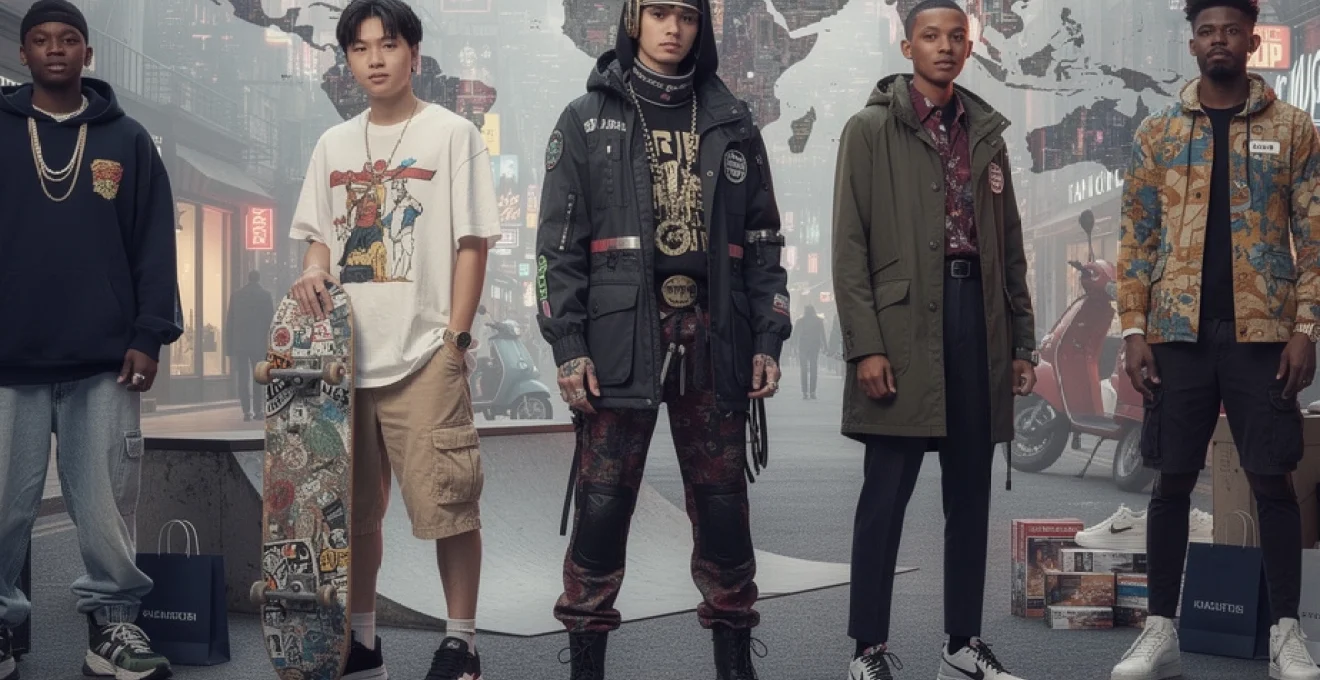
Streetwear has transformed from a collection of underground subcultures into a global fashion phenomenon worth over £185 billion, fundamentally reshaping how we understand style, identity, and cultural expression. What began as practical clothing for skateboarders and hip-hop artists in the 1970s has evolved into a sophisticated cultural language that transcends geographical boundaries, social classes, and traditional fashion hierarchies. This remarkable journey spans multiple continents, each contributing unique elements that have collectively created today’s dynamic streetwear ecosystem.
The streetwear movement represents more than mere fashion trends; it embodies a democratisation of style where authenticity and cultural relevance often outweigh traditional markers of luxury. From the graffiti-covered walls of New York’s South Bronx to Tokyo’s Harajuku district, streetwear has consistently challenged established fashion norms whilst creating new paradigms for cultural expression and commercial success.
Origins and foundational elements of global streetwear movements
The genesis of streetwear culture cannot be attributed to a single moment or location, but rather emerges from the convergence of multiple youth movements across different continents during the late 20th century. These foundational elements created a template that would later influence global fashion markets and redefine the relationship between street culture and high fashion.
Hip-hop culture’s influence on new york street fashion genesis
The South Bronx of the 1970s provided the crucible for what would become streetwear’s most influential foundational element. Hip-hop pioneers like Grandmaster Flash and Afrika Bambaataa didn’t merely create a new musical genre; they established a visual language that would resonate across continents. The oversized sportswear, bold graphics, and brand consciousness that characterised early hip-hop fashion created a template for authentic street style that valued accessibility over exclusivity.
This movement introduced the concept of cultural capital through fashion choices, where wearing the right brands or styling garments in specific ways communicated insider knowledge and community belonging. The relationship between Run-DMC and Adidas exemplifies this dynamic, transforming athletic wear into cultural statements that transcended their original functional purposes.
Skateboarding subculture integration with california streetwear aesthetics
California’s skateboarding scene of the 1970s and 1980s contributed essential DNA to streetwear culture through its emphasis on functionality, durability, and anti-establishment attitudes. Brands like Vans and later Stüssy emerged from this environment, creating clothing that could withstand the physical demands of skateboarding whilst expressing the rebellious spirit of its practitioners.
The DIY aesthetic inherent in skateboarding culture introduced hand-drawn graphics, custom modifications, and limited production runs that would later become hallmarks of premium streetwear brands. This approach to design and manufacturing created scarcity value long before it became a calculated marketing strategy, establishing authenticity through genuine grassroots development rather than corporate manufacturing.
Japanese Ura-Harajuku underground fashion revolution
Japan’s contribution to streetwear culture emerged from the underground fashion scenes of Tokyo, particularly in areas like Ura-Harajuku during the 1980s and 1990s. Japanese designers brought technical precision, attention to detail, and innovative fabric treatments that elevated streetwear from purely functional clothing to high-quality fashion statements.
Brands like A Bathing Ape (BAPE) and Undercover introduced Japanese craftsmanship standards to streetwear aesthetics, creating products that maintained street credibility whilst offering superior construction quality. This Japanese influence introduced the concept of limited edition culture and seasonal drops that would later become fundamental to global streetwear marketing strategies.
British mod and punk counterculture streetwear manifestations
Britain’s contribution to streetwear culture emerged through the mod and punk movements of the 1960s and 1970s, which introduced concepts of sartorial rebellion and subcultural identity expression through clothing. These movements demonstrated how fashion could serve as political and social commentary, influencing later streetwear brands to incorporate activist messaging and countercultural themes.
The British approach emphasised customisation, personalisation, and the mixing of
personal style with traditional British tailoring, sportswear, and second-hand pieces. Over time, brands like Fred Perry, Ben Sherman, and later Palace Skateboards and early London street labels absorbed this spirit, translating political dissent and working-class pride into wearable statements. This lineage explains why contemporary British streetwear often feels simultaneously sharp and subversive, pairing clean silhouettes with provocative graphics, slogans, and unexpected styling choices.
The DIY attitude of punk – custom patches, safety pins, handwritten slogans – anticipated the personalised streetwear jackets and hand-altered denim you see today. Mods brought an obsession with specific labels and “getting the details right”, a mindset that carries through to the modern sneakerhead’s focus on exact colourways and collaborations. When we talk about the evolution of streetwear culture across continents, the UK’s mod and punk scenes remind us that clothing has always been a battlefield for ideas, not just aesthetics.
Continental streetwear ecosystems and regional brand development
As streetwear matured from local scenes into a global industry, distinct continental ecosystems began to emerge. Each region developed its own mix of independent labels, luxury collaborations, and retail models, shaped by local culture, economics, and digital adoption. Understanding these ecosystems helps us see why a hype-driven drop in New York looks different from a luxury streetwear capsule in Milan or a community-led pop-up in Lagos.
Despite these regional differences, several common threads run through global streetwear development: a focus on authenticity, a preference for limited edition drops, and a constant feedback loop between online communities and physical spaces. Brands that succeed across continents tend to be those that can adapt to local tastes while maintaining a clear core identity. In effect, they speak a “global streetwear language” with a distinct regional accent.
North american hypebeast culture and supreme’s drop model strategy
In North America, the evolution of streetwear culture is inseparable from the rise of “hypebeast” culture and Supreme’s pioneering drop model. Supreme, founded in 1994 as a skate shop in New York City, perfected a formula based on scarcity, cultural credibility, and consistent storytelling. Weekly or seasonal drops of limited products created queues around blocks, fostered a sense of community, and fuelled an active resale market where items could sell for multiples of their original price.
This drop model rewired how young consumers thought about fashion: instead of waiting for seasonal collections, they began to anticipate specific release days and “cop” lists. As a result, the value of a hoodie or pair of sneakers became linked not just to materials or design, but to timing and perceived exclusivity. According to the Hypebeast Streetwear Impact Report, over half of surveyed consumers spend between $100–$500 per month on streetwear, with many prioritising footwear and limited drops over traditional apparel purchases.
Hypebeast culture, amplified by blogs, forums, and later social media, turned the act of buying streetwear into a social performance. You weren’t just purchasing a T-shirt; you were signalling your ability to navigate release calendars, join raffles, and understand niche brand references. For aspiring brands, the takeaway is clear: a strong drop strategy, built on authentic storytelling rather than artificial scarcity alone, can turn a local label into a continental phenomenon.
European luxury streetwear convergence through Off-White and fear of god
Europe’s streetwear ecosystem has evolved along a different but intersecting path, driven by the region’s deep-rooted luxury fashion heritage. Rather than starting solely from skate or hip-hop scenes, many European streetwear moments came from the top down, as luxury houses experimented with hoodies, sneakers, and logo-heavy designs. The convergence of luxury and street culture became especially visible through brands like Off-White and Fear of God, both of which bridged streetwear sensibilities with European high-fashion platforms.
Off-White, founded by Virgil Abloh, blurred the line between runway collections and graphic-driven streetwear. Its quotation-mark branding, diagonal stripes, and industrial belts became instantly recognisable symbols of “elevated streetwear”. Fear of God, while American in origin, found strong resonance in European boutiques and fashion weeks thanks to its premium fabrics, elongated silhouettes, and muted, almost monastic colour palettes. Both brands showed that streetwear could command luxury price points without abandoning its roots in youth culture.
This luxury streetwear convergence also influenced European maisons such as Balenciaga, Louis Vuitton, and Gucci, which integrated oversized sneakers, logo sweatshirts, and track pants into their collections. The result? A new category often labelled “luxury streetwear”, where the casual comfort of street style meets the craftsmanship and pricing of high fashion. For European consumers, especially millennials and Gen Z, this meant they no longer had to choose between tailoring and track tops; they could have both in a single outfit.
Asian streetwear manufacturing hubs and bathing ape’s cultural impact
Asia plays a dual role in the evolution of streetwear culture across continents: it is both a manufacturing powerhouse and a creative epicentre. On one hand, countries like China, Vietnam, and Bangladesh produce a significant share of global streetwear apparel and sneakers, enabling fast production cycles and competitive pricing. On the other, cities such as Tokyo, Seoul, and Shanghai function as style laboratories where new silhouettes, fabrics, and graphics are tested before spreading worldwide.
A Bathing Ape (BAPE), founded by Nigo in Tokyo in 1993, is central to this story. BAPE’s camouflage patterns, shark hoodies, and bold ape logo turned Harajuku into a pilgrimage site for global streetwear fans. The brand embraced limited drops long before they became industry standard, selling small runs through tightly controlled retail channels. This approach, combined with collaborations ranging from Pepsi to Adidas, helped BAPE become a cross-cultural symbol of Japanese streetwear ingenuity.
Beyond BAPE, the broader Asian streetwear ecosystem has diversified with labels like Undercover, Neighborhood, and Korean brands such as Ader Error and thisisneverthat. These brands often combine technical fabrics, experimental cuts, and references to local pop culture, K‑pop, and anime, then export these aesthetics through e-commerce and social media. The result is a feedback loop where Asia no longer just manufactures Western streetwear; it actively defines what global streetwear looks like.
Emerging african streetwear markets and lagos fashion week integration
While North America, Europe, and Asia have dominated streetwear headlines, the African continent has rapidly emerged as a crucial frontier in the culture’s evolution. Cities like Lagos, Johannesburg, Nairobi, and Accra are home to young, digitally savvy populations blending local heritage with global streetwear aesthetics. Here, bold prints, upcycled materials, and references to traditional textiles intersect with sneakers, hoodies, and graphic tees.
Lagos Fashion Week has become a key platform for this new wave of African streetwear designers. Brands such as Daily Paper (with roots in the African diaspora), WafflesNCream, and Orange Culture use runways and pop-ups to showcase collections that tell stories about identity, migration, and urban life. Rather than simply mimicking Western hypebeast culture, many African labels prioritise sustainability and community – reworking vintage garments, using local artisans, and grounding their narratives in African history and contemporary politics.
For global streetwear consumers, these emerging African markets offer fresh perspectives and silhouettes that challenge the dominance of Euro-American aesthetics. And for the industry as a whole, they signal a shift: the next wave of influential streetwear may well come from designers who grew up navigating both global Instagram trends and hyper-local cultural realities.
Digital transformation and social media amplification mechanisms
Streetwear’s rise from niche subculture to billion-pound industry would not have happened at this pace without digital transformation. Social media turned local scenes into global conversations, while e-commerce and resale platforms created new economic models around limited edition products. In many ways, the smartphone became as important to streetwear culture as the hoodie or sneaker, enabling real-time discovery, community building, and price tracking.
As we explore how digital tools amplified the evolution of streetwear culture across continents, it helps to think of the internet as both megaphone and marketplace. Platforms like Instagram and TikTok broadcast style inspirations, while sites such as StockX, Grailed, and Depop provide the infrastructure to buy and sell coveted pieces. Together, they’ve shifted power from traditional fashion gatekeepers to communities of fans, resellers, and creators.
Instagram influencer marketing and StockX resale platform dynamics
Instagram has been central to how streetwear trends spread globally. Influencers, musicians, and everyday users post “fit pics” that can turn a little-known hoodie into a must-have item overnight. Brands use the platform as a visual lookbook, revealing new drops, teasing collaborations, and sharing behind-the-scenes content that deepens their perceived authenticity. For many young consumers, scrolling through Instagram is the new window shopping.
At the same time, the resale platform StockX introduced a stock-market-style approach to sneakers and streetwear, listing real-time prices, sales histories, and bid/ask spreads. This transparency turned limited edition sneakers into measurable assets, not unlike shares or crypto tokens. When you can see that a shoe originally priced at £150 now trades consistently for £600, it changes how you think about buying and holding products: is it fashion, investment, or both?
These dynamics have pros and cons. On one hand, you, as a consumer, gain access to products that might never reach your local store. On the other, resale markups can price out grassroots fans and shift focus from creativity to speculation. Navigating this landscape often means deciding whether you want to wear your streetwear or treat it as a tradable commodity, a tension that sits at the heart of modern hype culture.
Tiktok’s role in democratising streetwear trend propagation
If Instagram is the curated gallery of streetwear, TikTok is the bustling marketplace where ideas spread at breakneck speed. Short-form video content – outfit transitions, styling tips, thrift hauls – has made it easier than ever for young creators to share their approach to street style with global audiences. One viral video can propel an independent designer, thrift store, or DIY customisation technique into the spotlight.
TikTok’s algorithm, which prioritises content over follower count, effectively democratises trend propagation. A teenager in Manila or Nairobi can influence how people dress in London or Los Angeles without ever setting foot in those cities. This shifts power away from big-budget campaigns and towards authentic, often low-production clips that resonate emotionally. Have you noticed how many new micro-trends – from “blokecore” to “gorpcore” – seem to originate on TikTok before appearing in magazines?
For streetwear brands, this environment presents both opportunity and challenge. They must move quickly, listening to community signals and experimenting with content formats, while avoiding the temptation to chase every fleeting trend. The most effective strategies lean into education and storytelling: showing how pieces are made, explaining cultural references, and inviting users to put their own spin on each item.
NFT integration and blockchain authentication in limited edition releases
Beyond social platforms, emerging technologies like blockchain and NFTs are reshaping how we think about scarcity and authenticity in streetwear. Counterfeit products have long plagued popular brands, but blockchain-based certificates and NFC chips embedded in garments or sneakers offer a way to verify provenance. By scanning a tag, you can confirm whether a piece is genuine and trace its ownership history, much like checking a car’s logbook.
NFTs (non-fungible tokens) extend this concept into the digital realm. Some brands now release physical-digital bundles: you buy a limited hoodie and receive a matching NFT that proves ownership or unlocks exclusive access to future drops and events. Think of it as a virtual membership card, combining bragging rights with real-world perks. For collectors, NFTs can function like trading cards; for brands, they provide new revenue streams and engagement channels.
Of course, NFT integration also raises questions around environmental impact, long-term value, and accessibility. As more sustainable blockchain technologies emerge, we’re likely to see NFT usage shift from speculative hype to practical tools for authentication, loyalty, and storytelling. The underlying idea – using decentralised ledgers to secure streetwear’s limited edition culture – is likely to stick, even if specific platforms rise and fall.
Cross-cultural design language translation and adaptation strategies
As streetwear circulates across continents, designers face a delicate task: how to translate cultural references for global audiences without diluting or misrepresenting their original meaning. A graphic that resonates deeply in Tokyo might require context in Berlin; a symbol tied to Nigerian heritage might be misunderstood in Los Angeles. Successful cross-cultural streetwear design functions like good translation – faithful to the source, yet sensitive to the target audience.
One effective strategy is collaboration with local creatives, from illustrators and musicians to community organisers. Rather than simply appropriating motifs, brands co-create collections that share profits and credits. Another approach is to use streetwear as a conversation starter: including small educational notes, zines, or digital content that explain the stories behind prints, phrases, and silhouettes. When you know the context of a design, wearing it feels less like costume and more like participation in a shared narrative.
We can think of global streetwear as a constantly evolving “visual language” made up of logos, cuts, fabrics, and references. Just as multilingual speakers switch codes depending on who they are talking to, many brands now adjust their design language by region – perhaps toning down certain colours, adapting sizing, or highlighting different cultural touchpoints. The key is to keep the core identity intact while allowing for genuine localisation, rather than superficial tweaks.
Economic impact and market valuation across global streetwear sectors
From a business perspective, the evolution of streetwear culture across continents has transformed it into one of the most powerful segments of the fashion industry. Estimates suggest that streetwear-related categories account for more than 10% of the global apparel and footwear market, translating into tens of billions of pounds annually. This growth is driven by a combination of high purchase frequency, strong brand loyalty, and the premium pricing of limited edition products.
Consumer surveys consistently show that dedicated streetwear buyers are willing to spend significantly more on hoodies, sneakers, and graphic tees than on non-streetwear items. Many report monthly spends in the £80–£400 range, with a notable subset comfortable paying £200–£400 for a single pair of limited sneakers. In some Asian markets, average spend per product is even higher, reflecting both higher disposable income in key urban centres and stronger cultural emphasis on fashion as social capital.
At the same time, the streetwear economy extends beyond primary sales into thriving resale, rental, and vintage markets. Platforms like StockX, GOAT, and regional marketplaces capture secondary value that often surpasses original retail revenue. For brands and investors, this layered economy – primary, secondary, and digital – presents complex questions: how do you measure true brand value when a significant percentage of profit flows through third-party resellers? And how do you ensure long-term relevance in a category where hype can be both asset and liability?
Future trajectory analysis and sustainable streetwear innovation pathways
Looking ahead, the next chapter in the evolution of streetwear culture across continents will likely be defined by sustainability, inclusivity, and technological integration. Younger consumers increasingly expect their favourite brands to address environmental impact, labour practices, and overproduction. The traditional model of endless drops and disposable hype is giving way – slowly but surely – to circular design thinking, repair services, and higher-quality garments built to last.
Many pioneering streetwear labels are already experimenting with organic cotton, recycled polyester, deadstock fabrics, and localised production to reduce carbon footprints. Upcycling – turning old garments into new, one-of-a-kind pieces – not only supports sustainability but also resonates with streetwear’s DIY roots. Imagine a future where owning a highly customised, upcycled jacket says more about your taste and values than having the latest mass-produced collaboration.
We can also expect further integration of digital tools: virtual try-ons, augmented reality experiences, and token-gated communities built around NFTs or membership passes. These technologies, when used thoughtfully, can reduce returns, strengthen community, and make limited releases fairer through verified raffles rather than bot-dominated checkouts. The challenge for brands will be to harness innovation without losing the raw, community-driven energy that made streetwear compelling in the first place.
Ultimately, the evolution of streetwear culture across continents shows no sign of slowing. As new scenes emerge in cities from São Paulo to Nairobi, and as existing hubs in New York, Tokyo, and London continue to reinvent themselves, streetwear will remain a vital canvas for expressing identity, politics, and creativity. The question is not whether streetwear will endure, but how each of us – as consumers, designers, or observers – will shape its next, more sustainable and inclusive, era.