
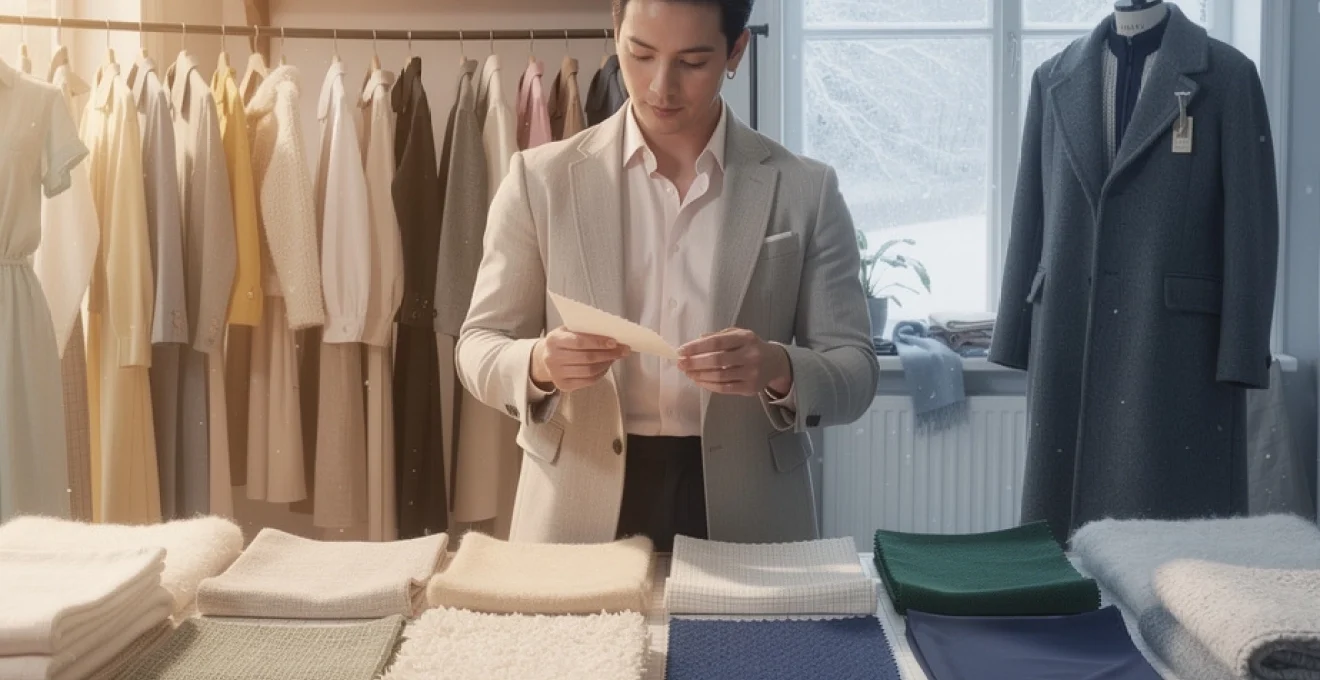
The relationship between fabric choice and seasonal comfort extends far beyond simple aesthetics. Understanding how different textile fibres respond to temperature variations, humidity levels, and weather conditions can transform your wardrobe from merely fashionable to genuinely functional. Modern fabric technology has evolved dramatically, offering sophisticated solutions that adapt to environmental changes whilst maintaining style and durability. Whether you’re designing a capsule wardrobe or selecting materials for specific seasonal applications, the science behind fabric behaviour provides crucial insights that influence both comfort and performance throughout the year.
Natural fibre properties and seasonal performance characteristics
Natural fibres have evolved over millennia to provide optimal performance characteristics that align remarkably well with seasonal requirements. These organic materials possess inherent properties that make them particularly suited to specific climate conditions, offering advantages that synthetic alternatives often struggle to replicate.
Cotton breathability metrics and summer heat management
Cotton’s cellular structure creates microscopic air pockets that facilitate exceptional air circulation, making it the gold standard for summer comfort. The fibre’s absorbent capacity allows it to wick up to 27% of its weight in moisture whilst maintaining its structural integrity. This characteristic proves invaluable during hot weather when perspiration management becomes critical for comfort.
Different cotton weaves produce varying levels of breathability performance. Percale weaves, with their one-over-one construction, offer superior air permeability compared to sateen weaves. Cotton lawn, weighing typically between 60-80 GSM, provides maximum cooling effect whilst maintaining adequate coverage. The fibre’s natural crimp structure creates additional airflow channels that enhance its cooling properties significantly.
Wool thermal regulation through crimped fibre structure
Wool’s remarkable temperature regulation capabilities stem from its unique crimped structure, which creates thousands of tiny air pockets that provide insulation whilst allowing moisture vapour to escape. This natural architecture enables wool to maintain comfortable body temperature across varying ambient conditions, making it suitable for both cool and moderately warm weather.
The lanolin coating on wool fibres provides natural water resistance whilst maintaining breathability. Merino wool, with its finer diameter (typically 18-24 microns), offers enhanced next-to-skin comfort compared to traditional wool variants. Research indicates that wool can absorb up to 35% of its weight in moisture vapour without feeling damp, a property that synthetic fibres cannot match.
Linen’s moisture wicking capacity and humidity control
Linen’s hollow fibre structure creates exceptional capillary action that rapidly transports moisture away from the skin surface. The flax plant’s natural adaptation to humid growing conditions has evolved fibres with superior moisture management properties, making linen particularly effective in high-humidity environments.
The loose weave commonly associated with linen fabrics enhances air circulation, creating a cooling effect through evaporative heat loss. Belgian linen, renowned for its quality, typically exhibits 20-30% better moisture absorption rates compared to cotton. The fabric’s natural stiffness, whilst initially perceived as a disadvantage, actually contributes to its cooling properties by maintaining airspace between fabric and skin.
Silk’s temperature adaptability and Year-Round versatility
Silk’s protein structure provides unique thermoregulatory properties that respond dynamically to ambient temperature changes. The triangular cross-section of silk fibres creates prismatic effects that reflect heat during warm conditions whilst providing insulation during cooler periods. This dual functionality makes silk remarkably versatile across seasonal transitions.
Mulberry silk, with its long continuous filaments, offers superior temperature regulation compared to wild silk varieties. The fabric’s natural elasticity allows it to expand and contract with temperature fluctuations, maintaining consistent comfort levels. Silk’s ability to absorb moisture whilst feeling dry against the skin makes it particularly suitable for layering systems that need to perform across varied conditions.
Synthetic fabric technologies for Climate-Specific applications
Contemporary synthetic fibres represent decades of engineering innovation focused on addressing specific performance requirements that natural fibres cannot fully satisfy. These manufactured materials offer controlled properties that can be precisely tailored to seasonal demands.
Polyester microfibre engineering for active summer wear
Modern polyester microf
ibre technology is engineered at the microscopic level to optimise moisture management and rapid drying. Filaments are extruded to extremely fine diameters, increasing surface area and capillary action so sweat is pulled away from the skin and spread across the fabric to evaporate quickly. This makes microfibre polyester particularly effective for active summer wear and high-intensity sports in hot climates.
Unlike older generations of polyester, modern performance knits incorporate mesh zones, venting panels and differential weaves to fine-tune airflow. When you are choosing fabrics for hot weather workouts, look for descriptors such as wicking, cool-touch or micro-perf in the fabric specification. These indicators usually signal enhanced breathability, reduced cling and lower drying times compared to standard polyester jersey.
Nylon’s durability standards in harsh weather conditions
Nylon is valued for its exceptional tensile strength and abrasion resistance, making it one of the most reliable options for garments exposed to harsh weather conditions. The fibre’s high resiliency means it can endure repeated flexing, friction and mechanical stress without significant degradation, which is crucial for outerwear, hiking trousers and technical shells. In controlled tests, nylon often outperforms polyester in tear strength, particularly in ripstop constructions designed for rugged use.
For season-specific applications, nylon’s low moisture absorbency (typically less than 4%) ensures it dries quickly after exposure to rain or snow. This characteristic is particularly beneficial for autumn and winter shells where you need robust weather protection that will not stay damp for hours. When evaluating nylon fabrics for seasonal wear, pay attention to denier ratings and coating specifications; higher denier counts generally indicate tougher yarns suited to heavy-duty applications.
Acrylic wool alternatives for winter insulation systems
Acrylic was originally developed to mimic the insulating properties and hand-feel of wool while improving certain performance aspects. Its hollow, lightweight fibres trap air efficiently, delivering impressive warmth-to-weight ratios that work well in winter knitwear, blankets and mid-layer garments. For those with wool sensitivities, acrylic offers a non-irritating alternative that can still provide substantial thermal insulation in cold climates.
However, acrylic does not manage moisture vapour as effectively as natural wool, which means it can feel clammy if you overheat. To maximise winter comfort, acrylic is often blended with wool, cotton or polyester to balance insulation with breathability and durability. If you are selecting synthetic knitwear for winter layering, look for blended compositions that use acrylic for bulk and warmth but rely on other fibres to improve moisture handling and longevity.
Spandex blend integration for seasonal stretch requirements
Spandex (also known as elastane) plays a supporting yet crucial role in seasonal fabric engineering by providing controlled stretch and recovery. On its own, spandex is rarely used as a standalone fabric; instead, small percentages (typically 2–10%) are blended with cotton, polyester, nylon or wool to enhance comfort, fit and freedom of movement. This is particularly valuable in fitted summer activewear, structured autumn trousers and flexible winter base layers.
From a seasonal perspective, the key is to consider how much stretch you actually need and in which zones of the garment. Lightweight summer leggings might use higher spandex content for full-range mobility, while tailored spring or autumn pieces often rely on modest bi-stretch blends for ease without distortion. Because spandex can be sensitive to heat and UV exposure, you should always follow care labels carefully; line-drying and low-heat washing will help preserve elasticity across multiple seasons.
Weave construction impact on seasonal fabric performance
Beyond fibre type, the way yarns are interlaced or knitted has a profound effect on how fabrics perform in different seasons. Two fabrics made from identical cotton fibres can behave completely differently in summer or winter simply because of their weave density, structure and surface texture. Understanding these construction variables helps you fine-tune your choices when comfort in specific weather conditions is a priority.
Open, loose constructions such as plain weaves, gauze and mesh promote airflow and rapid heat dissipation, which is ideal for summer clothing where breathability is essential. In contrast, tighter weaves like twill, satin and densely knitted jerseys reduce air permeability, improving wind resistance and heat retention for cooler months. When you are assessing fabric swatches, hold them up to the light: if you can see a lot of light passing through, the fabric will generally feel cooler and more suitable for warm seasons.
The surface character of the weave also influences seasonal comfort. Brushed twills, flannels and raised knits trap a layer of insulating air, making them perfectly suited to autumn and winter applications. Smooth, crisp constructions such as poplin, percale and high-thread-count sateen feel cooler against the skin because they sit closer and allow heat to escape more easily. By combining the right weave construction with appropriate fibre content, you can create targeted solutions for almost any climate scenario.
Fabric weight classifications and seasonal appropriateness
Whilst fibre content and weave structure set the baseline for performance, fabric weight often becomes the deciding factor in seasonal suitability. Weight is typically measured in grams per square metre (GSM), and understanding these classifications helps you compare options objectively. Think of GSM as the fabric equivalent of a garment’s “tog rating”: it gives you a quick indication of how light, mid-weight or heavy a textile will feel in real use.
Of course, GSM is only one part of the equation; a 200 GSM dense twill will behave very differently from a 200 GSM loose knit. However, as a general rule, lower GSM fabrics lend themselves to summer and hot climates, mid-weight materials excel in spring and autumn, and heavier textiles above 300 GSM come into their own during winter. If you frequently experience transitional weather or travel between climates, learning to read GSM values on product descriptions can dramatically improve your wardrobe planning.
Lightweight fabrics under 150 GSM for summer collections
Lightweight fabrics under 150 GSM are primarily designed to prioritise breathability, quick drying and minimal thermal retention. Common examples include cotton lawn, voile, chiffon, lightweight linen and fine modal or viscose blends. These materials allow heat to dissipate rapidly and minimise the risk of overheating, making them ideal for hot, humid conditions and high UV environments.
When curating summer collections or warm-weather travel wardrobes, aim to incorporate a variety of lightweight options that balance sheerness with coverage. For instance, a 70–90 GSM cotton lawn shirt provides excellent airflow for daytime wear, while slightly heavier 120–140 GSM linen or rayon can offer better drape for evening outfits. If you are sensitive to sun exposure, consider tightly woven but still lightweight fabrics, as they can provide improved UV protection compared to ultra-sheer options.
Medium-weight materials 150-300 GSM for transitional seasons
Medium-weight fabrics in the 150–300 GSM range form the backbone of most versatile, season-spanning wardrobes. This category includes chambray, poplin, denim shirting, mid-weight jersey, ponte knit, brushed cotton and lighter wool blends. These textiles provide enough substance to offer light insulation on cooler days while remaining breathable enough for mild temperatures, making them ideal for spring and autumn layering.
One of the key advantages of medium-weight fabrics is their adaptability to different styling strategies. A 200 GSM cotton twill can be worn as a standalone shirt in early autumn or layered under a jacket as temperatures drop. Similarly, mid-weight merino knitwear works as a primary layer in cool spring weather and transitions seamlessly into a mid-layer beneath winter coats. If you want to build a capsule wardrobe that performs across multiple months, focusing on this GSM range is an efficient strategy.
Heavy-weight textiles above 300 GSM for winter applications
Heavy-weight textiles above 300 GSM are engineered to provide substantial insulation and structural stability in cold conditions. Typical examples include heavy wool coatings, melton, thick flannel, felt, fleece, boiled wool and dense sweatshirt fleece. Their mass and fibre density help retain body heat, block wind and, in some cases, resist light precipitation, making them indispensable for winter outerwear and thermal mid-layers.
However, heavier is not always better if moisture management is neglected. To avoid feeling weighed down or overheated, it is wise to combine these heavy fabrics with lighter, breathable base layers made of merino, cotton or moisture-wicking synthetics. When you are evaluating winter fabrics for coats or jackets, pay attention not only to GSM but also to loft and fibre type: a lofty 320 GSM brushed fleece can feel warmer than a compressed 350 GSM cotton canvas with poor insulation properties.
Advanced textile treatments for enhanced seasonal functionality
Modern textile finishing technologies can dramatically alter how a fabric behaves across different seasons without changing its core fibre composition. These treatments range from simple mechanical processes, such as brushing or calendaring, to sophisticated chemical finishes that add water repellency, UV protection or antimicrobial properties. Used intelligently, they allow you to fine-tune fabrics for very specific climate and lifestyle requirements.
For wet or snowy conditions, durable water repellent (DWR) coatings create a hydrophobic surface that causes water to bead and roll off rather than soak in. This keeps outer layers lighter and drier, improving comfort in autumn storms and winter showers. In hot, sunny regions, UV-resistant finishes can increase a garment’s ultraviolet protection factor (UPF), helping shield your skin from harmful rays while maintaining breathability and comfort.
Moisture management treatments are particularly useful for performance wear and year-round base layers. Hydrophilic finishes draw sweat away from the body and spread it across the fabric surface to accelerate evaporation, much like how a high-performance towel works. Antimicrobial or odour-control finishes, often based on silver ions or plant-derived extracts, help keep garments fresher between washes—especially valuable in summer heat or for winter base layers that you may wear for multiple days on outdoor trips.
It is worth noting that not all treatments are permanent; some diminish after repeated laundering, which is why manufacturers sometimes specify an expected wash-life (for example, effective up to 30 washes). If you are investing in technical garments for demanding seasonal use, check the care instructions and any notes about reproofing products, especially for DWR-coated outerwear. By maintaining these finishes correctly, you can extend the functional lifespan of your seasonal wardrobe significantly.
Colour psychology and fabric selection for seasonal fashion cycles
While fibre science and construction determine how a fabric behaves, colour selection shapes how garments are perceived and how they interact with light and heat. Colour psychology suggests that we associate certain shades with specific moods and seasons—pastels with spring, bright tones with summer, earth tones with autumn and deep jewel colours with winter. These associations influence not only style decisions but also how comfortable you feel wearing particular colours at different times of the year.
From a practical standpoint, colour also affects thermal comfort through light absorption and reflection. Light colours such as white, beige and pale blue reflect a significant portion of solar radiation, helping to keep summer garments cooler in direct sunlight. Darker hues, including black, navy and charcoal, absorb more heat, which can actually be beneficial in cold, low-sun environments where every bit of warmth helps. When you are planning a seasonally balanced wardrobe, it can be helpful to align your colour palette with both psychological and thermal considerations.
In transitional seasons, mid-tone colours and layered palettes offer visual and functional flexibility. For example, combining a light base layer with a mid-tone cardigan and a darker jacket allows you to adjust not only insulation but also the visual weight of your outfit as the day progresses. Textured fabrics, such as heathered jerseys, tweeds or slubbed linens, add depth to solid colours, making them feel more seasonally nuanced without relying on prints.
Finally, colour fastness and dye stability become important technical factors, especially for pieces exposed to strong sun, frequent washing or harsh winter conditions. High-quality reactive dyes on cotton and solution-dyed synthetics tend to resist fading better than cheaper pigment dyes, preserving both appearance and perceived quality over multiple seasons. By considering how colour interacts with fabric properties, climate and your own style preferences, you can create a wardrobe that not only performs well year-round but also feels aligned with the natural rhythm of seasonal fashion cycles.