
Selecting the perfect metal for your jewellery extends far beyond personal preference—it’s an art form rooted in understanding how different metals interact with your unique complexion. The right choice can illuminate your natural radiance, enhance your features, and create a harmonious balance that elevates your entire appearance. With the jewellery industry worth over £340 billion globally, consumers are increasingly seeking personalised guidance to make informed decisions that complement their individual characteristics.
The science behind metal selection involves analysing subtle colour variations beneath your skin’s surface, known as undertones. These permanent pigmentations remain consistent throughout your lifetime, regardless of seasonal changes or sun exposure. Professional stylists and colour analysts have developed sophisticated methods to identify these undertones, enabling precise recommendations for metal choices that create visual harmony between your natural colouring and your jewellery collection.
Understanding skin undertones: warm, cool, and neutral classifications
Skin undertones represent the subtle hues that exist beneath your surface complexion, functioning as the foundation for all colour harmony decisions in fashion and jewellery. Unlike your surface skin tone, which can fluctuate with seasons, sun exposure, or age, undertones remain constant throughout your lifetime. These underlying pigmentations fall into three primary categories: warm, cool, and neutral, each requiring different metal considerations for optimal aesthetic appeal.
The complexity of undertone analysis extends beyond simple categorisation. Professional colour consultants recognise that undertones can vary in intensity and sometimes present as combinations of multiple classifications. This nuanced understanding explains why some individuals find certain metals universally flattering while others must be more selective in their choices. The key lies in identifying the dominant undertone characteristics that influence how metals reflect light against your skin.
Identifying warm undertones through yellow and golden pigmentation
Warm undertones manifest through yellow, golden, peachy, or olive hues beneath the skin’s surface. Individuals with warm undertones typically tan easily without burning extensively, and their natural hair colour often contains golden or reddish highlights. The presence of these undertones creates a natural affinity with metals that share similar warm characteristics, particularly yellow gold and rose gold variations.
Professional identification of warm undertones involves several assessment techniques. The vein test remains the most accessible method—examine the veins on your inner wrist under natural lighting. Warm undertones typically display greenish or olive-coloured veins, contrasting with the blue or purple veins associated with cool undertones. Additionally, warm-undertoned individuals often find that clothing in earthy tones like rust, olive green, and warm browns enhance their natural complexion vibrancy.
Recognising cool undertones via pink and blue pigment analysis
Cool undertones present through pink, red, or blue pigmentations beneath the skin’s surface, creating a natural foundation that harmonises beautifully with silver-toned metals. Individuals with cool undertones frequently burn before tanning and often possess hair with ashy or blue-based highlights rather than golden ones. These characteristics create an inherent compatibility with metals like sterling silver, platinum, and white gold.
The identification process for cool undertones requires careful observation under various lighting conditions. Beyond the traditional vein assessment, consider how your skin responds to different fabric colours. Cool-undertoned individuals typically appear more radiant in jewel tones such as emerald, sapphire, and amethyst, while warm colours can sometimes create a washed-out appearance. This colour sensitivity extends to metal selection, where cool-toned metals enhance the natural brightness of the complexion.
Neutral undertones: balanced pigmentation assessment techniques
Neutral undertones represent a balanced combination of warm and cool pigmentations, creating exceptional versatility in metal selection. Individuals with neutral undertones often find that both gold and silver metals appear equally flattering, providing them with the freedom to choose based on personal preference, occasion, or current fashion trends. This balanced pigmentation occurs in approximately 30% of the population, making it a significant consideration for jewellery retailers and consumers alike.
Identifying neutral undertones requires a process of elimination rather than positive identification. If the vein test reveals a mixture of green and blue colours, or if both warm and cool clothing
colours seem to flatter you equally, you are likely in the neutral category. Another indicator is how your skin appears against pure white versus cream fabrics—if both look equally harmonious, your undertone balance is probably neutral. This balanced pigment distribution means you can use metal choice strategically: silver to create a crisp, contemporary look one day, and rich yellow gold for a softer, more traditional aesthetic the next.
Professional colour analysis methods using natural light evaluation
While home tests are useful, professional colour analysis offers a more precise approach to determining which jewellery metals suit your skin tone best. Certified image consultants typically conduct assessments in natural daylight or daylight-simulating environments to avoid colour distortion caused by artificial lighting. They evaluate your skin, eye, and natural hair colour in combination, rather than isolating any single feature.
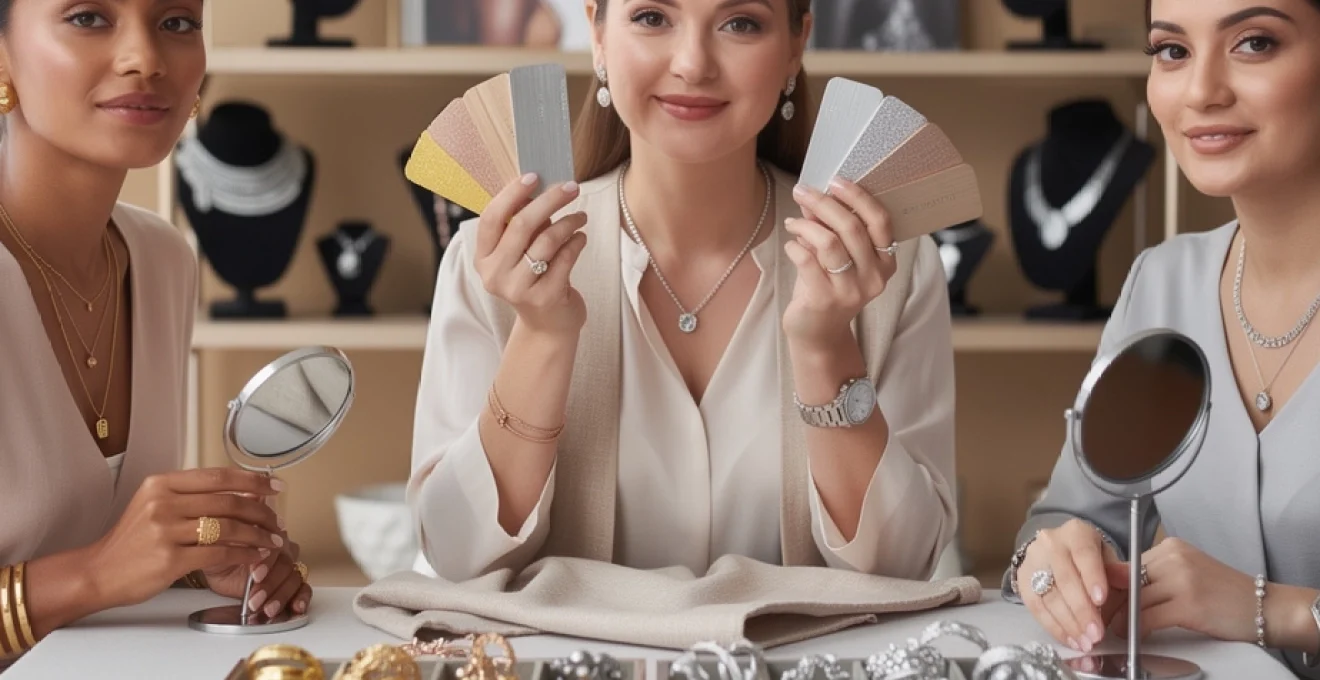
During a professional session, fabric draping is often used: cool, warm, and neutral-coloured textiles are placed around your face to observe how your complexion responds. This process highlights whether your skin appears brighter, smoother, and more rested—or dull and shadowed—under different colour temperatures. The same principle is then applied to metal samples, enabling highly accurate recommendations for gold or silver jewellery that harmonises with your undertone and overall colouring.
Gold jewellery compatibility with different skin undertones
Gold jewellery has been associated with luxury and status for millennia, but from a colour theory perspective, its true power lies in the way it interacts with skin undertones. Modern jewellers work with a spectrum of gold alloys—from pale champagne tones to deep, saturated yellow and blush-toned rose gold—each producing a distinct visual effect. Understanding how these variations behave against warm, cool, and neutral complexions helps you build a jewellery collection that looks considered rather than random.
Crucially, gold is rarely used in its pure 24-carat form for everyday jewellery. Instead, it is alloyed with metals such as copper, silver, and palladium to increase durability and alter colour temperature. A higher gold content (18k versus 9k, for example) typically results in a richer, warmer appearance, which can either enhance or overwhelm certain skin tones. By aligning carat weight, gold colour, and skin undertone, you can fine-tune how your jewellery frames your face and hands.
Yellow gold enhancement for warm undertone complexions
Yellow gold is the natural ally of warm undertone complexions, echoing the golden and peach pigments present beneath the skin. When you place yellow gold against warm-toned skin, the result is often a cohesive, sunlit effect that appears both luxurious and effortless. This is particularly evident on individuals with olive, tan, or deeper golden skin, where yellow gold amplifies the natural warmth rather than competing with it.
From a styling perspective, warm undertones can comfortably explore a broad range of yellow gold intensities. Higher carat gold, such as 18k or 22k, tends to look especially opulent on warm skin, while 9k and 14k offer a slightly cooler, more muted tone that can feel modern and understated. If you gravitate towards earthy wardrobes—think camel, rust, terracotta, and forest green—yellow gold jewellery will often feel like a seamless extension of your personal aesthetic.
Rose gold versatility across multiple skin classifications
Rose gold occupies a unique position in metal colour theory, sitting between the warmth of yellow gold and the neutrality of certain silver alloys. Its soft pink hue, created by blending gold with copper, allows rose gold to complement a wide variety of skin undertones. On warm complexions, rose gold behaves like a subtle blush, adding freshness and dimension without overwhelming the skin’s natural golden tones.
Interestingly, rose gold can also flatter many cool and neutral skin types, particularly when the underlying pink or blue pigments are not overly pronounced. On neutral undertones, rose gold appears romantic and contemporary, making it a popular choice for engagement rings and everyday fine jewellery. However, if your skin leans very cool with noticeable redness or rosiness, heavily saturated rose gold can sometimes intensify those tones. In such cases, opting for paler rose gold alloys or pairing rose gold with cooler stones—like morganite or pale sapphire—can restore balance.
White gold considerations for cool-toned skin types
White gold is frequently recommended for cool-toned skin because its icy, reflective surface mirrors the blue and pink pigments present beneath the complexion. In practice, white gold often delivers a similar visual impact to sterling silver or platinum, but with the durability and prestige associated with gold. For individuals who burn easily, have ashy or cool brown hair, or look best in jewel-tone clothing, white gold jewellery can provide a brightening, almost spotlight effect.
However, not all white gold is created equal. Most white gold pieces are plated with rhodium to achieve their luminous, chrome-like finish. Over time, this plating can wear and reveal the slightly warmer base alloy, subtly changing how the metal interacts with your undertone. If you have very cool skin and want to maintain that crisp contrast, periodic re-plating is advisable. For neutral undertones, a faint hint of warmth in white gold can actually be advantageous, softening the contrast while still keeping the overall look refined.
Vintage gold patinas and their undertone interactions
Vintage and antique gold pieces often develop a natural patina—a softening of colour and shine that comes from decades of wear. This patina can slightly mute the brightness of yellow or rose gold, shifting the metal closer to a neutral temperature. For many people, especially those with neutral or softly cool undertones, this aged finish provides an unexpectedly flattering effect, offering warmth without overwhelming the skin.
On warm complexions, patinated gold enhances the sense of depth and character, much like a sepia filter softens harsh contrasts in photography. Cool-toned individuals who find high-polish yellow gold too intense may discover that vintage gold—with its subtle, lived-in glow—creates a much more wearable balance. If you are drawn to heirloom jewellery or pre-owned pieces, pay attention to how the softened metal tone interacts with your skin; you may find that vintage patina effectively broadens the range of gold colours you can wear comfortably.
Silver metal variants and skin tone harmonisation
Silver-toned metals—ranging from classic sterling silver to high-end platinum—are renowned for their ability to create clean lines and modern visual clarity. For many wearers, especially those with cool undertones, these metals act like natural reflectors, brightening the complexion and enhancing eye colour. Yet silver variants are far from one-dimensional: differences in alloy composition, surface treatment, and finish can significantly alter how the metal behaves on different skin tones.
In contemporary jewellery design, silver and its relatives are often chosen for minimal, architectural pieces that emphasise form and negative space. When matched correctly to your undertone, these metals can make diamonds appear whiter, coloured gemstones more saturated, and everyday outfits more polished. The key is understanding how each silver variant—sterling, platinum, rhodium-plated alloys, and oxidised finishes—interacts with warm, cool, and neutral complexions.
Sterling silver brilliance on cool undertone complexions
Sterling silver remains a cornerstone of modern jewellery, prized for its bright sheen and accessibility. On cool undertone complexions, its naturally chilly, blue-leaning reflection tends to amplify clarity and radiance, particularly around the face. This is why cool-toned individuals often find that simple sterling silver hoops or a sleek chain necklace can make their skin appear more even and luminous.
From an optical perspective, sterling silver behaves like a soft-focus filter for cool skin tones, echoing the internal pigments rather than competing with them. If you notice that you look especially awake and refreshed in cool colours like navy, charcoal, or icy pastels, sterling silver is likely to be a flattering everyday choice. For warm undertones, sterling silver can still be worn successfully, especially when paired with warmer gemstones or layered with gold to prevent the metal from feeling too stark.
Platinum premium appeal for neutral skin classifications
Platinum is often positioned as the pinnacle of silver-toned metals, valued for its density, durability, and naturally white finish. Unlike many white gold alloys, platinum does not require rhodium plating to achieve its cool sheen, which means its colour remains consistent over time. For neutral undertones, this stability can be a major advantage, offering a reliable, balanced backdrop that doesn’t drift too far into icy or overly warm territory.
Because platinum has a slightly softer, greyer cast than highly polished rhodium-plated metals, it tends to suit a wide spectrum of complexions. On neutral skin, it reads as quietly luxurious and subtly flattering, particularly in engagement rings and fine bracelets worn daily. If you enjoy both gold and silver jewellery, platinum can also serve as a bridge between the two, sitting comfortably alongside yellow or rose gold in mixed-metal stacks without clashing.
Rhodium plating effects on silver jewellery appearance
Rhodium plating has become a standard finishing technique in contemporary jewellery, used to enhance the brightness and durability of white gold and some silver pieces. Rhodium itself is a member of the platinum family, known for its mirror-like reflectivity and extremely cool colour temperature. When applied over a base metal, it can significantly sharpen the visual contrast between jewellery and skin, particularly on cool undertone complexions.
For wearers with very warm or strongly golden undertones, highly reflective rhodium finishes can feel a touch severe, especially in large, uninterrupted surfaces. In these cases, choosing designs that break up the metal with gemstones, texture, or open space can prevent the look from becoming too stark. Over time, rhodium plating may thin and reveal the slightly warmer base beneath; you might even find that this gradual softening improves the harmony with your skin tone, much like a tailored jacket becoming more flattering as it moulds to your shape.
Oxidised silver finishes and warm undertone compatibility
Oxidised silver—sometimes called blackened silver—is created by intentionally darkening the surface of sterling silver to produce a charcoal or gunmetal effect. This finish dramatically alters how silver interacts with the skin, shifting it from a cool reflector to a deeper, more neutral or even warm-leaning presence. For many warm undertone wearers who find bright silver too icy, oxidised silver offers an appealing alternative that feels richer and more grounded.
On warm complexions, the shadowy quality of oxidised silver can create a sophisticated, almost editorial effect, especially when combined with organic textures or sculptural forms. Think of it as the jewellery equivalent of a soft, smoky eyeliner—it defines without overwhelming. Neutral undertones also tend to pair well with oxidised silver, particularly in casual or bohemian-inspired designs. If you are experimenting with darker metals for the first time, start with smaller pieces around the wrist or ears to gauge how the finish interacts with your natural colouring.
Celebrity style analysis: gold versus silver metal choices
Observing how celebrities and public figures use gold and silver can offer valuable clues about matching jewellery metals to skin tone. Stylists working with high-profile clients often rely on the same undertone principles discussed earlier, using metal choice to enhance red-carpet looks under intense lighting. For example, stars with cool undertones are frequently styled in platinum or white gold settings that magnify the brilliance of diamonds and cool-toned gemstones, ensuring their features remain sharp and defined on camera.
Conversely, celebrities with warm or olive skin are often seen in rich yellow and rose gold pieces that echo their natural glow. Think of how yellow gold cuffs and layered chains can transform a simple black dress into something dramatically warm and luxurious. Neutral-undertoned icons tend to move fluidly between both camps, sometimes even wearing mixed metals within a single look to create depth and visual interest. When you study these choices, you are essentially seeing undertone theory applied in real time on global stages.
Professional skin tone testing methods for metal selection
For clients investing in significant pieces—such as engagement rings, heirloom-quality necklaces, or corporate gifts—many jewellers now incorporate basic colour analysis into their consultations. This may include examining the inner wrist under natural light, comparing how the skin appears against silver versus gold sample pieces, and noting responses to different gemstone colours. The objective is not to impose strict rules, but to identify which metals make the skin appear brighter, more even, and more energised.
Some luxury boutiques collaborate with professional colour analysts or image consultants to offer more in-depth sessions. These can involve digital photography under controlled lighting, software-assisted tone mapping, or extended draping exercises. While this level of analysis may not be necessary for everyday purchases, it can be invaluable when choosing jewellery intended to be worn daily for decades. Ultimately, professional testing refines your intuition, giving you the confidence to select gold or silver jewellery that consistently flatters you, regardless of changing trends.
Mixed metal jewellery strategies for versatile styling
Once you understand which metals best align with your skin undertone, the next step is learning how to combine them intentionally. Mixed metal jewellery—pairing gold with silver, or layering white, yellow, and rose gold—has evolved from a style faux pas into a hallmark of modern, personalised dressing. For neutral undertones, this approach is especially easy to pull off, but even strongly warm or cool skins can benefit from strategic mixing to create balance.
One effective strategy is to choose a “dominant” metal that aligns with your undertone, then introduce a secondary metal in smaller proportions. For instance, if silver is your most flattering choice, you might wear a platinum engagement ring and sterling bracelet as your base, then add a fine yellow gold pendant or stacking ring for warmth. Think of metals as you would lighting in a room: the main source should be flattering and consistent, while accent lights add depth and character without overwhelming the scene.