
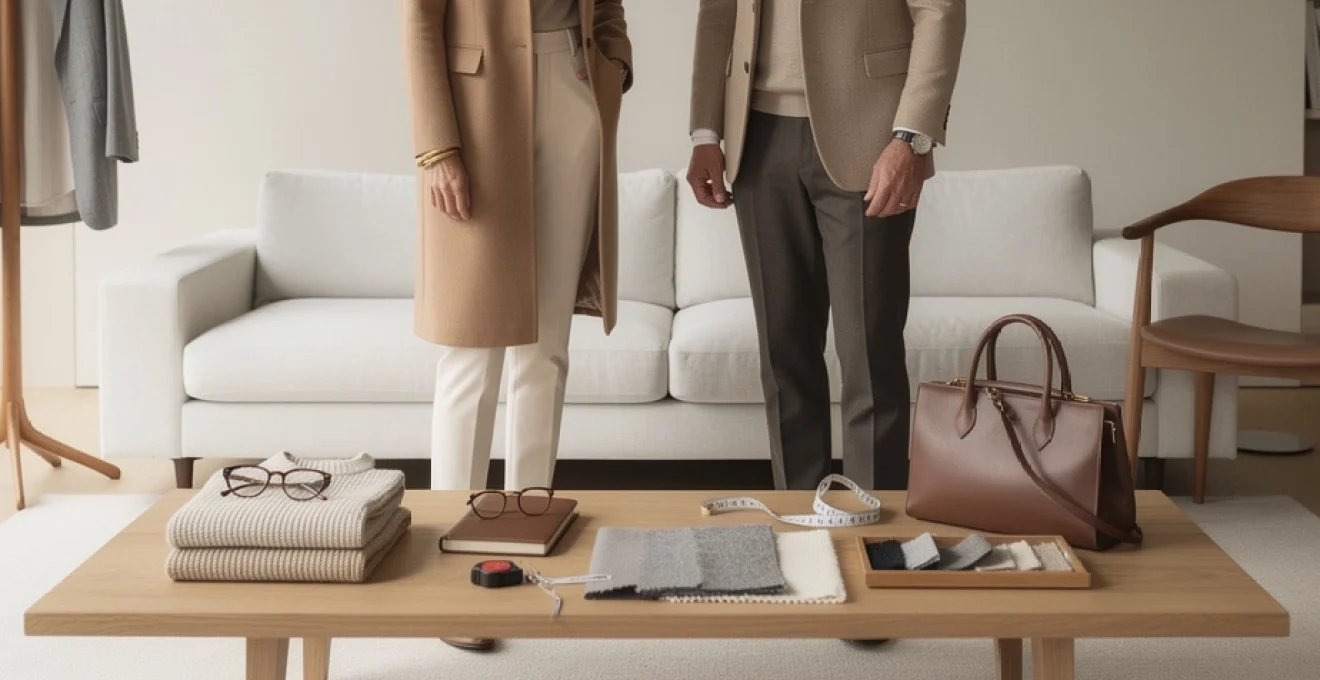
The fashion landscape has undergone a seismic transformation in recent years, moving away from the logo-saturated designs that dominated the previous decade. This shift represents far more than a simple aesthetic preference—it signals a fundamental recalibration of how contemporary consumers perceive value, craftsmanship, and status. Quiet luxury, also known as stealth wealth, has emerged as the defining philosophy of sophisticated dressing, prioritising impeccable quality and subtle refinement over ostentatious branding. As you navigate your wardrobe choices today, you’re witnessing a cultural movement that champions whispered elegance over shouted affluence, where a perfectly woven cashmere jumper speaks volumes more than any embossed logo ever could.
Stealth wealth aesthetics: how minimalist design language replaced Logo-Centric fashion
The fluorescent glow of monogrammed accessories that illuminated the 2010s has definitively dimmed. What began as subtle undercurrents in niche fashion circles has evolved into a mainstream movement that fundamentally challenges traditional luxury markers. Stealth wealth aesthetics represent a deliberate inversion of conspicuous consumption, where the absence of visible branding becomes the ultimate status symbol. This design philosophy speaks through texture, construction, and proportion rather than recognisable emblems.
The transformation became culturally undeniable when high-profile moments showcased this aesthetic shift. Sofia Richie Grainge’s wedding imagery, which went viral across social platforms, exemplified restrained confidence through minimalist Chanel and Dolce & Gabbana designs devoid of obvious branding. Similarly, Gwyneth Paltrow’s courtroom appearances during her ski trial demonstrated how carefully tailored, logo-free ensembles could communicate authority more effectively than any traditional power dressing. These weren’t merely personal styling choices—they were cultural statements that resonated with millions seeking alternatives to maximalist fashion.
According to a 2023 McKinsey report, 62% of luxury consumers now prioritise quality over recognisability, a significant increase from 41% in 2019. This statistical shift reveals a profound psychological transformation in how you and other discerning consumers evaluate luxury purchases. Fashion psychologists attribute this evolution to post-pandemic reevaluations of consumption patterns, where authenticity and craftsmanship have replaced marketing-driven desirability. The stealth wealth movement creates what industry insiders call a “sartorial secret handshake”—an unspoken code recognisable only to those with refined aesthetic sensibilities.
The most compelling statements in contemporary fashion are often made in silence, where whispers carry more weight than shouts.
Brands like Bottega Veneta have masterfully embraced this philosophy, with their signature intrecciato weave pattern serving as a subtle identifier that requires no external branding. The Row’s leather totes, commanding prices exceeding £4,000, bear no visible logos yet remain instantly recognisable to cognoscenti. This approach democratises exclusivity paradoxically—whilst the price points remain elevated, the aesthetic speaks to those who value craft over brand name recognition. You’re investing in pieces that communicate through what’s absent rather than what’s emblazoned across their surface.
The brunello cucinelli philosophy: craftsmanship over branding in contemporary luxury
Italian luxury house Brunello Cucinelli stands as perhaps the most articulate embodiment of quiet luxury principles. Founded in 1978 in the medieval hamlet of Solomeo, the brand has constructed an entire business philosophy around humanistic capitalism—a concept that places craftsmanship, ethical production, and timeless design above profit maximisation. When you purchase a Cucinelli garment, you’re not simply acquiring clothing; you’re investing in a philosophical approach to luxury that prioritises longevity and artisanal tradition.
Cashmere manufacturing techniques and artisanal production methods
Brunello Cucinelli’s reputation rests significantly on its exceptional cashmere manufacturing processes. The brand sources the finest fibres from Mongolian goats, selecting only the undercoat hairs that measure between 14.5 and 15.5 microns in diameter—the optimal range for combining
the highest softness, warmth and durability. Once the raw cashmere is collected, it undergoes a painstaking de-hairing, combing and spinning process designed to preserve the integrity of each fibre. Rather than chasing speed or volume, Cucinelli’s workshops favour small-batch production and meticulous hand-finishing, ensuring that every seam, stitch and ribbing detail feels considered. This artisanal production approach is the antithesis of fast fashion; it is closer to how a fine instrument is crafted than how typical knitwear is manufactured.
For you as a consumer, this translates into knitwear and tailoring that retain their shape, colour and hand-feel season after season. While the initial outlay is undeniably high, the cost per wear of a Cucinelli cashmere jumper or blazer often undercuts cheaper alternatives that pill, distort or date quickly. You are not paying for a logo splashed across the chest but for a garment that becomes a loyal companion in your wardrobe, capable of moving seamlessly from weekday meetings to weekend escapes. In the quiet luxury universe, this emphasis on longevity and tactility is the new definition of value.
Solomeo’s humanistic capitalism model and its influence on luxury markets
What truly sets Brunello Cucinelli apart is its base in Solomeo, a restored medieval village that functions as both company headquarters and philosophical manifesto. Cucinelli’s concept of humanistic capitalism places human dignity at the centre of production, from fair wages and reasonable working hours to investing heavily in the cultural and architectural restoration of the town itself. Employees work in light-filled ateliers overlooking Umbrian hills, a far cry from the anonymous industrial units that typify much of the global supply chain.
This model has become a case study in how quiet luxury brands can align profit with purpose. By publicly committing a share of profits to philanthropic and cultural projects, Cucinelli reframes luxury consumption as a form of patronage rather than pure self-indulgence. Is it any wonder that affluent clients increasingly gravitate toward labels that can tell this kind of story? In a marketplace saturated with product, brands that embody coherent values stand out, even when their aesthetics remain deliberately discreet.
Humanistic capitalism also exerts a subtle but powerful influence on the wider luxury market. Competitors are under pressure to demonstrate similar commitments to worker welfare, heritage preservation and local communities, or risk being perceived as hollow. As you build a modern elegant wardrobe, asking where and how your garments are made becomes as important as asking what they are made from. In this sense, Solomeo functions as both a physical place and a blueprint for the future of ethical, quiet luxury.
Neutral colour palettes and tonal dressing strategies
A key visual signature of quiet luxury is its reliance on neutral colour palettes and tonal dressing. Think layers of stone, camel, charcoal, navy and soft white, combined in ways that create depth without drama. Brunello Cucinelli is a master of this strategy, frequently presenting head-to-toe looks in variations of taupe or greige that appear simple at first glance but reveal subtle shifts in texture and undertone on closer inspection. This is minimalist design language at its most sophisticated.
Why do these muted palettes feel so modern? Neutrals act as visual noise-cancelling headphones, reducing distraction and allowing silhouette and material to take centre stage. They also dramatically increase your wardrobe’s versatility, as most pieces work seamlessly together. If you want to experiment with tonal dressing, start by anchoring your quiet luxury outfits around two or three core hues—perhaps camel, cream and chocolate—and build out from there with knitwear, tailored trousers and outerwear in complementary shades. Over time, you will notice how much easier it becomes to get dressed, and how elevated even the simplest combination can feel.
Tonal dressing also helps shift attention from “what brand is that?” to “how is that put together?”. When your outfit is composed of quiet neutrals, the eye notices fit, fabric and proportion. A perfectly cut pair of flannel trousers or a double-faced wool coat suddenly becomes the protagonist, without any need for visible branding. In the context of modern elegance, this restrained chromatic approach is one of the most effective ways to embody stealth wealth aesthetics in everyday life.
Investment dressing: cost-per-wear analysis in premium wardrobe building
Quiet luxury encourages you to think like an investor rather than an impulse shopper. Instead of asking “How much does this cost today?”, the more relevant question becomes “How often will I wear this, and how long will it last?”. This is where the concept of cost per wear becomes invaluable. A £1,200 cashmere coat worn three times a week for six months of the year, over five years, works out at less than £1.60 per wear—often cheaper than a £150 trend-driven piece you wear twice and then abandon.
To apply investment dressing principles, start by identifying the categories where premium quality makes the greatest difference: outerwear, footwear, knitwear and tailoring. These are the backbone of a quiet luxury wardrobe and the items that suffer most from poor fabrication or construction. It can help to think of your closet as a well-curated portfolio: a few high-performing “blue-chip” pieces (like a camel coat or cashmere crewneck) form the foundation, supported by mid-range basics and a minimal number of carefully chosen seasonal accents.
Of course, not every purchase can sit at Brunello Cucinelli’s price point, and that is not the goal. The aim is to recalibrate your buying habits towards fewer, better things, and to use cost-per-wear analysis as a rational anchor in a world of emotional marketing. When you pause to calculate how many times you are likely to wear a piece and how it integrates with what you already own, quiet luxury shifts from being an elusive aesthetic to a practical strategy for building a modern, elegant wardrobe that actually serves your life.
Architectural influences: scandinavian functionalism and japanese wabi-sabi in fashion
Quiet luxury does not exist in a vacuum; it draws heavily from architectural and design movements that also celebrate restraint, function and serenity. Scandinavian functionalism and Japanese wabi-sabi are two particularly potent influences. Both champion the idea that beauty emerges from purpose, material honesty and a certain calm clarity of line. In fashion, this translates into garments that feel like wearable architecture—clean silhouettes, thoughtful details, and a distinct absence of visual clutter.
When we speak of quiet luxury as “new-age minimalism”, we are often unconsciously referencing these design lineages. Scandinavian design contributes the emphasis on practicality and ease—clothes that work across multiple contexts and climates—while wabi-sabi introduces a poetic appreciation of imperfection and patina. Together, they foster an aesthetic where a slightly rumpled linen shirt or a softened leather loafer is not a flaw but evidence of a life well lived. For those seeking modern elegance that feels grounded rather than sterile, this fusion is compelling.
Margareta van den bosch’s COS design principles
Few brands have translated Scandinavian design principles into accessible fashion as successfully as COS, largely thanks to the influence of former creative director Margareta van den Bosch. Her design philosophy centred on clean lines, functional details and a muted palette, echoing the tenets of Nordic architecture. Instead of chasing fleeting trends, COS collections under her guidance focused on modular pieces that could be layered, reconfigured and worn across seasons—a capsule wardrobe approach that predates the current quiet luxury boom.
Van den Bosch’s work illustrates how minimalist design language can feel both democratic and elevated. By stripping garments back to their essential shapes—boxy shirts, cocoon coats, wide-leg trousers—she made it easier for you to focus on proportion and styling. In many ways, COS acted as a gateway for a generation of consumers to experiment with stealth wealth aesthetics at an attainable price point. The brand’s success proved that there was a substantial appetite for clothing that looks architecturally considered without relying on overt branding.
For your own wardrobe, borrowing from these COS design principles means prioritising cut and versatility over decoration. Ask yourself: does this piece work with at least three items I already own? Can it be dressed up and down with minimal effort? Can I imagine wearing it several years from now without it feeling dated? When the answer is yes, you are probably looking at a quiet luxury staple, whether or not it comes from a traditional high-end label.
Issey miyake’s technical fabric innovation and timeless silhouettes
On the Japanese side of the spectrum, Issey Miyake represents a different but complementary strand of quiet luxury. Rather than relying on conventional notions of refinement, Miyake’s work explores how technology and fabric innovation can create timeless silhouettes that transcend trend cycles. His iconic Pleats Please line, for instance, uses heat-set pleating techniques to produce garments that are lightweight, wrinkle-resistant and extraordinarily comfortable, yet visually striking in their simplicity.
What makes Miyake relevant to the conversation around modern elegance is his refusal to compromise function for spectacle. The clothes are designed to move with the body, to travel well, and to accommodate a wide range of shapes and sizes—values that align closely with contemporary desires for inclusivity and practicality. The silhouettes may appear sculptural, but they are anything but precious; you can roll a pleated dress into a suitcase and unpack it ready to wear. This marriage of technical innovation and ease is a different form of stealth wealth, one that prizes intelligent design over overt opulence.
If you are drawn to quiet luxury but worry that it risks becoming too safe or monotonous, Miyake’s work offers an inspiring counterpoint. It shows that you can embrace minimalism and neutral palettes while still playing with volume, texture and movement. A single unconventional yet timeless piece—a pleated trouser, a sculpted coat—can act as a focal point in an otherwise understated wardrobe, adding depth without breaking the overall sense of calm.
Kinfolk aesthetics and their impact on modern luxury consumption
Beyond individual designers, the broader cultural shift toward quiet luxury has been shaped by what is often called the Kinfolk aesthetic. Originating from the eponymous magazine, this visual language favours muted colours, natural materials, negative space and a sense of unhurried living. Think sunlit kitchens with linen curtains, rough ceramics on pale wooden tables, and impeccably simple outfits photographed against blank walls. It is an aesthetic that romanticises slowness, intention and authenticity.
This imagery has proven profoundly influential on how we imagine modern luxury. Instead of crystal chandeliers and gilded mirrors, we now associate high-end living with stoneware bowls, Belgian linen sofas and quietly expensive knitwear draped over the back of a chair. Fashion and interiors have converged around this mood, reinforcing the idea that true elegance is about coherence and calm rather than spectacle. If your Instagram feed is filled with beige-on-beige interiors and soft-focus outfit shots, you are already steeped in Kinfolk’s influence.
The impact on consumption habits is significant. Many of us feel an increasing dissonance between these serene images and overcrowded wardrobes or cluttered homes. Quiet luxury offers a way to reconcile the two by encouraging you to buy less but better, to seek out pieces—whether a coat or a coffee cup—that will age gracefully and integrate into a cohesive visual narrative. In this way, the Kinfolk aesthetic becomes less about performance and more about guiding genuine lifestyle choices.
Raw material transparency: loro piana’s vicuña and noble fibre sourcing
While design language sets the mood, raw material sourcing underpins the credibility of quiet luxury. Italian house Loro Piana is a benchmark in this regard, especially for its work with vicuña, baby cashmere and other so-called “noble fibres”. Vicuña, one of the rarest and finest animal fibres in the world, comes from a camelid native to the Andes and can only be shorn every two to three years. Loro Piana has invested heavily in conservation programmes and traceability systems to ensure ethical, sustainable harvesting—a crucial consideration when dealing with such a delicate ecosystem.
This level of raw material transparency elevates the brand’s offering beyond mere indulgence. When you invest in a Loro Piana scarf or coat, you are paying not only for unparalleled softness and warmth but also for a tightly controlled supply chain that respects both animals and local communities. In an age where consumers are increasingly suspicious of greenwashing, such verifiable commitments carry weight. They transform luxury from a vague promise into a tangible, traceable reality.
For the wider fashion industry, Loro Piana’s approach acts as both inspiration and pressure point. As more customers ask where their cashmere, wool or leather comes from, brands are compelled to provide clearer answers or risk losing trust. Quiet luxury thrives on this transparency because it aligns with the broader ethos of mindful consumption. When you know the story behind your garments—who spun the yarn, who wove the fabric, which landscapes nurtured the animals—the relationship to what you wear becomes richer and more respectful.
Psychological pricing strategies: why celine and the row avoid seasonal markdowns
Another defining feature of quiet luxury is how it is priced and sold. Unlike many mainstream labels that rely on aggressive discounting cycles to drive volume, brands such as Celine and The Row often eschew seasonal markdowns altogether or keep them extremely limited. This is not accidental; it is a psychological pricing strategy designed to reinforce the perception of enduring value. When a coat looks as desirable in February as it did in September, and the price remains stable, you begin to see it as an investment rather than a fleeting fashion bet.
From a behavioural standpoint, consistent pricing sends a powerful message: these pieces are not perishable trends but long-term wardrobe anchors. It reduces the anxiety of “buying at the wrong time” and encourages you to think more carefully before purchasing, which paradoxically can deepen satisfaction and loyalty. After all, how often have you felt regret upon seeing an item you paid full price for go on heavy sale weeks later? By avoiding this pattern, quiet luxury brands foster a calmer, more deliberate relationship with consumption.
This strategy also protects brand equity. Deep, frequent discounts can train customers to wait for sales and erode the perceived worth of the product. Celine and The Row instead position themselves closer to fine art or furniture galleries, where markdowns are rare and objects are expected to hold, or even increase, their value over time. In practical terms, this means that if you decide to resell a piece from these houses, it is more likely to retain a strong resale value—a further reinforcement of the investment mindset underpinning modern elegance.
Old money dressing codes: greenwich, hamptons, and cotswolds style markers
Quiet luxury is often associated with “old money” because both share an aversion to overt displays of wealth. The style codes of enclaves like Greenwich, the Hamptons and the Cotswolds have therefore become visual shorthand for this discreet affluence. Instead of head-to-toe runway looks, you see weathered Barbour jackets, well-cut navy blazers, worn-in loafers and heirloom jewellery worn with casual nonchalance. The clothes appear almost incidental, yet they are anything but accidental.
What unites these regional aesthetics is an emphasis on practicality and continuity. In coastal or rural environments, garments must withstand wind, rain and mud, so quality outerwear and sturdy knits are essential. Colours skew toward navy, olive, camel and cream, reinforcing a cohesive, low-key palette. Pieces are often tailored but not tight, allowing for ease of movement—whether you are walking a dog across a field or boarding a weekend train. This blend of functionality and refinement is a cornerstone of quiet luxury style.
If you are looking to channel this “old money” energy without veering into costume, focus on upgrading classic staples rather than chasing niche trends. A navy cashmere crewneck, a trench coat in cotton gabardine, leather loafers with minimal hardware and a well-fitted pair of jeans or chinos can carry you almost anywhere. The goal is not to appear as though you belong to a specific postcode, but to embody the same relaxed confidence that comes from knowing your clothes will perform, season after season.
Hermès kelly and birkin as understated status signifiers
Within this discreet universe, certain accessories have achieved near-mythic status, none more so than the Hermès Kelly and Birkin bags. On paper, these are simply structured leather handbags, often in muted colours with minimal external branding. In reality, they function as some of the most potent yet understated status symbols in fashion. The scarcity, waiting lists and meticulous handcrafting involved in their production all contribute to their aura of exclusivity.
What makes the Kelly and Birkin quintessential quiet luxury pieces is how little they rely on visible logos. To the untrained eye, they may look like any other quality leather bag; to those in the know, they are instantly recognisable. Carrying one is akin to speaking a dialect only a small group understands—a perfect example of the “sartorial secret handshake” that defines stealth wealth. They communicate not just financial means but a certain patience, knowledge and long-term commitment to craft.
For most wardrobes, these bags remain aspirational rather than attainable, and that is perfectly acceptable. The underlying lesson is broader: when you choose accessories, consider how they will age, how versatile they are, and whether they rely on loud branding to make an impact. A beautifully made, logo-free leather tote or top-handle bag from a smaller artisan can fulfil the same quiet luxury function, aligning with your personal values and budget while still conveying modern elegance.
Bespoke tailoring on savile row versus off-the-peg luxury
Another important axis of quiet luxury lies in the contrast between bespoke tailoring and off-the-peg designer pieces. Savile Row, the historic London street synonymous with bespoke suits, represents the pinnacle of personalised craftsmanship. Here, patterns are drafted from scratch to your exact measurements, fittings are conducted over multiple appointments, and every element—from lapel width to lining colour—is chosen with you in mind. The result is a garment that fits like a second skin and can last decades with proper care.
Off-the-peg luxury, by contrast, offers instant gratification and wider availability but inevitably compromises on fit and individual expression. While a ready-to-wear blazer from a prestigious house can certainly embody quiet luxury through fabric and construction, it will rarely match the nuanced comfort of a bespoke piece. The difference is akin to commissioning a portrait versus buying a limited-edition print; both can be beautiful, but one is intimately, irreducibly yours.
Does this mean you need a Savile Row suit to participate in modern elegance? Not at all. The key takeaway is to appreciate the value of tailoring, whether that means saving for a bespoke piece or taking off-the-rack garments to a skilled alterations specialist. A mid-range coat with a perfectly adjusted sleeve and a nipped-in waist will often look more luxurious than an unaltered high-end piece. Quiet luxury is as much about fit and posture as it is about labels.
Capsule wardrobe architecture: the 37-piece french wardrobe method
To make sense of all these principles in daily life, many style-conscious individuals are turning to capsule wardrobe strategies, particularly the popular “French wardrobe” method. This approach recommends building a core of around 37 high-quality pieces per season, including outerwear, shoes and accessories, and then adding only a handful of new items each year. The exact number is less important than the philosophy: everything in your wardrobe should be wearable, combinable and genuinely loved.
Designing such a capsule forces you to clarify your personal uniform. Do you gravitate towards blazers and denim, or dresses and boots? Are your neutrals more cool-toned (grey, navy, black) or warm (camel, cream, brown)? Once you identify these preferences, you can curate your 37 pieces accordingly, prioritising premium fabrics and impeccable cuts. The French wardrobe method is essentially quiet luxury in numeric form: a deliberate rejection of quantity in favour of coherence and longevity.
In practice, this might mean owning one exceptional camel coat instead of five average ones, two pairs of perfectly fitting jeans rather than a drawer full of compromises, and a tight edit of knitwear in cashmere or merino that layers effortlessly. The discipline can feel challenging at first—especially if you are used to the dopamine hits of frequent shopping—but the payoff is immense. Getting dressed becomes quicker, your style appears more consistent, and your clothing budget stretches further because each purchase is carefully considered through the lens of your existing capsule.
Digital detox luxury: how quiet brands navigate instagram’s visual economy
There is an intriguing paradox at the heart of quiet luxury: how do brands built on understatement thrive in an attention economy driven by constant noise? Platforms like Instagram and TikTok reward spectacle, rapid trend cycles and algorithm-friendly virality—conditions seemingly at odds with the slow, considered ethos of stealth wealth. Yet many quiet luxury labels have found ways to participate in the digital sphere without compromising their values.
One strategy is to treat social media less as a megaphone and more as a curated gallery. Instead of daily outfit blasts and aggressive calls to action, brands often post at a slower cadence, focusing on atmospheric imagery, close-ups of fabrics, studio shots and glimpses of ateliers at work. The effect is closer to paging through a coffee-table book than scrolling through an online shop. This “digital detox luxury” approach respects your attention rather than constantly clamouring for it, which can feel like a rare luxury in itself.
Some labels go a step further by limiting influencer partnerships and resisting viral trends, even when doing so might generate short-term buzz. They understand that their ideal customer values consistency and integrity over hype. As a result, the online presence of quiet luxury brands tends to emphasise storytelling—heritage, craft, material sourcing—rather than overt persuasion. You are invited into a world, not pushed towards a checkout button.
For individuals, embracing digital detox luxury can mean curating your own feeds with the same discernment you apply to your wardrobe. Unfollow accounts that trigger impulse shopping or style anxiety, and seek out creators who align with the principles of mindful, long-term dressing. In a sense, your social media diet becomes an extension of your quiet luxury philosophy: fewer, better, and chosen with intention. In a noisy world, that might be the most modern expression of elegance of all.