
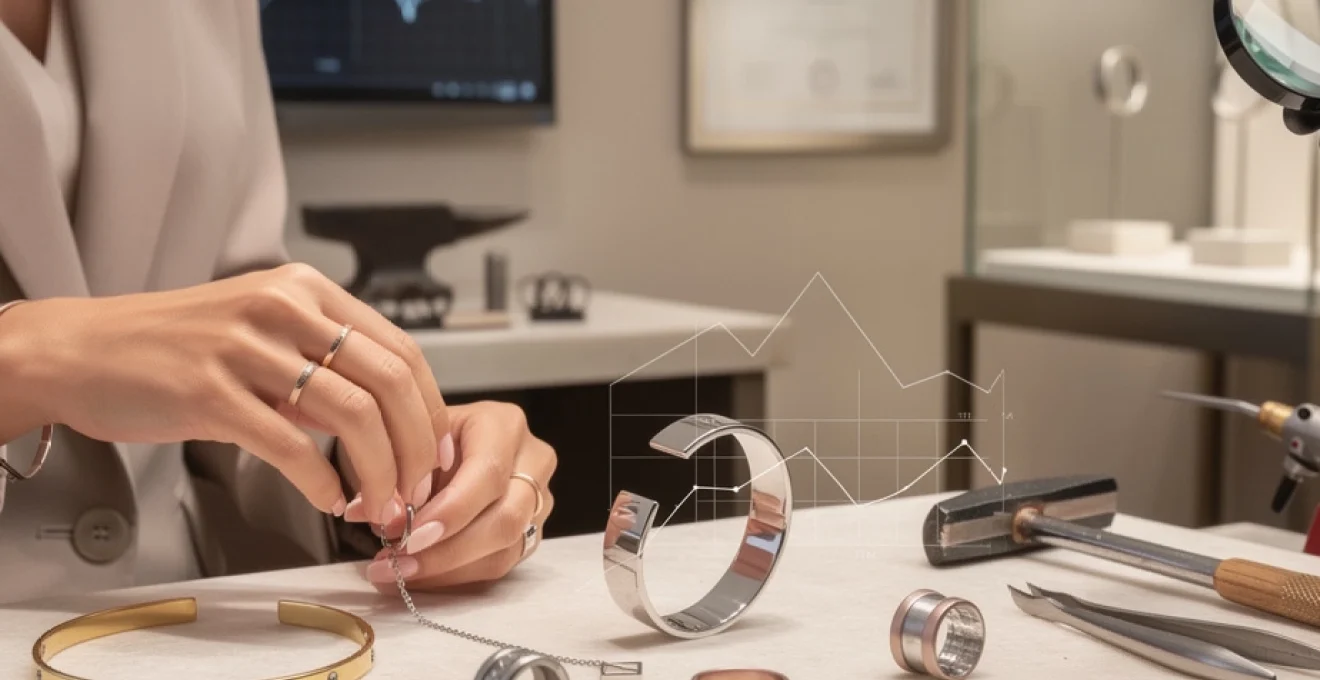
The allure of minimalist jewellery transcends fleeting fashion trends, establishing itself as a cornerstone of sophisticated style and financial prudence. Unlike statement pieces that may lose their appeal as tastes evolve, minimalist designs embody timeless elegance through clean lines, superior craftsmanship, and enduring materials. This aesthetic philosophy, rooted in the principle that less is more, has captivated discerning collectors and everyday enthusiasts alike, creating a robust market for pieces that appreciate in value whilst maintaining their contemporary relevance. The intersection of artisanal craftsmanship, precious metal composition, and iconic design creates investment opportunities that extend far beyond mere adornment, positioning minimalist jewellery as both a personal treasure and a tangible asset in today’s luxury market.
Precious metal composition and durability in minimalist jewellery design
The foundation of any investment-grade minimalist piece lies in its material composition, where the choice of precious metals directly impacts both aesthetic appeal and long-term value retention. Unlike fashion jewellery that relies on plating or base metals, true minimalist investment pieces utilise solid precious metals that maintain their integrity across decades of wear. The molecular structure of these materials provides not only the lustrous appearance that defines luxury jewellery but also the durability required for pieces intended to transcend generations.
Material selection in minimalist design becomes particularly crucial because the absence of elaborate embellishments places greater emphasis on the inherent beauty and quality of the base metal. When ornate details cannot mask inferior materials, every aspect of the metal’s composition becomes visible to the discerning eye. This transparency in design demands excellence in material selection, making the metal’s purity, colour consistency, and structural integrity paramount considerations for both craftsmen and collectors.
18ct gold alloy properties and longevity characteristics
Eighteen-carat gold represents the optimal balance between purity and practicality in minimalist jewellery construction. Containing 75% pure gold combined with 25% carefully selected alloy metals, 18ct gold delivers the warm, rich appearance associated with luxury whilst maintaining sufficient hardness for daily wear. The alloy composition typically includes copper, silver, or palladium, each contributing specific characteristics that enhance the metal’s performance and appearance.
The longevity of 18ct gold stems from its resistance to tarnishing and corrosion, properties that become increasingly valuable in minimalist designs where maintenance requirements must remain minimal. Unlike lower-carat alternatives that may show wear patterns or colour changes over time, 18ct gold maintains its original lustre through decades of use. This consistency proves essential for investment pieces, as condition significantly influences resale value in the luxury jewellery market.
Platinum purity standards and hypoallergenic benefits
Platinum’s reputation as the ultimate precious metal for fine jewellery rests on its exceptional purity standards and inherent hypoallergenic properties. Most platinum jewellery contains 95% pure platinum, making it significantly purer than gold alternatives whilst delivering unmatched durability. The metal’s natural white colour eliminates the need for rhodium plating, ensuring that minimalist platinum pieces maintain their original appearance without periodic refinishing requirements.
The hypoallergenic nature of platinum addresses a crucial consideration for jewellery intended for daily wear. Unlike white gold, which may contain nickel and require rhodium plating that can wear away over time, platinum remains completely biocompatible throughout its lifespan. This characteristic proves particularly valuable for minimalist engagement rings and wedding bands, where continuous skin contact demands the highest standards of metal purity and safety.
Sterling silver 925 hallmark requirements and tarnish resistance
Sterling silver’s 925 hallmark designation indicates a composition of 92.5% pure silver combined with 7.5% copper, creating an alloy that balances workability with durability. This standardised composition ensures consistency across manufacturers whilst providing the strength necessary for intricate minimalist designs. The copper content enhances the silver’s structural integrity without significantly compromising its distinctive colour or lustrous finish.
Modern tarnish-resistance treatments have revolutionised sterling silver’s suitability for minimalist investment pieces. Advanced surface treatments and protective coatings now allow sterling silver jewellery to maintain its brilliant finish for extended periods without
developing the heavy, frequent polishing once associated with silver. For investors in minimalist jewellery, this improved tarnish resistance means pieces retain their visual appeal and marketability with relatively low upkeep. When combined with hallmarked authenticity and reputable craftsmanship, sterling silver can offer an accessible entry point into timeless, investment-worthy minimalist design.
Titanium and surgical steel applications in contemporary pieces
Titanium and surgical steel have emerged as important materials in contemporary minimalist jewellery, particularly for wearers who prioritise durability, lightweight comfort, and hypoallergenic properties. Titanium is renowned for its exceptional strength-to-weight ratio, meaning even substantial designs feel feather-light on the skin. Its natural grey tone suits the understated aesthetic of minimalist design, while coloured anodised finishes allow for subtle personalisation without compromising simplicity.
Surgical steel, often specified as 316L or 304L stainless steel, offers excellent corrosion resistance and biocompatibility at a more accessible price point than precious metals. These alloys are frequently used for everyday minimalist pieces such as stacking rings, huggie hoops, and sleek cuff bracelets designed for continuous wear. Although titanium and surgical steel may not carry the same intrinsic metal value as gold or platinum, their longevity and low maintenance make them compelling choices for pieces where design heritage and brand equity drive long-term desirability.
Artisan craftsmanship techniques behind timeless minimalist pieces
While metal composition underpins the physical value of minimalist jewellery, artisan craftsmanship determines its aesthetic longevity and structural integrity. Minimalist pieces appear simple at first glance, yet their clean lines leave no room for error; every curve, edge, and junction must be executed with precision. As a result, enduring investment pieces typically combine traditional hand skills with modern technology, creating jewellery that feels both contemporary and timeless.
This synthesis of old and new techniques allows designers to achieve the razor-sharp silhouettes and perfectly balanced proportions that define high-end minimalist jewellery. From hand-forging and soldering to laser cutting and advanced polishing methods, each stage of production contributes to the overall resilience and refinement of the finished piece. For collectors, understanding these processes provides deeper insight into why certain minimalist designs command premium prices and hold their value over time.
Hand-forged construction methods and structural integrity
Hand-forging remains one of the most respected techniques in fine jewellery making, particularly suited to minimalist rings, cuffs, and bangles. In this process, the metal is repeatedly heated and hammered to refine its grain structure, much like a master bladesmith tempering steel. This controlled deformation increases density, enhancing the strength and resilience of the piece while allowing subtle adjustments to shape and fit.
Because minimalist jewellery often relies on slender bands and open forms, structural integrity is crucial to prevent warping or deformation with daily wear. Hand-forged constructions excel in this respect, distributing stress more evenly across the metal and reducing weak points. For the investor, hand-forged minimalist pieces can offer superior longevity, which in turn supports higher resale values, especially when created by renowned artisans or heritage ateliers.
Precision laser cutting and CAD design integration
Computer-aided design (CAD) and precision laser cutting have revolutionised the production of minimalist jewellery, enabling ultra-clean lines and repeatable accuracy that would be difficult to achieve by hand alone. Designers can model pieces to micron-level tolerances, testing proportions, balance, and ergonomics in a virtual environment before a single gram of metal is used. This digital precision is particularly valuable for geometric pendants, linear earrings, and interlocking ring sets, where any deviation would be visually obvious.
Laser cutting and laser engraving complement CAD by translating digital models into physical form with extraordinary fidelity. Fine apertures, crisp edges, and consistent cut-outs contribute to the sleek, architectural quality associated with modern minimalist jewellery. From an investment perspective, CAD archives and digital design files also provide a form of provenance, documenting the exact specifications of an original piece—useful for authentication and for verifying that later reproductions match the initial design intent.
Traditional soldering techniques versus modern welding processes
Joining methods have a significant impact on both the appearance and durability of minimalist jewellery. Traditional soldering uses a lower-melting alloy to fuse components, allowing for invisible joins when executed by a skilled goldsmith. This technique remains favoured for delicate chains, fine claw settings, and multi-component constructions where subtlety is paramount. High-quality soldering minimises excess material and avoids the bulky seams that would disrupt a minimalist profile.
Modern micro-welding and laser-welding processes, by contrast, can join metals with pinpoint heat and minimal distortion, making them ideal for heat-sensitive gemstones or ultra-fine structures. These technologies enable stronger joints with less risk of porosity, a key factor in pieces designed for long-term, everyday wear. Investors should note that well-executed joins—whether soldered or welded—reduce the likelihood of repairs, preserving both the original form and the resale value of minimalist jewellery over decades.
Surface finishing methods: brushed, polished, and matte textures
Surface finishing is where minimalist jewellery truly comes to life, transforming raw metal into a tactile, light-responsive object. High-polish finishes create a mirror-like surface that reflects light dramatically, ideal for slender bangles and simple band rings intended to catch the eye with every movement. However, such finishes can also highlight scratches, which is why collectors often reserve them for pieces worn with care.
Brushed and matte finishes, achieved through controlled abrasion or sandblasting, diffuse light more softly, enhancing the understated character of minimalist design. These textures can disguise minor wear, making them practical choices for investment pieces intended for daily use, such as wedding bands or signature bracelets. Some of the most coveted minimalist collections alternate polished and matte planes within a single piece, creating subtle contrast. This thoughtful finishing not only elevates the visual sophistication of the jewellery but also signals meticulous craftsmanship—an important consideration for long-term value.
Investment grade minimalist jewellery: cartier love bracelet and tiffany T collection analysis
Certain minimalist jewellery collections have transcended their role as accessories to become recognised investment assets in their own right. Iconic designs from houses such as Cartier, Tiffany & Co., Georg Jensen, and Van Cleef & Arpels have established measurable track records in the secondary market, where rarity, condition, and brand prestige converge to drive appreciation. What do these pieces share? A restrained aesthetic, enduring recognisability, and the use of high-quality materials that withstand decades of wear.
By examining the market performance of these benchmark collections, we can better understand why minimalist jewellery is considered a timeless investment. These pieces illustrate how design heritage and cultural significance can add intangible value on top of intrinsic metal content. For collectors building a portfolio, such case studies provide practical guidance on which minimalist styles are most likely to retain or increase their worth over time.
Cartier’s iconic love bracelet resale value performance since 1969
Launched in 1969, the Cartier Love bracelet is perhaps the definitive example of investment-grade minimalist jewellery. Its clean oval shape, screw motif, and understated profile have barely changed in more than five decades, yet demand on the primary and secondary markets has grown consistently. According to resale data from major platforms, classic 18ct yellow gold Love bracelets often retain 80–120% of their original retail price, with rare editions and limited releases fetching substantial premiums.
Several factors underpin this resilience: the bracelet’s symbolic association with enduring love, Cartier’s strong global brand equity, and the piece’s recognisable yet minimalist design. Because the Love bracelet is made in solid gold and engineered for continuous wear, examples in good condition remain highly desirable even after years of ownership. For investors, this combination of emotional resonance and measurable market performance makes the Love bracelet a compelling benchmark for evaluating other minimalist pieces.
Georg jensen silver cuff heritage and market appreciation rates
Georg Jensen’s sculptural silver cuffs demonstrate how minimalist Scandinavian design can achieve blue-chip status in the jewellery world. Created in sterling silver with flowing, organic lines, these cuffs embody a “less but better” philosophy that resonates strongly with collectors of modernist design. Vintage pieces from mid-century designers such as Vivianna Torun Bülow-Hübe have shown notable appreciation, with auction results frequently surpassing initial retail values, especially for rare or early editions.
Despite being crafted in silver—a metal traditionally seen as less valuable than gold—the artistry and historical significance of Georg Jensen cuffs elevate them into the realm of investment-grade minimalist jewellery. Their performance illustrates an important principle for collectors: in certain cases, design heritage and provenance can outweigh intrinsic metal value. For those seeking to diversify a jewellery portfolio beyond gold and platinum, well-documented Georg Jensen cuffs offer a compelling case study.
Van cleef & arpels alhambra collection vintage market dynamics
While often associated with romantic motifs, the Van Cleef & Arpels Alhambra collection is, at its core, a study in minimalist repetition and balanced geometry. Introduced in 1968, the four-leaf clover silhouette of the Alhambra necklace and bracelet is remarkably simple, yet its restrained outlines and clean symmetry have ensured decades of relevance. Vintage pieces in hardstones such as malachite, onyx, and mother-of-pearl have seen strong appreciation, with auction prices for certain configurations more than doubling over the last decade.
Market dynamics for Alhambra pieces are influenced by stone rarity, metal choice, and production period, with early editions and discontinued variations attracting the highest premiums. The enduring popularity of this collection underscores a key theme in minimalist jewellery investment: consistency of design. Because the core Alhambra motif has remained largely unchanged, newer pieces reinforce demand for earlier examples, creating a virtuous cycle that supports long-term value.
Monica vinader and astley clarke contemporary investment potential
Contemporary brands such as Monica Vinader and Astley Clarke occupy a different segment of the minimalist jewellery market, bridging the gap between fashion and fine investment pieces. Their designs favour clean silhouettes, stackable forms, and subtle gemstone accents, often crafted in vermeil or solid 18ct gold. While these brands may not yet command the same secondary-market premiums as Cartier or Van Cleef & Arpels, certain limited editions and solid-gold lines have begun to show encouraging resale performance.
For younger collectors or those building an initial minimalist jewellery collection, these contemporary houses can provide accessible entry points into investment-worthy design. The key is to focus on solid precious metal pieces, core collections that define the brand identity, and collaborations or limited runs that may become future cult classics. As brand recognition grows and archives deepen, early acquisitions from these designers may benefit from a “first-generation” effect similar to that seen with now-iconic heritage collections.
Market performance metrics and resale value calculations
Evaluating minimalist jewellery as an investment requires more than intuition; it calls for an understanding of the metrics that govern price movements over time. Just as with fine art or vintage watches, factors such as annual appreciation rates, auction records, and liquidity on secondary platforms help investors gauge the relative strength of different pieces and brands. Minimalist designs, with their clean aesthetics and broad wearability, often exhibit more stable demand than trend-driven statement pieces.
By analysing both primary retail pricing and secondary-market performance, you can form a realistic view of potential returns. It is important to remember, however, that jewellery investments also deliver non-monetary value in the form of daily enjoyment and personal expression. When you choose minimalist jewellery that aligns with your style and quality expectations, you hedge against market volatility by ensuring the piece remains valuable to you, regardless of price charts.
Annual appreciation rates for designer minimalist collections
Annual appreciation rates in the minimalist jewellery segment vary widely depending on brand, model, and condition, but data from leading resale platforms suggests that top-tier designer pieces can appreciate at 3–8% per year over the medium term. Iconic collections—such as the Cartier Love bracelet or Tiffany T bangles—have, in some periods, outperformed these averages, particularly following retail price increases or when supply constraints tighten. These rates are comparable to certain segments of the luxury watch market, underscoring jewellery’s role as an alternative asset class.
To calculate the appreciation of a specific piece, investors typically compare the original purchase price (including taxes) with recent realised sale prices for items in comparable condition. When you track these metrics over several years, trends begin to emerge: some collections stabilise, others plateau, and a select few accelerate as they cross into vintage status. Understanding where a minimalist piece sits on this curve can inform decisions about when to acquire, hold, or sell.
Auction house results: sotheby’s and christie’s fine jewellery data
High-profile auction houses such as Sotheby’s and Christie’s provide transparent benchmarks for the upper tier of the minimalist jewellery market. Their catalogues frequently feature pieces from the most coveted collections, complete with estimated sale ranges and final hammer prices. Analysing these results over time reveals which minimalist designs attract competitive bidding, achieve prices above estimate, or set new records.
For example, vintage Cartier bangles, Georg Jensen cuffs, and early Alhambra necklaces regularly appear in specialist sales, offering insights into collector demand at the highest level. Auction data also highlights the premium associated with impeccable provenance, original packaging, and well-documented service histories. While not every investor will buy or sell through these houses, their published results serve as a valuable reference point for assessing the broader health of the minimalist jewellery market.
Secondary market platforms: vestiaire collective and the RealReal analysis
Online resale platforms such as Vestiaire Collective and The RealReal have transformed the liquidity of investment-grade minimalist jewellery. These marketplaces provide real-time pricing data for thousands of pieces, from contemporary minimalist designers to legacy maisons. Because listings and sold prices are regularly updated, they offer a more granular view of day-to-day market sentiment than annual auction reports alone.
By tracking how quickly certain styles sell, the discount (or premium) relative to current retail prices, and the condition notes attached to each piece, you can gauge which minimalist designs maintain strong demand. Platforms with in-house authentication teams also help reduce counterfeit risk, although no system is infallible. For investors, these secondary markets function like a live barometer, signalling when interest in a particular collection is rising, stabilising, or declining.
Authentication standards and provenance documentation for investment security
As values increase, so does the incentive for counterfeiting, making authentication a critical component of minimalist jewellery investment. Unlike highly ornate pieces where complex detailing may act as a deterrent, minimalist designs are, paradoxically, easier to imitate visually. This places greater importance on hallmarks, serial numbers, maker’s marks, and accompanying documentation. Authenticity not only protects your financial outlay but also ensures that you are acquiring jewellery produced under the ethical and quality standards claimed by the brand.
Robust provenance—evidence of a piece’s origin and ownership history—can significantly enhance value, especially for vintage or limited-edition minimalist designs. Original receipts, certificates, boxes, and even service records all contribute to a verifiable chain of custody. When buying on the secondary market, you should prioritise sellers who provide clear images of stamps and hallmarks, detailed descriptions, and, ideally, third-party authentication. This careful approach reduces risk and supports the long-term integrity of your jewellery portfolio.
Care protocols and maintenance strategies for long-term value preservation
Even the most robust minimalist jewellery requires thoughtful care to preserve both beauty and value. Because minimalist designs leave more of the metal surface exposed, scratches, dents, and chemical damage are more visible than on heavily embellished pieces. Fortunately, a combination of sensible daily habits and periodic professional maintenance can keep investment-grade jewellery in excellent condition for decades, supporting stronger resale prospects should you ever choose to part with it.
At home, simple steps such as removing rings before abrasive tasks, storing pieces in separate soft pouches, and avoiding direct contact with harsh chemicals go a long way. Gentle cleaning with appropriate solutions—ammonia-free for gold, specific dips for silver, and non-abrasive cloths for platinum—helps maintain lustre without over-polishing, which can gradually wear down fine details and hallmarks. Think of regular care as servicing a classic car: modest, consistent attention dramatically extends lifespan.
Professional maintenance is equally important, especially for frequently worn minimalist pieces like wedding bands, everyday bracelets, and staple necklaces. Reputable jewellers can inspect for loose connections, thinning bands, or worn clasps, addressing issues before they become structural failures. Light refinishing can restore original surface finishes—whether brushed, matte, or high polish—while preserving the crisp edges that define minimalist aesthetics. By combining mindful wear with scheduled check-ups, you ensure that your minimalist jewellery remains not only a style constant but also a sound, enduring investment.