
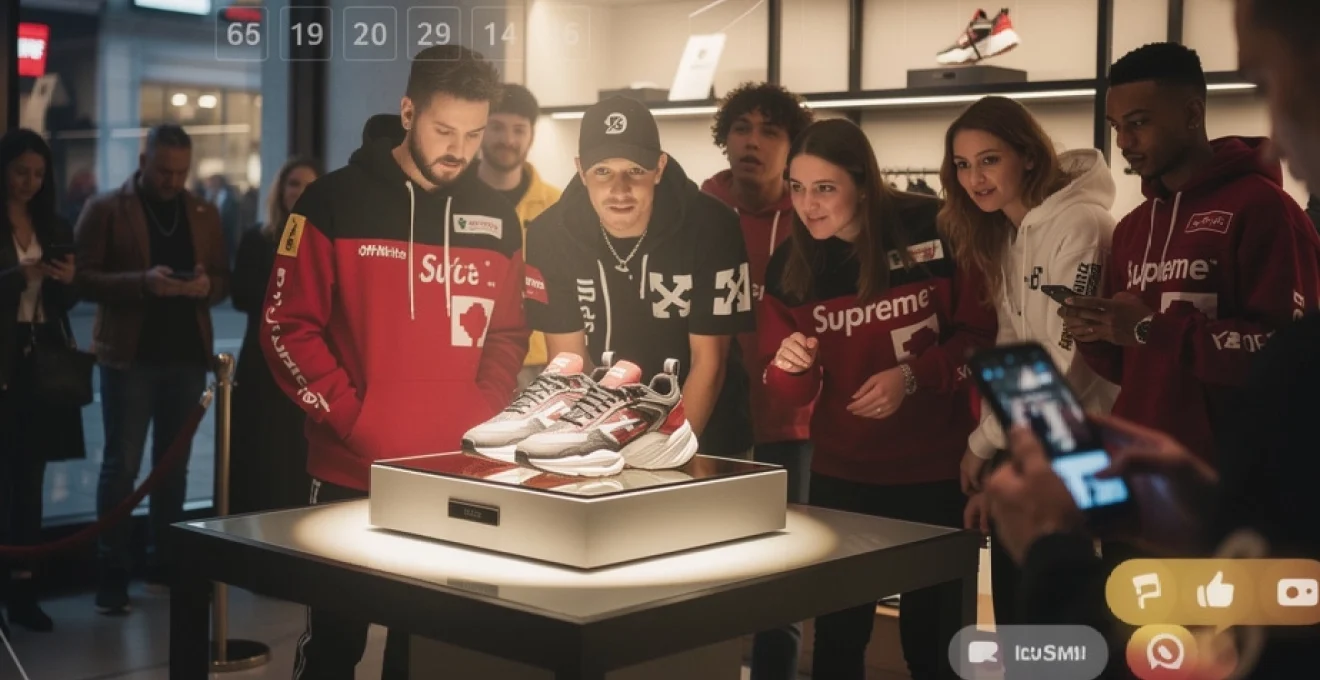
Fashion’s most compelling paradox lies in the deliberate creation of scarcity within an industry built on mass production. Limited editions have transformed from occasional marketing tactics into fundamental drivers of consumer behaviour, reshaping how brands cultivate desire and establish market dominance. The psychological mechanics behind this phenomenon reveal profound insights into human nature, where the promise of exclusivity triggers immediate purchasing decisions and long-term brand loyalty.
The fashion industry’s embrace of artificial scarcity represents a sophisticated understanding of consumer psychology, where brands manipulate availability to amplify desirability. This strategic orchestration of demand has created entirely new market dynamics, transforming simple clothing items into coveted cultural artefacts that command premium prices and generate substantial media attention.
Psychological mechanisms behind Scarcity-Driven consumer behaviour in fashion
The human brain’s response to scarcity operates on primal levels that predate modern consumer culture by millennia. When fashion brands introduce limited availability, they activate ancient survival mechanisms that equate rarity with value, triggering immediate psychological responses that override rational purchasing decisions. These deep-seated cognitive patterns explain why consumers frequently abandon price sensitivity when confronted with exclusive fashion opportunities.
Cialdini’s scarcity principle and fashion market applications
Robert Cialdini’s seminal research on scarcity reveals how limited availability increases perceived value through cognitive shortcuts that bypass analytical thinking. Fashion brands leverage this principle by creating artificial constraints that transform ordinary products into premium commodities. The principle operates through two distinct mechanisms: the perception of increased quality and the assumption that exclusive items must possess superior characteristics.
Contemporary fashion brands apply Cialdini’s framework through sophisticated release strategies that emphasise numerical limitations and temporal constraints. When Supreme announces production runs of 500 pieces, consumers immediately assign higher value based purely on quantity restrictions rather than material quality or design innovation. This psychological manipulation proves particularly effective in streetwear markets where authenticity and exclusivity determine social status.
FOMO psychology in luxury fashion consumption patterns
Fear of Missing Out (FOMO) represents the emotional engine driving limited edition consumption, where anticipated regret motivates immediate purchasing decisions. Luxury fashion brands cultivate FOMO through strategic information release, creating knowledge gaps that intensify consumer anxiety about potential losses. This psychological state transforms shopping from rational evaluation into emotional urgency, where delay equals deprivation.
Social media amplification intensifies FOMO effects by providing constant visibility into others’ exclusive acquisitions. When fashion influencers showcase limited edition pieces across Instagram and TikTok, followers experience vicarious satisfaction followed by personal inadequacy. This cycle creates perpetual demand for exclusive fashion items as consumers seek to replicate observed social validation through similar purchases.
Cognitive dissonance theory in limited edition purchasing decisions
Cognitive dissonance theory explains how consumers justify premium prices for limited edition fashion by emphasising exclusivity over intrinsic value. When faced with contradictory information about cost versus worth, buyers resolve internal conflict by elevating the importance of rarity and social status. This mental adjustment transforms expensive purchases into logical investments in personal identity and social positioning.
Post-purchase dissonance reduction occurs through community engagement and social validation, where limited edition owners seek confirmation of their decisions through online forums and fashion communities. The psychological need to justify premium spending creates evangelical customers who actively promote brands and defend purchasing decisions against critics.
Social proof dynamics within exclusive fashion communities
Social proof mechanisms within fashion communities create self-reinforcing cycles of demand that validate individual purchasing decisions through collective behaviour. When influential community members acquire limited editions, their actions provide implicit endorsement that motivates similar purchases among followers. This dynamic creates cascading demand waves that can exhaust inventory within minutes of release.
Exclusive fashion communities develop internal hierarchies based on acquisition success, where early adopters gain status through demonstrable access to rare items. These social structures reward quick decision-making and penalise hesitation, creating cultural pressure that overrides personal budget constraints and rational evaluation processes.
Strategic implementation of limited edition marketing frameworks
Successful limited edition strategies require careful orchestration of multiple variables including timing, quantity, distribution channels, and communication approaches. Fashion brands must balance genuine scarcity with sustainable business models, ensuring that artificial constraints don’t alienate core customer bases while maximising revenue
To achieve this, brands increasingly rely on structured limited edition marketing frameworks that can be replicated, tested, and refined across seasons and product categories.
Numbered editions versus time-limited release strategies
Numbered editions and time-limited releases represent two primary architectures for scarcity-driven fashion marketing. Numbered editions emphasise fixed quantity, often with visible identifiers such as 1 of 300 labels or engraved serial numbers, which transform garments into collectible assets. Time-limited releases, by contrast, restrict the purchase window rather than the absolute volume, using countdown timers and defined launch periods to trigger urgency.
From a consumer psychology perspective, numbered editions appeal to collectors who value provenance and resale potential, while time-limited drops resonate with audiences driven by FOMO and impulse buying. Brands must evaluate which model aligns with their positioning: luxury houses often favour numbered capsules that reinforce craftsmanship, whereas streetwear labels rely on weekly or monthly drops to sustain hype cycles. In practice, hybrid strategies are emerging, where a release is both time-bound and quantity-capped, intensifying perceived scarcity and driving faster sell-through.
Collaborative capsule collections and brand equity enhancement
Collaborative capsule collections have become one of the most effective tools for amplifying limited edition desirability while compounding brand equity. When two culturally relevant brands or a brand and a celebrity collaborator merge visual codes, they create products that exist at the intersection of multiple fan bases. This cross-pollination expands reach and introduces each brand to new demographics who might not have engaged with the core line.
Strategically, collaborations enable fashion labels to experiment with new aesthetics, price points, or categories under the protective umbrella of “limited edition experimentation.” If the capsule succeeds, elements can be absorbed into the permanent collection; if it fails, the damage is contained by the inherent temporariness of the drop. The most successful collaborations build on authentic shared values—such as sustainability, subcultural heritage, or local craftsmanship—rather than superficial logo swaps, ensuring that the partnership deepens rather than dilutes brand meaning.
Geographic exclusivity models in global fashion distribution
Geographic exclusivity introduces another layer of scarcity by restricting access based on location rather than pure quantity. Brands allocate specific limited edition products to flagship stores, pop-ups, or regional e-commerce platforms, signalling cultural alignment with particular cities or markets. For instance, a sneaker colourway available only in Tokyo or Paris turns travel itself into a prerequisite for ownership, reinforcing the product’s status as a souvenir of global fashion capitals.
This model exploits social comparison dynamics: when consumers in one region see coveted items available only elsewhere, desire intensifies alongside the perceived prestige of the destination. At the same time, geographic exclusivity allows brands to test hyper-local themes—such as city-specific graphics, festival motifs, or sports references—without risking global backlash. The challenge lies in managing fairness perceptions; overuse of region-locked drops can alienate loyal customers in overlooked markets, so transparent communication and occasional global reissues are essential to maintain trust.
Pre-order campaigns and demand generation mechanisms
Pre-order campaigns bridge the gap between scarcity and operational efficiency by allowing brands to gauge demand before committing to full production runs. In the context of limited editions, controlled pre-orders function as both a marketing narrative and a risk management tool. Consumers are invited into the production process, often with messaging that emphasises sustainability and reduced waste, which reframes scarcity as a responsible choice rather than a manipulative tactic.
From a psychological standpoint, pre-orders leverage commitment and consistency: once a consumer has reserved a piece and perhaps paid a deposit, they are more likely to rationalise the purchase positively and share anticipation on social media. Brands can further heighten engagement by providing behind-the-scenes updates between pre-order and delivery, transforming the waiting period into part of the experience. However, extended lead times or missed delivery dates can quickly erode trust, so operational reliability must underpin any pre-order-based scarcity strategy.
Premium pricing psychology and perceived value engineering
Premium pricing in limited edition fashion is less about covering production costs and more about engineering perceived value. When consumers encounter elevated price points attached to scarce items, they often infer superior quality, craftsmanship, or cultural significance. This inference is reinforced when pricing is consistent with a brand’s broader positioning and accompanied by narratives that justify the premium, such as artisanal techniques, rare materials, or philanthropic contributions.
Behavioural economics suggests that consumers use price as a heuristic for value, especially when objective quality differences are difficult to assess. By intentionally setting limited edition prices above the core line, brands anchor perceptions of exclusivity and create a clear hierarchy within their assortment. At the same time, visible resale market activity—where items trade at multiples of retail price—retroactively validates the original premium, encouraging future buyers to accept or even welcome high initial costs as evidence of investment potential.
To avoid accusations of opportunism, brands must ensure that premium pricing is matched by tangible enhancements: upgraded packaging, superior customer service, or unique ownership benefits such as early access to future drops. When customers feel that every touchpoint has been elevated, they are more likely to view the higher price as fair exchange rather than exploitation of scarcity-driven demand.
Brand case studies: supreme, Off-White, and palace streetwear phenomena
Supreme’s drop culture and resale market dynamics
Supreme exemplifies how disciplined control of supply can turn a skate shop into a multi-billion-dollar cultural force. The brand’s weekly drop schedule, tightly restricted production runs, and deliberate refusal to chase mass-market demand have created a ritualised consumer behaviour pattern. Fans queue physically outside flagship stores or camp online before each Thursday release, treating participation in the drop as a social event as much as a transactional opportunity.
The secondary market amplifies this ecosystem. Many Supreme items sell out within minutes at retail, only to reappear on resale platforms at multiples of their original price. This resale activity functions as public proof of desirability, reinforcing the idea that Supreme pieces are assets rather than simple garments. Interestingly, Supreme benefits from this dynamic without directly capturing resale profits; the brand’s reward lies in elevated cultural capital and the ability to maintain premium pricing across future collections.
Virgil abloh’s Off-White quotation mark strategy
Virgil Abloh’s Off-White built a distinctive visual language around quotation marks, diagonal stripes, and industrial motifs, transforming semiotic play into a premium fashion proposition. The use of quotation marks around everyday words—“SHOELACES,” “SCULPTURE,” “LOGO”—invited consumers to view familiar objects through a conceptual, almost museum-like lens. When applied to limited edition capsules and high-profile collaborations, this sign system turned products into conversation pieces that signalled cultural literacy as well as style.
Off-White’s collaborations with Nike, IKEA, and luxury houses demonstrated how limited editions can elevate both partners simultaneously. The “The Ten” sneaker collection with Nike, for example, deconstructed classic silhouettes and released them in carefully staggered drops, igniting global hype and establishing Abloh as a bridge between streetwear and luxury. By framing each collaboration as a finite artistic project rather than a simple co-branded product, Off-White reinforced its identity as a conceptual label where scarcity and ideas are inseparable.
Palace london’s ironic branding and exclusivity positioning
Palace London approaches exclusivity with a distinctly British sense of irony, blending serious skate heritage with self-deprecating humour. Its graphics frequently parody corporate logos, sports branding, and even luxury fashion tropes, inviting insiders to share the joke. Limited edition drops released through Palace’s own channels and select retailers create an in-group feeling where owning a piece signals understanding of the brand’s satirical stance.
Despite its playful tone, Palace is highly disciplined about distribution and volume, mirroring Supreme’s focus on controlled scarcity. The brand’s presence in key fashion capitals and its selective collaborations with Adidas and Ralph Lauren demonstrate how humour can coexist with premium positioning. For consumers, Palace’s limited editions offer not just exclusivity but also a form of cultural commentary, turning each purchase into a wearable critique of mainstream branding.
Digital marketing amplification through social media hype cycles
Digital platforms have become the primary amplifiers of limited edition fashion, transforming local drops into global events within minutes. Instagram, TikTok, and X (Twitter) serve as real-time broadcast channels where lookbooks, teaser videos, and countdown posts construct anticipation weeks before release. Algorithms favour content that generates rapid engagement, so each like, comment, and share contributes to an exponential visibility curve that can overwhelm organic demand.
Hype cycles typically follow a predictable pattern: initial rumours, official confirmation, teaser imagery, influencer seeding, drop announcement, and finally live coverage of queues or checkout screens. Brands that manage these phases with precision can convert attention into action at the exact moment products go live. For you as a marketer, the key question becomes: how do you sustain credibility while intentionally stoking frenzy? Transparency about quantities, honest communication about restocks, and clear policies on bots and raffles help maintain trust even when demand dramatically exceeds supply.
Social media also enables micro-communities—Discord servers, Reddit threads, private Instagram groups—to coordinate information about drops, resale prices, and authenticity checks. These communities act as unpaid distribution and education networks for brands, but they also hold labels accountable for perceived missteps such as exaggerated scarcity claims or poor quality. In this sense, digital hype is a double-edged sword: it can catapult a limited edition into cultural icon status, but it can also amplify backlash at unprecedented speed.
Economic impact analysis of artificial scarcity on fashion retail revenue
Artificial scarcity exerts complex effects on fashion retail economics, extending far beyond the immediate revenue of a single drop. On the positive side, limited editions can deliver exceptionally high sell-through rates, reduced markdowns, and elevated average order values. When a capsule sells out at full price, it improves overall margin performance and frees up working capital that would otherwise be tied up in slow-moving inventory.
Moreover, the halo effect of successful limited editions often boosts sales of core collections. Consumers drawn in by a sold-out collaboration may settle for permanent-line items, effectively converting hype traffic into everyday revenue. At scale, this dynamic can shift a brand’s entire demand curve upward, enabling higher baseline pricing and more favourable wholesale negotiations. However, over-reliance on scarcity can create revenue volatility, where performance becomes overly dependent on a few blockbuster drops rather than stable, recurring demand.
From a risk perspective, artificial scarcity must be calibrated carefully to avoid leaving excessive money on the table. If demand is consistently multiples of supply, brands may inadvertently fuel grey markets and counterfeiting rather than capturing additional legitimate sales. Conversely, misjudged volumes that fail to sell out can damage perceived exclusivity and force discounting that undermines premium positioning. The most resilient fashion businesses therefore treat limited editions as part of a diversified portfolio strategy—one that balances hype-driven capsules with reliable core lines, ensuring that desire is cultivated not just for a season, but over the long-term life of the brand.