
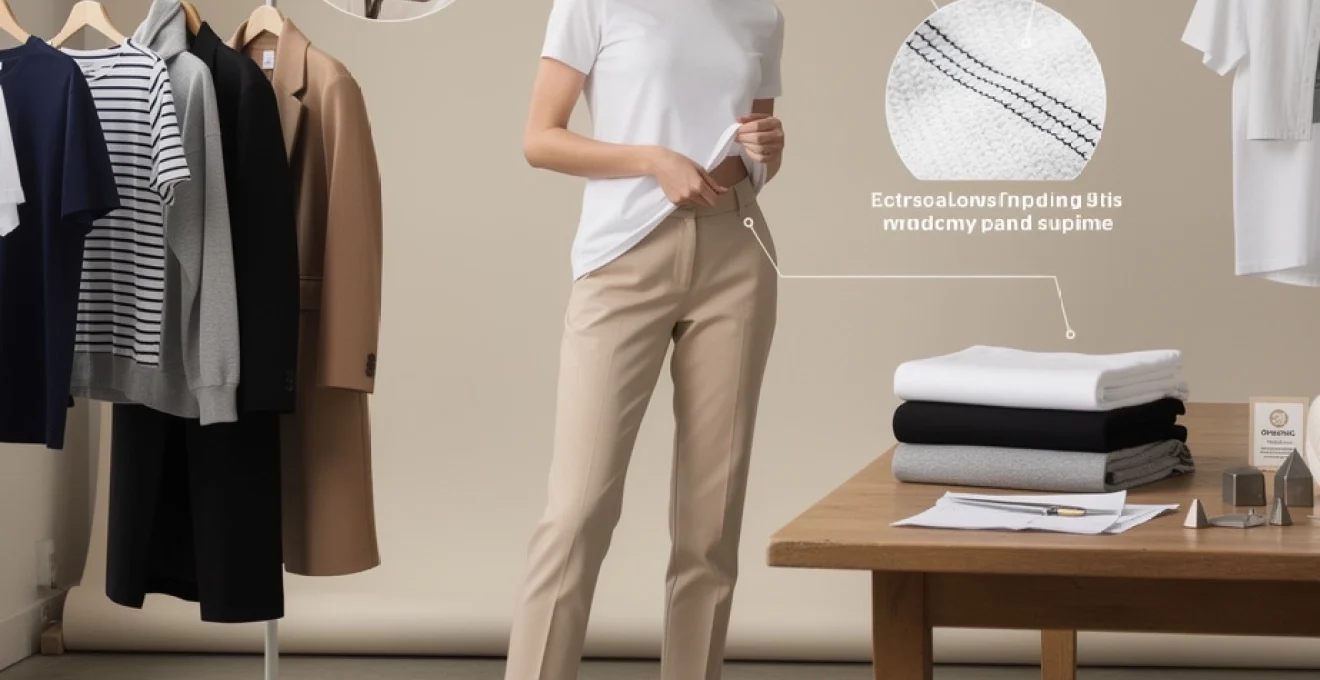
The foundation of exceptional style doesn’t lie in statement pieces or seasonal trends—it rests in the quality of your basic garments. Premium basics serve as the architectural framework upon which every sophisticated wardrobe is built, transforming ordinary outfits into polished ensembles that exude confidence and refinement. When you invest in meticulously crafted essentials, you’re not merely purchasing clothing; you’re acquiring versatile building blocks that multiply your styling options whilst delivering superior comfort, durability, and timeless appeal. These investment pieces work harder for your wardrobe than any trend-driven purchase ever could.
Fabric construction and fibre technology in premium basic garments
The distinction between ordinary basics and investment-grade garments begins at the molecular level, where fibre selection and fabric construction techniques determine everything from drape and durability to comfort and longevity. Premium basics utilise advanced textile technologies and superior raw materials that justify their higher price point through measurable performance advantages. Understanding these technical aspects empowers you to make informed decisions when building your capsule wardrobe foundation.
Single-jersey cotton knit construction vs. Double-Knit jersey performance
Single-jersey cotton construction, characterised by its distinctive V-shaped loops on the technical face, offers excellent drape and breathability but tends to curl at edges and lacks dimensional stability. This construction method creates lighter-weight fabrics that are ideal for layering but may show wear more readily over time. The inherent stretch properties of single-jersey knits provide comfort but can lead to shape retention issues in lower-quality garments.
Double-knit jersey construction, featuring interlocking loops that create a more stable fabric structure, delivers superior shape retention and reduced curling tendencies. This advanced construction technique produces fabrics with enhanced recovery properties, meaning garments return to their original shape after stretching. Premium brands often utilise double-knit construction for basics that require superior drape and longevity, particularly in blazers and structured knitwear.
Pima cotton vs. supima cotton: staple length impact on durability
Pima cotton, grown primarily in Peru, Australia, and parts of the United States, features extra-long staple fibres measuring 1.4 to 1.6 inches in length. These extended fibres create stronger, smoother yarns that resist pilling and maintain their lustre through multiple wash cycles. The superior staple length allows for tighter yarn twist, resulting in fabrics with enhanced tensile strength and reduced surface irregularities.
Supima cotton, representing the premium grade of American Pima cotton, must meet stringent quality standards including a minimum staple length of 1.375 inches and superior strength measurements. Supima-certified garments typically last 45% longer than regular cotton basics, making them particularly valuable for frequently worn items like t-shirts and underwear. The certification process ensures consistent quality and traceability from farm to finished garment.
Ring-spun yarn technology in premium T-Shirt manufacturing
Ring-spun yarn production involves twisting cotton fibres into continuous strands using traditional ring-spinning machinery, creating stronger, smoother yarns compared to open-end or rotor-spun alternatives. This time-intensive process aligns fibres more uniformly, resulting in fabrics with superior hand-feel and enhanced durability. Ring-spun yarns produce t-shirts with softer surfaces and better printability for graphic applications.
The ring-spinning process also enables tighter yarn construction, which translates to improved dimensional stability in finished garments. Premium t-shirt manufacturers often combine ring-spun yarns with combed cotton processing, removing shorter fibres and impurities to create exceptionally smooth, strong fabrics. This dual processing approach justifies higher costs through measurably superior performance characteristics.
Mercerised cotton treatment for enhanced lustre and strength
Mercerisation involves treating cotton fibres with concentrated sodium hydroxide solution under tension, permanently altering the fibre’s molecular structure to increase dye absorption, strength, and lustre. This chemical treatment swells cotton fibres, creating more reflective surfaces that produce silk-like sheen and improved colour vibrancy.
For basic garments, mercerised cotton offers two clear advantages: increased tensile strength (often 10–20% higher than non-mercerised cotton) and outstanding colourfastness. That means your favourite white t-shirt stays crisp rather than turning grey, and dark hues retain their depth instead of fading after a few washes. In the context of premium basics, mercerisation is particularly valuable for items you wear and launder frequently, such as t-shirts, polo shirts, and fine-gauge knitwear, where long-term appearance and structural integrity are crucial.
Organic cotton certification standards: GOTS vs. OCS requirements
Not all “organic cotton” labels are created equal. Two of the most widely recognised standards in premium basic garments are GOTS (Global Organic Textile Standard) and OCS (Organic Content Standard), each with distinct requirements. Understanding the difference helps you invest in sustainable basics that genuinely align with your values rather than relying on vague marketing claims.
GOTS is considered the gold standard for organic textiles, covering the entire supply chain from fibre cultivation to finished garment. To carry the GOTS label, products must contain at least 70% certified organic fibres, and “organic” grade products must contain a minimum of 95%. The standard also regulates chemical inputs, wastewater treatment, and social criteria, offering a comprehensive guarantee of environmental and ethical responsibility. When you see a GOTS-certified t-shirt or sweatshirt, you can be confident that both the fibre and the manufacturing process have been audited to stringent criteria.
OCS, by contrast, focuses primarily on verifying the presence and percentage of organic fibres in a product, from farm to final fabric. While OCS 100 requires products to contain 95–100% organic material, it does not address processing chemicals, dyeing practices, or social compliance to the same extent as GOTS. This makes OCS a useful indicator of organic content but not a full sustainability benchmark. For investment-grade basics, GOTS-certified garments typically offer the most robust assurance of both fibre quality and responsible production, justifying a premium price tag.
Garment construction techniques that define investment-grade basics
While fibre and fabric selection provide the foundation, it is garment construction that ultimately determines whether a basic will truly stand the test of time. Premium basics are engineered with the same care as tailoring, using refined sewing techniques, precise pattern cutting, and strategic reinforcement in high-stress zones. These details may be almost invisible at first glance, yet they dramatically influence comfort, silhouette, and longevity.
Fast fashion basics tend to rely on the quickest, cheapest assembly methods: minimal seam allowance, limited reinforcement, and shortcuts on finishing. In contrast, investment-grade basics incorporate construction methods more often found in high-end ready-to-wear and bespoke garments. When you understand what to look for, you can quickly distinguish a t-shirt or shirt that will last for years from one that will lose its shape after a season.
French seam construction vs. overlock finishing methods
Seam construction is a clear visual indicator of quality. Overlock (or serged) seams are ubiquitous in mass-produced basics because they are fast to sew and economical. An overlock machine trims the raw fabric edge and encloses it in a multi-thread stitch, preventing fraying. While adequate for many garments, basic overlock seams can feel rough against the skin and may not withstand repeated stress on finer fabrics.
French seams, by contrast, encase the raw edge within two lines of stitching, creating a clean, durable, and smooth finish on both the inside and outside of the garment. This technique is commonly used in luxury shirts, delicate blouses, and premium sleepwear where comfort and neat internal appearance are paramount. Although French seams require more time and skill, they significantly enhance seam strength and reduce irritation, making them ideal for high-quality basics that sit close to the skin.
So how do you spot the difference when shopping for quality basics? Turn the garment inside out and examine the seams along the side and sleeve. A French seam appears as a narrow, neatly pressed ridge with no visible raw threads, while a standard overlock seam will show the characteristic looped threads at the edge. For wardrobe staples like cotton poplin shirts and silk camisoles, French seams signal that the manufacturer has prioritised longevity and wearer comfort.
Reinforced shoulder tape application in premium knitwear
If you have ever owned a t-shirt that developed sagging shoulders or a stretched-out neckline, you have seen the consequences of inadequate reinforcement. Premium knitwear and t-shirts often incorporate shoulder taping—narrow strips of woven fabric or self-fabric sewn into the shoulder and back neck seams—to stabilise these high-stress areas. This subtle detail prevents the garment from deforming on the hanger and maintains a crisp, clean neckline over time.
Shoulder tape serves two important functions: it distributes tension along the seam and provides a stable anchor for the neckline. In high-quality basics, taping is usually applied from shoulder to shoulder across the back neck, and sometimes extended along the side of the neck opening. This reinforcement is especially beneficial for heavier jersey fabrics and oversized silhouettes, which place greater strain on the shoulder seams due to their weight.
To assess shoulder reinforcement, gently tug the neckline and observe how it responds. A well-taped shoulder will resist distortion and return to its original shape, while an unreinforced seam may ripple or stretch. Investing in basics with proper shoulder taping means your favourite tees and lightweight sweats will keep their sharp lines and flattering fit, even after frequent wear and washing.
Pre-shrunk fabric treatment and dimensional stability testing
Shrinkage is one of the most common complaints with lower-cost basics, especially those made from untreated cotton. Investment-grade essentials typically undergo pre-shrunk fabric treatments and dimensional stability testing to ensure the garment maintains its intended size and proportions after laundering. This process can involve mechanical compaction (often called sanforisation), controlled washing and drying, or steam relaxation treatments.
Dimensional stability testing measures how much a fabric changes in length and width after washing and tumble drying, with premium manufacturers often targeting shrinkage rates below 3–5%. This testing is carried out in accordance with recognised industry standards, such as ISO or AATCC protocols, to provide reliable, repeatable results. When you purchase a pre-shrunk, tested basic, you are far less likely to experience that frustrating moment when your favourite t-shirt suddenly feels a size smaller.
As a practical tip, reputable brands will usually indicate “pre-shrunk” or “sanforised” in their product descriptions. You can also compare garment measurements before and after the first wash to gauge quality. When your basics consistently hold their shape and length, outfit planning becomes easier—and you avoid the hidden cost of replacing distorted pieces every few months.
Blind hem stitching techniques for superior finish quality
Hems are another subtle detail that reveal a great deal about construction quality. In many fast fashion basics, hems are finished with a simple visible topstitch, often using fewer stitches per inch to save time and thread. These hems may wave, tunnel, or twist after laundering, disrupting the clean line of the garment. In contrast, premium basics often employ blind hem stitching, especially for trousers, skirts, and finely tailored knitwear.
Blind hem stitching uses a specialised machine or hand technique to catch only a few threads of the garment’s right side, creating an almost invisible line of stitching from the outside. The result is a crisp, uninterrupted hem that hangs smoothly and looks refined. This is particularly important for wardrobe staples like dress trousers, midi skirts, and knit dresses, where a bulky or uneven hem can detract from the overall silhouette.
Why does this matter for your everyday wardrobe? A well-executed blind hem not only looks more elevated but also distributes strain more evenly, reducing the likelihood of the hemline dropping or fraying. When you see a clean hem that appears to “float” without heavy stitch lines, you are looking at one of the hallmarks of investment-grade construction—proof that even the finishing touches have been considered.
Essential basic garments for capsule wardrobe architecture
Building a capsule wardrobe with quality basics is similar to designing a well-planned home: you need a solid structural framework before you can add decorative elements. Rather than accumulating dozens of trend-led pieces, a strategic selection of versatile, investment-grade basics will support countless outfit combinations. The goal is to curate garments that work harmoniously across seasons and settings, from the office to weekends and evening events.
So which basics deserve priority when you are allocating your budget? While personal style and lifestyle will shape your choices, certain categories consistently deliver the highest return on investment. These pieces form the core of a functional wardrobe, enabling you to dress with ease, confidence, and minimal decision fatigue.
Consider incorporating the following essentials as the backbone of your capsule wardrobe architecture:
- A high-quality white and black t-shirt made from ring-spun, long-staple cotton or a premium cotton-modal blend
- A finely tailored button-down shirt in crisp cotton poplin or organic oxford cloth
- A structured blazer in a neutral tone with refined shoulder construction and a balanced lapel width
- Well-cut trousers or jeans in a mid-weight, comfortable fabric with excellent recovery
- A versatile knit, such as a merino or cashmere crew neck, that layers effortlessly
- A pair of polished yet comfortable shoes (loafers, ankle boots, or minimalist trainers) suitable for both work and leisure
Each of these pieces should meet your criteria for fit, comfort, and fabric quality. When you invest in a few key categories rather than spreading your budget thinly across many lower-quality items, you effectively future-proof your wardrobe. The result is a cohesive foundation where even simple combinations—jeans and a tee, trousers and a knit—look intentional and put together.
Colour theory and versatility maximisation in basic wardrobe selection
Colour choice is as important as fabric and construction when you are building a wardrobe around quality basics. The right palette amplifies versatility, allowing you to create multiple outfits from a limited number of pieces. The wrong mix can leave you with high-end garments that clash with each other or do not flatter your natural colouring. Applying simple colour theory turns your wardrobe into a cohesive system rather than a random assortment.
A practical approach is to anchor your basics in a core of neutrals—think black, navy, charcoal, ivory, and camel—then layer in a few accent colours that suit your skin tone and personal style. Neutrals function like the canvas in a painting: they provide balance, reduce visual noise, and allow statement pieces to shine when you choose to add them. When most of your premium basics share a complementary neutral base, it becomes almost impossible to create a mismatched outfit.
You might ask, does this mean avoiding colour altogether? Not at all. Instead, focus on a tight, harmonious palette. For example, a wardrobe built around navy, soft white, and warm beige can easily integrate accent shades like burgundy, forest green, or powder blue. This limited spectrum ensures that your investment pieces—whether a blazer, knit, or tailored trouser—can be recombined endlessly without feeling repetitive. It is colour strategy, not restriction.
In technical terms, you can think of your wardrobe in three layers: base, mid, and accent. Base colours are your dark neutrals (navy, black, chocolate), mid colours are your light neutrals (ivory, stone, grey), and accents are your chosen brights or seasonal tones. By ensuring that most of your quality basics sit in the base and mid categories, you create a stable foundation that still leaves room for personality. This approach maximises cost-per-wear and reduces the urge to chase new shades every season.
Cost-per-wear analysis: premium basics vs. fast fashion economics
At first glance, premium basics can seem expensive compared to fast fashion alternatives. However, a cost-per-wear analysis often reveals that the higher initial investment translates into superior long-term value. Cost-per-wear simply divides the price of an item by the number of times you wear it, offering a realistic metric for evaluating wardrobe investments. When a garment is well-made, fits beautifully, and integrates seamlessly into your existing outfits, you are far more likely to reach for it repeatedly.
Consider this practical comparison. A £25 fast fashion sweatshirt worn 20 times before losing shape or pilling has a cost-per-wear of £1.25. A £120 premium sweatshirt, constructed from high-quality, pre-shrunk cotton fleece with reinforced seams, might easily be worn 150 times over several years—bringing its cost-per-wear down to just £0.80. Beyond the numbers, the premium piece will likely feel more comfortable, look more polished, and hold its colour and structure over time.
There is also a psychological dimension to cost-per-wear. When you invest in a garment that has been thoughtfully designed and constructed, you tend to treat it with greater care. You store it correctly, follow the care instructions, and repair it when necessary. This behaviour further extends the garment’s lifespan and lowers its real cost. In contrast, low-cost basics are often perceived as disposable, leading to more frequent replacements and, ultimately, higher wardrobe churn.
From an environmental and ethical perspective, premium basics can also be the more responsible choice. Producing fewer, better garments uses resources more efficiently and reduces textile waste. The Ellen MacArthur Foundation estimates that clothing utilisation has decreased by 36% in the last 15 years in some regions, largely due to fast fashion cycles. By shifting your focus to long-wearing basics and evaluating purchases through a cost-per-wear lens, you consciously opt out of that cycle and build a wardrobe that supports both your style and your values.
Care and maintenance protocols for extending premium basic lifespan
Even the best-constructed basics need proper care to deliver their full lifespan. Think of maintenance as the final, crucial stage of investment: you have paid for superior fibre, fabric, and construction, so it makes sense to protect that value. Fortunately, extending the life of your premium basics does not require complex routines—just a few consistent, evidence-based habits.
First, wash less and wash smarter. Over-laundering is one of the fastest ways to degrade fabrics, fade colours, and distort garment shape. For many items, especially knitwear and denim, airing between wears and spot-cleaning are often sufficient. When washing is necessary, turn garments inside out, use cool water, and choose a gentle cycle to minimise mechanical stress. Avoid overloading the machine, as compressed garments experience more abrasion, which accelerates pilling and fibre breakdown.
Second, pay close attention to drying and storage. High heat is particularly damaging to natural fibres, causing shrinkage and weakening yarns over time. Where possible, air-dry garments flat or on padded hangers, reshaping them while damp to preserve their original silhouette. Reserve tumble drying for items specifically labelled for it, and even then, select a low-heat or delicate setting. For knits, fold rather than hang to avoid shoulder bumps and stretching, especially with heavier fibres like wool and cashmere.
Finally, adopt a repair-and-refresh mindset. Small interventions—replacing a loose button, darning a tiny hole, or depilling a knit with a fabric shaver—can add years to the life of a garment. Premium basics are engineered to withstand such maintenance, and minor repairs are far more sustainable than replacement. By treating your wardrobe as a curated collection rather than a constant cycle of new purchases, you honour the craftsmanship behind each piece and maintain a wardrobe that looks refined, feels comfortable, and evolves with you over time.