
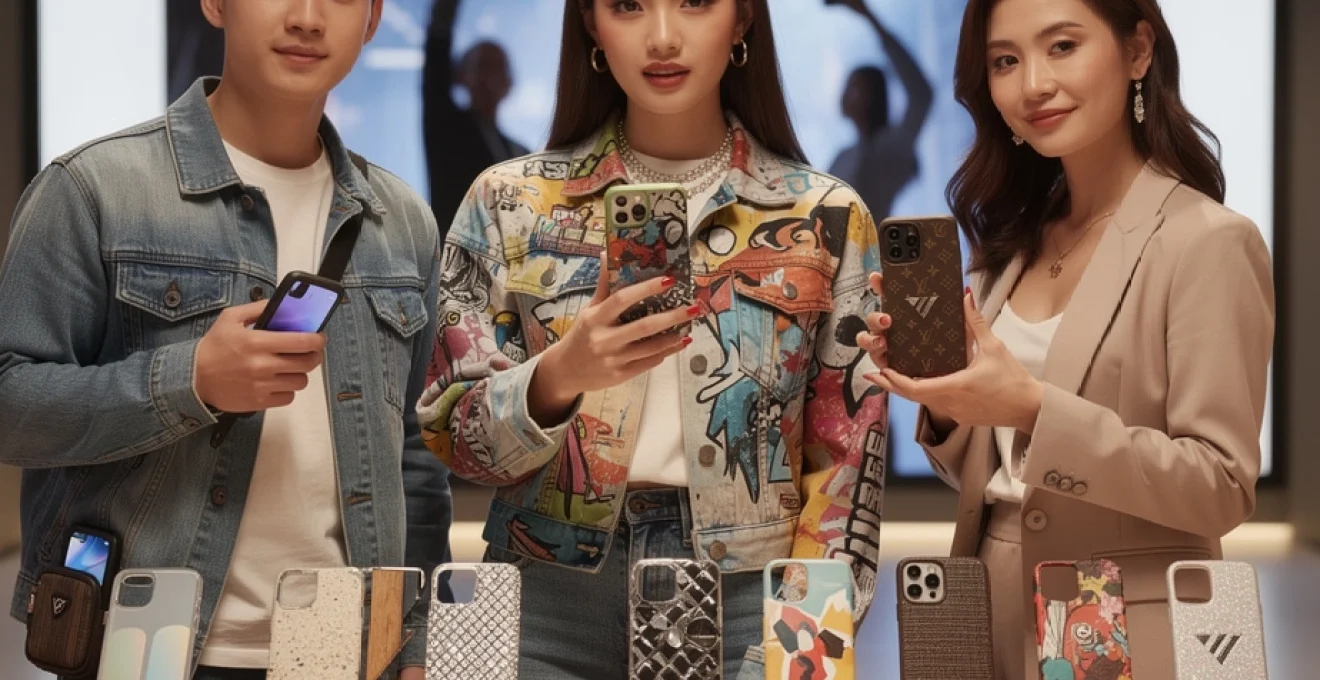
# Why Designer Phone Cases Have Become a Fashion Accessory
The smartphone has undergone a remarkable transformation from simple communication device to essential style accessory. In an era where mobile phones remain within arm’s reach for an average of 16 hours daily, the protective cases surrounding these devices have evolved into fashion statements that rival traditional accessories like watches, handbags, and jewellery. What was once a purely functional purchase—a piece of plastic or rubber to prevent screen cracks—has become a carefully considered style choice that reflects personal identity, social status, and aesthetic preferences.
This shift represents more than a superficial trend. The designer phone case market has exploded into a multi-billion pound industry, attracting luxury fashion houses, independent artists, and tech-savvy entrepreneurs alike. Consumers now invest significant resources into cases that complement their outfits, match their aesthetic vision, and broadcast their fashion sensibilities to the world. As phones have become the most photographed objects in modern life—appearing in mirror selfies, flat-lay compositions, and countless social media posts—their appearance has grown increasingly important to style-conscious individuals across all demographics.
The evolution of mobile phone cases from protection to style statement
The journey from basic protection to high-fashion accessory represents one of the most fascinating transformations in consumer culture. Understanding this evolution requires examining how both technology and fashion sensibilities have fundamentally changed over the past two decades.
From functional nokia pouches to casetify artistic collaborations
The early mobile phone era prioritised function over form. Nokia pouches and basic silicone sleeves served one purpose: preventing damage. These utilitarian accessories came in limited colours—typically black, grey, or occasionally a daring blue—and featured no decorative elements beyond perhaps a manufacturer’s logo. The aesthetic consideration was virtually nonexistent; phones were tools, not fashion statements.
The transformation accelerated dramatically with smartphone adoption. As devices became sleeker and more expensive, the protective case market began fragmenting into distinct segments. Brands like CASETiFY recognised an opportunity to merge protection with personality, launching artistic collaborations that transformed cases into canvases for creative expression. These partnerships with illustrators, photographers, and graphic designers demonstrated that phone cases could simultaneously protect devices and showcase individual style. The success of such initiatives proved consumers were willing to pay premium prices for cases that reflected their aesthetic preferences rather than settling for generic options.
Today, the market spans from £10 basic cases to £745 Louis Vuitton trunk-inspired designs, demonstrating how thoroughly the category has matured. This pricing spectrum mirrors traditional fashion accessories, where consumers select products based on budget, brand affinity, and desired positioning rather than function alone.
The role of social media influencers in elevating case aesthetics
Social media platforms have fundamentally altered how consumers perceive and purchase phone cases. Instagram, TikTok, and Pinterest have created an environment where visual aesthetics dominate, and phones appear in countless photographs daily. Influencers have capitalised on this visibility by showcasing designer cases as integral components of their carefully curated personal brands.
When celebrities and influencers share mirror selfies or flat-lay compositions featuring distinctive phone cases, they’re not merely documenting their possessions—they’re making style statements that resonate with millions of followers. The phone case occupies prime visual real estate in these compositions, often appearing more prominently than clothing or traditional accessories. This constant exposure has normalised the concept of investing in premium cases as part of a complete wardrobe strategy.
Influencer partnerships with case manufacturers have further legitimised designer options. When a prominent fashion influencer collaborates on a limited-edition collection, it signals that phone cases deserve the same consideration as shoes, bags, or jewellery. These collaborations frequently sell out within hours, demonstrating strong consumer demand for fashion-forward mobile accessories. Research indicates that 79% of smartphone users purchase a case within one week of acquiring a new device, and influencer content significantly shapes these purchasing decisions.
How apple’s iphone design philosophy catalysed the premium case market
Apple’s influence on the premium case market cannot be overstated. The company’s design philosophy—emphasising sleek minimalism, premium materials, and attention to aesthetic detail—created devices worthy of
being displayed rather than hidden. When the first iPhone launched in 2007, its aluminium and glass construction, slim profile, and almost jewellery-like finish repositioned the smartphone as an object of desire. Apple’s marketing leaned heavily into this aesthetic, showing the device in close-up, turning slowly like a luxury watch. This visual narrative encouraged consumers to treat their phones with the same reverence they had previously reserved for fine accessories.
At the same time, Apple kept its colour palette and external design language deliberately restrained. The minimalist hardware effectively created a blank canvas around which a premium case market could flourish. Consumers who wanted individuality without compromising the sleek iPhone silhouette began seeking out designer phone cases that could add personality while respecting Apple’s design ethos. The rise of MagSafe and wireless charging further pushed case manufacturers to engineer slimmer, more precise, and more premium-feeling products that aligned with Apple’s exacting standards.
Moreover, Apple’s consistent form factors and long product cycles gave case brands the confidence to invest in high-quality tooling, premium materials, and fashion collaborations. When you know a device design will remain relevant and aspirational for several years, it makes sense to create a designer phone case that feels as considered as a leather wallet or a luxury belt. In that sense, Apple didn’t just sell phones—it catalysed an entire ecosystem of elevated mobile accessories.
Luxury fashion houses entering the mobile accessory space
As smartphones became visual status symbols, luxury fashion houses quickly recognised that ignoring the mobile accessory category meant missing a lucrative and highly visible opportunity. From around the mid-2010s onwards, brands like Louis Vuitton, Gucci, and Prada began integrating designer phone cases into their seasonal collections. These were not afterthoughts; they featured in runway shows, campaign imagery, and in-store displays alongside signature bags and small leather goods.
The appeal for heritage maisons was clear. A designer phone case allowed younger consumers to access a brand’s world at a relatively lower price point than a handbag or ready-to-wear piece, while still carrying recognisable signatures such as monograms, logos, or iconic hardware. For the brands, each case effectively became a mini billboard, constantly flashed in cafés, co-working spaces, and social feeds. As a result, we saw an explosion in premium materials, craftsmanship, and logo-centric designs specifically tailored to the smartphone form factor.
This move also blurred the lines between tech and fashion retail. Luxury boutiques began merchandising phone cases in “accessory stories” next to wallets and cardholders, while department stores created dedicated phone accessory bars. In doing so, they cemented the idea that a premium phone case sits firmly within the fashion accessory ecosystem, not the electronics aisle.
Designer brands redefining the phone case industry
Once luxury houses stepped into the arena, the designer phone case industry evolved from a niche into a fully-fledged fashion category. Each brand brought its own aesthetic codes, materials, and heritage, reshaping consumer expectations around what a “simple” phone accessory could be. Rather than generic plastic shells, we now see pieces that borrow construction techniques from luggage making, small leather goods, and even fine jewellery.
Louis vuitton monogram and damier canvas case collections
Louis Vuitton was among the first to explicitly treat the phone case as a luxury object. The now-iconic Eye-Trunk case, inspired by the maison’s historic travel trunks, signalled a new era: the smartphone as miniature luggage. Crafted in the brand’s signature Monogram or Damier canvas, trimmed with leather corners and micro-rivets, it translated heritage codes into a contemporary format. At price points rivaling small leather goods, these cases intentionally positioned themselves as status symbols rather than purely protective shells.
Beyond the Eye-Trunk, Louis Vuitton has expanded into slimmer snap-on covers, folio-style cases, and crossbody phone pouches, often integrating card slots or detachable straps. For fashion-conscious buyers, these collections offer a way to coordinate their phone with existing LV pieces—matching a Neverfull tote, Speedy bag, or passport holder. In practice, the phone case completes the look, reinforcing brand loyalty every time the device is placed on a restaurant table or appears in a selfie.
For many, owning a Louis Vuitton designer phone case is an entry point into the brand’s universe. It allows them to participate in the visual language of LV—monogram flowers, Damier check, signature hardware—without committing to the higher investment of a full-sized bag. As a result, these cases often become gateway purchases that later lead to broader luxury wardrobes.
Gucci’s GG supreme and ophidia print mobile accessories
Gucci has also leveraged its instantly recognisable codes to turn phone cases into fashion talking points. The GG Supreme canvas, already ubiquitous across handbags and belts, appears on a wide range of smartphone accessories, often trimmed with the brand’s green-red-green Web stripe or vintage-inspired logos. When paired with the Ophidia line’s rounded shapes and gold-toned hardware, these designer phone cases feel like shrunken versions of full-sized bags.
Under the creative direction of Alessandro Michele and beyond, Gucci has embraced maximalism, and that spirit extends to its mobile accessories. You’ll find cases embellished with animal motifs, floral prints, and slogans, designed to stand out in mirror selfies and social content. For consumers who view their phone as part of their outfit, a GG Supreme or Ophidia phone case makes a clear statement: this is not just tech, it’s fashion.
Interestingly, Gucci’s phone accessories often tie into broader capsule collections or seasonal themes. That means a phone case can act as a collectible piece within a larger Gucci narrative, much like a scarf or small pouch. For dedicated fans, coordinating their smartphone with their sneakers, belt, or bag becomes part of a deliberate, head-to-toe styling strategy.
Prada saffiano leather cases as status symbols
Where some luxury brands lean into overt logos and bold prints, Prada often takes a more understated approach. Its Saffiano leather phone cases are a case in point. Crafted from the brand’s signature cross-hatched leather, these cases balance durability with a refined, almost architectural minimalism. The triangular Prada logo plaque or discreet embossed branding is often the only visible signifier, appealing to those who favour quiet luxury over conspicuous logos.
Saffiano leather is prized not only for its appearance but also for its resistance to scratches and water, making it ideal for everyday use on an object you handle constantly. This material choice positions Prada designer phone cases as long-term companions rather than fast-fashion accessories. In many professional settings, a sleek black or navy Saffiano case communicates polish and attention to detail, much like a well-made briefcase or pair of shoes.
For consumers, investing in a Prada phone case can feel like investing in a subtle status marker. It’s a way to signal taste and affluence without shouting. When your phone is placed on a meeting table or café counter, the small triangular plaque quietly reinforces your aesthetic preferences and lifestyle choices.
Bottega veneta’s intrecciato weave technique applied to tech accessories
Bottega Veneta’s entry into the designer phone case space underscores how traditional craftsmanship can be reinterpreted for modern technology. The house’s Intrecciato weave—meticulously interlaced leather strips—has long been a hallmark of its bags and wallets. Applied to phone cases and pouches, this technique creates a tactile, three-dimensional surface that feels as luxurious in the hand as it looks in photographs.
In line with Bottega’s “when your own initials are enough” philosophy, many of its phone accessories are logo-free, relying instead on the weave itself as the brand signature. This appeals to consumers drawn to stealth wealth aesthetics, where craftsmanship and material quality speak louder than monograms. The result is a designer phone case that reads as sophisticated and timeless rather than trend-driven.
By translating Intrecciato to tech accessories, Bottega Veneta has helped push the industry towards more artisanal construction methods. It demonstrates that even an object as small as a phone case can embody hours of handwork, justifying a higher price point and reinforcing the notion that tech accessories can sit comfortably alongside other luxury leather goods.
Collaboration culture between tech brands and fashion designers
As designer phone cases moved into the mainstream, collaborations between tech-focused companies and fashion creatives became a powerful engine of innovation. These partnerships mirror the sneaker world, where limited-edition drops and artist tie-ins drive hype and collectability. In the phone case arena, collaborations serve a similar purpose: they fuse functionality with cultural relevance, giving consumers accessories that feel both practical and “of the moment.”
Casetify x sarah jessica parker limited edition launches
CASETiFY has become synonymous with collaboration culture, regularly joining forces with designers, artists, and celebrities to create capsule collections. The brand’s limited-edition launches with Sarah Jessica Parker are a prime example. Drawing on Parker’s status as a fashion icon and her association with New York style, these designer phone cases blend playful sophistication with everyday usability.
The collections often feature refined colour palettes, subtle typography, and motifs that nod to Parker’s personal taste, appealing to consumers who see their phone case as part of a lifestyle narrative rather than a random accessory. Because the drops are strictly limited, they tap into scarcity psychology—once a design sells out, it becomes difficult to obtain, much like an exclusive handbag or pair of shoes.
For buyers, owning a CASETiFY x Sarah Jessica Parker case means more than just protecting their phone. It signals alignment with a particular fashion sensibility and grants a small share of celebrity association. In social media terms, it’s the difference between using a generic case and one that followers will recognise and comment on.
Supreme x CASETiFY streetwear-inspired drop collections
On the streetwear side, collaborations like Supreme x CASETiFY have helped cement phone cases as core elements of “the fit.” Supreme’s limited-drop model, built on queues, raffles, and rapid sell-outs, translates seamlessly to mobile accessories. When the brand applies its iconic box logo, bold graphics, or archival imagery to phone cases, those pieces become instantly covetable.
For streetwear enthusiasts, a Supreme designer phone case is as much a part of their identity as a graphic tee or pair of hyped sneakers. It slots neatly into the broader culture of collectability and resale, where certain designs can appreciate in value over time. In this context, the case is less a disposable accessory and more akin to a small-scale art object that happens to protect your device.
These collaborations also highlight how deeply intertwined tech and youth culture have become. Where 1990s streetwear focused on hoodies and caps, today’s scene includes phone cases as default components of the look. Your device is always in your hand; naturally, it should wear the same brands as the rest of your outfit.
Otterbox symmetry series collaborations with contemporary artists
OtterBox built its reputation on rugged protection, but the brand’s Symmetry Series collaborations show that durability and design are no longer mutually exclusive. By partnering with contemporary artists, illustrators, and graphic designers, OtterBox has transformed its cases into art-forward pieces that still meet stringent drop-test standards.
These collections often feature bold, gallery-worthy prints—abstract patterns, street art motifs, or nature-inspired graphics—that turn the back of your phone into a miniature canvas. For consumers who previously associated heavy-duty protection with bulky, unattractive shells, such designs prove that a protective case can also be a stylish companion.
From a fashion perspective, this is significant. It means you no longer have to choose between a good-looking phone case and a robust one. You can carry your phone on a night out, at the gym, or on a hike without swapping cases or compromising your aesthetic. That blend of safety and style is a major reason why designer phone cases have gained such widespread acceptance.
Sonix’s partnerships with fashion week runway designers
Sonix has carved out a niche by aligning its phone cases with high-fashion trends showcased at events like New York and Paris Fashion Weeks. By partnering with runway designers, the brand creates collections that echo seasonal colour stories, prints, and silhouettes seen on the catwalk. The result is a range of cases that feel remarkably current—almost like ready-to-wear for your phone.
These partnerships benefit both sides. Designers gain an additional platform for their creative vision, extending their influence from clothes to tech accessories. Sonix, meanwhile, gains credibility within the fashion community and offers customers an accessible way to participate in runway trends without purchasing full looks.
For you as a style-conscious consumer, this means you can co-ordinate your phone case with your wardrobe across seasons, just as you might rotate handbags or shoes. When leopard print, neon, or pastel checks dominate the runway, Sonix’s designer phone cases often reflect those motifs within months, keeping your tech firmly on-trend.
Material innovation and craftsmanship in premium phone cases
Designer phone cases stand apart not only because of branding and collaborations but also due to material choices and craftsmanship. As expectations have risen, so too has the sophistication of the materials used—from Italian leathers and aerospace-grade metals to responsibly sourced crystals. These advances mirror broader fashion and luxury trends, where touch, durability, and sustainability matter as much as appearance.
Italian full-grain leather versus vegan leather alternatives
Leather has long been associated with luxury, and full-grain Italian leather remains a benchmark for quality. Used in many premium designer phone cases, it ages gracefully, developing a patina that reflects daily use. The tactile pleasure of holding a soft, well-finished leather case is akin to carrying a high-end wallet or small handbag, lending the phone an elevated presence in your hand and on the table.
However, ethical and environmental concerns have driven rapid innovation in vegan leather alternatives. Today’s plant-based or PU-based “leathers” are a far cry from stiff, plasticky materials of the past. Many brands now offer designer phone cases crafted from corn-based, cactus, or apple-derived leathers that mimic the look and feel of animal hide while aligning with cruelty-free values.
For consumers, the choice between Italian full-grain and vegan leather has become a nuanced style and values decision. Do you prioritise heritage craftsmanship and traditional materials, or do you lean towards innovation and sustainability? Either way, the market now supports premium options in both categories, ensuring you don’t have to compromise on aesthetics.
Aerospace-grade aluminium bumpers in luxury case construction
Metal has also become a key component in high-end phone case construction. Aerospace-grade aluminium bumpers, in particular, offer a compelling mix of strength, lightness, and visual appeal. These bumpers frame the edges of the device, absorbing impact while maintaining a sleek profile, and are often anodised in sophisticated tones—from brushed silver to deep graphite or champagne gold.
From a design perspective, aluminium allows for precision machining and ultra-thin tolerances, which is essential when pairing a case with a minimalist smartphone like the iPhone. The result is a protective skeleton that feels more like part of the phone’s original design than an added shell. Some luxury brands combine aluminium bumpers with leather or glass backs, creating hybrid designer phone cases that echo the construction of premium watches or high-end audio equipment.
Functionally, aerospace-grade aluminium also dissipates heat and resists corrosion, making it well suited to a device you use all day. If you’ve ever felt frustrated by bulky plastic cases, an aluminium-based design can feel like switching from a mass-market sneaker to a precision-engineered dress shoe—lighter, sharper, and more refined.
Swarovski crystal embellishment techniques and durability
For those who view their phone as an opportunity for full-glam expression, crystal-embellished cases occupy a special niche. Brands that work with Swarovski crystals, for instance, must balance sparkle with structural integrity. Crystals are often handset or embedded into resin overlays to prevent snagging, shedding, or dulling over time.
Modern techniques involve layering crystals at different heights and sizes to catch light from multiple angles, ensuring that the case dazzles in photos and under artificial lighting. At the same time, manufacturers reinforce high-contact areas—corners and edges—with shock-absorbing materials so that the case remains protective rather than purely decorative.
In practice, well-executed crystal designer phone cases can feel like jewellery for your device, especially when coordinated with rings, bracelets, and handbags. They might not be the right choice for a rugged hike, but for events, evenings out, or content creation, they transform the phone into a centrepiece accessory.
Personalisation and customisation as fashion differentiation
As designer phone cases have become more prevalent, personalisation has emerged as a powerful way to stand out. In a world where millions of people own the same flagship devices, custom details—initials, colours, interchangeable components—allow you to claim your phone as uniquely yours. This trend mirrors what we’ve seen in trainers, bags, and even ready-to-wear, where made-to-order and customised options are increasingly popular.
Monogramming services from mulberry and burberry phone cases
Heritage British brands like Mulberry and Burberry have long offered monogramming on leather goods, so extending that service to phone cases was a natural step. Customers can often choose from a palette of foil colours—gold, silver, blind embossing—and have their initials or short messages stamped onto leather cases or folios. The process is usually done in-store or via specialised workshops, reinforcing the sense of craftsmanship.
Monogramming transforms an already premium case into something closer to a bespoke accessory. Two people might own the same Burberry check case, but their initials set them apart, much like personalised luggage tags or engraved cufflinks. In professional environments, a subtly monogrammed case can feel both personal and polished, signalling that you pay attention to details.
This approach also deepens emotional connection to the accessory. You’re less likely to discard or replace a personalised designer phone case on a whim, which in turn supports more mindful consumption habits and reduces unnecessary waste.
Print-on-demand technology enabling bespoke design aesthetic
Beyond traditional monogramming, print-on-demand technology has opened the door to fully bespoke phone case designs. Platforms allow you to upload photographs, illustrations, or typography and have them printed onto cases with near-retail quality. Some designer phone case brands even offer co-creation tools where you can choose backgrounds, fonts, and motifs within a curated aesthetic framework.
This technology effectively democratises design. You don’t need to be a graphic artist to create a case that feels personal and polished. Want a case that matches your brand palette, your pet’s portrait, or a favourite travel photo? Within minutes, you can turn those ideas into a physical accessory that accompanies you everywhere.
For small fashion labels and independent creators, print-on-demand also reduces risk. They can offer limited-run designer phone cases without investing in large inventories, testing which visuals resonate before committing to bigger production runs. In that sense, customisation is as valuable to brands as it is to end consumers.
Modular case systems with interchangeable fashion components
Another emerging trend is modular case design, where the base case remains constant but decorative or functional components can be swapped out. Think of it as building a capsule wardrobe for your phone: one solid foundation with interchangeable “outfits” in the form of straps, backplates, charms, or wallets.
Some systems include detachable crossbody chains, interchangeable camera-ring accents, or magnetically attached card holders that can be matched to your outfit. Others offer clip-on frames or patterned inserts that slide into a clear case, allowing for quick aesthetic changes without buying an entirely new designer phone case each season.
From a sustainability and cost perspective, modularity is appealing. It encourages you to invest in one well-made core case and refresh its look with smaller, less resource-intensive components. It also mirrors how we approach fashion more broadly—mixing and matching pieces rather than replacing entire wardrobes with every trend cycle.
Sustainability and ethical fashion movements in case manufacturing
As the market for designer phone cases has expanded, so too has scrutiny around their environmental impact. Cheap, disposable plastic shells contribute to landfill waste and often use resource-intensive materials. In response, a growing number of brands are aligning with sustainable fashion principles, prioritising biodegradable materials, recycled content, and carbon-conscious manufacturing processes.
Pela case’s flax shive bioplastic compostable materials
Pela Case is frequently cited as a pioneer in eco-friendly phone protection. Its cases are made from a proprietary blend of flax shive and plant-based biopolymers, creating a flexible material that is both protective and commercially compostable in appropriate conditions. Unlike traditional petroleum-based plastics, Pela’s material is designed to break down over time rather than persist for centuries.
From a design standpoint, these cases have a distinctive matte, slightly textured finish that differentiates them from glossy plastic. Colourways range from muted earth tones to vibrant hues, proving that sustainable materials can still support aesthetically pleasing, fashion-forward designs.
For eco-conscious consumers, choosing a compostable designer phone case is a tangible way to align daily habits with broader values. It acknowledges that style and sustainability are not mutually exclusive; they can, and increasingly must, coexist.
Carbon-neutral production processes in designer accessory lines
Beyond materials, many premium accessory brands are examining the carbon footprints of their operations. Carbon-neutral production often involves a combination of efficiency measures—such as renewable energy in factories, optimised shipping logistics, and reduced packaging—alongside credible offset programmes that support reforestation or clean energy projects.
Some designer phone case lines now highlight their carbon-neutral status as a key selling point, much like organic certification in fashion or beauty. This transparency appeals to consumers who want reassurance that their purchases aren’t contributing disproportionately to climate impact. It also pushes the industry as a whole toward higher environmental standards.
Practically, this might look like recycled or minimal packaging, water-based inks, and supply-chain audits. While none of these steps alone solves the environmental challenge, together they signal a shift away from disposable tech accessories toward more responsible, long-lasting designs.
Recycled ocean plastic integration by brands like oceanic
Another powerful sustainability trend involves upcycling waste—especially plastic recovered from oceans and waterways—into new products. Brands like Oceanic integrate recycled ocean plastic into their phone cases, turning a global pollution problem into a resource. These materials are typically cleaned, processed into pellets, and then moulded into durable shells.
From a storytelling perspective, carrying a case made from reclaimed ocean plastic adds a layer of meaning to an everyday object. It transforms your phone accessory into a conversation starter about conservation and responsible consumption. Visually, these cases can look just as sleek and refined as virgin-plastic alternatives, often featuring subtle speckles or textures that hint at their reclaimed origins.
For the wider designer phone case industry, such initiatives set a powerful precedent. They show that high design and high ethics can align—that you can protect your phone, express your style, and contribute, however modestly, to cleaning up the planet at the same time.