
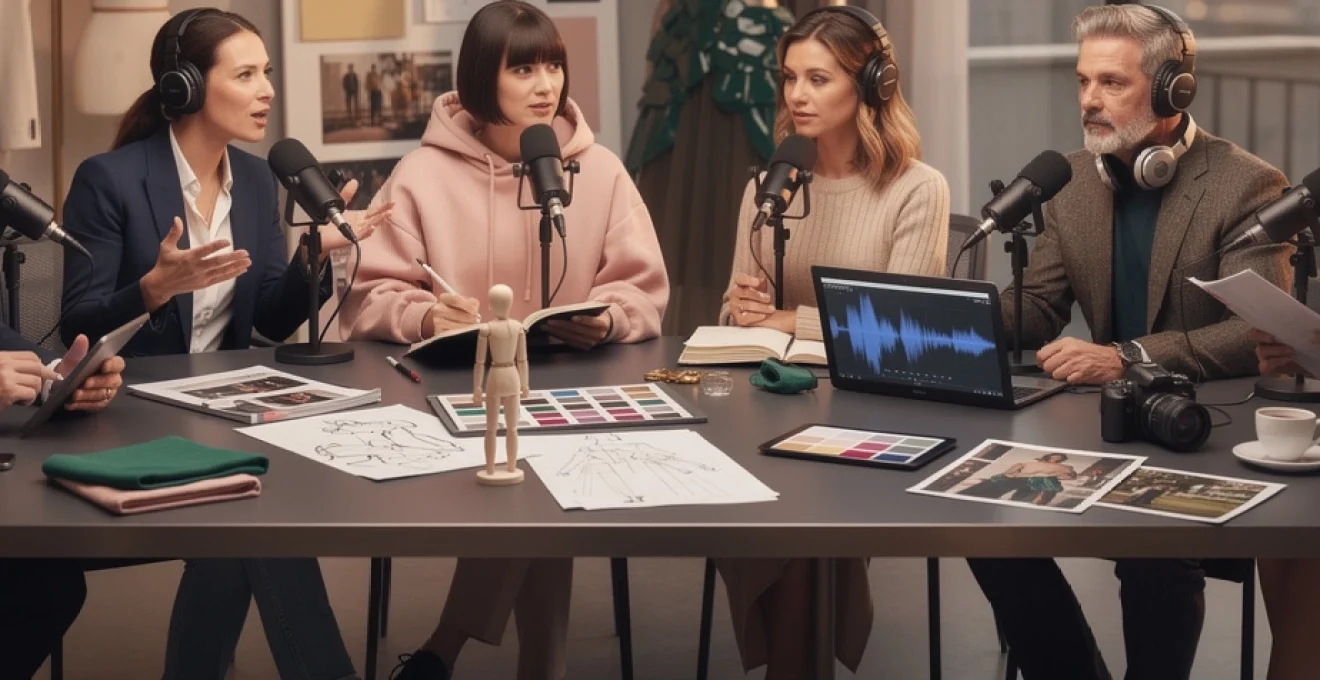
The fashion industry has embraced audio storytelling with remarkable enthusiasm, transforming how professionals and enthusiasts consume industry insights. Fashion podcasts have emerged as powerful platforms for discourse, offering unprecedented access to designers, executives, and cultural commentators who shape contemporary style narratives. These audio programmes provide intimate conversations that traditional media formats often cannot accommodate, creating spaces for nuanced discussions about creativity, business strategy, and cultural impact.
The podcasting medium has revolutionised fashion journalism by eliminating geographical barriers and democratising access to industry expertise. Listeners can now engage with haute couture conversations whilst commuting, working out, or managing daily routines. This accessibility has fostered a more informed fashion community, where complex industry topics become digestible through expert commentary and engaging dialogue formats.
Modern fashion podcasts span diverse topics from sustainable production methods to digital transformation strategies, catering to various professional interests within the industry. Whether you’re seeking market intelligence, creative inspiration, or historical context, these audio programmes deliver comprehensive coverage that enhances professional development and cultural understanding.
Fashion commentary podcasts: Deep-Dive analysis and cultural discourse
Contemporary fashion commentary podcasts have established themselves as essential resources for industry professionals seeking comprehensive analysis of market trends, cultural movements, and business developments. These programmes distinguish themselves through rigorous journalism standards and expert-led discussions that examine fashion’s broader societal implications.
The business of fashion podcast: industry intelligence and market analytics
The Business of Fashion Podcast stands as the industry’s premier analytical audio programme, delivering twice-weekly episodes that dissect complex market dynamics and strategic business decisions. Hosted by publication founder Imran Ahmed, the podcast features conversations with chief executives, creative directors, and industry analysts who provide insider perspectives on fashion’s evolving landscape. Recent episodes have explored topics ranging from luxury conglomerate strategies to emerging market opportunities in Asia-Pacific regions.
The programme’s strength lies in its ability to translate complex financial data and market research into accessible insights for diverse professional audiences. Episodes frequently examine mergers and acquisitions, sustainability initiatives, and digital transformation strategies that reshape traditional retail models. This analytical approach makes it invaluable for fashion professionals seeking to understand broader industry forces affecting their careers and businesses.
Fashion no filter with camille charrière: contemporary style commentary
Fashion No Filter offers a refreshing perspective on contemporary fashion culture through the lens of influencer Camille Charrière and journalist Monica Ainley. Their approach combines insider knowledge with relatable commentary, creating content that bridges the gap between industry expertise and consumer perspectives. The podcast excels at examining social media’s impact on fashion consumption patterns and brand communication strategies.
The hosts’ backgrounds in both traditional fashion journalism and digital content creation provide unique insights into how fashion narratives are constructed and disseminated across multiple platforms. Episodes frequently feature conversations with emerging designers, established brands, and cultural commentators who analyse current trends through both commercial and artistic perspectives. This dual approach makes Fashion No Filter particularly valuable for professionals navigating the intersection of creativity and commerce.
A piece of work podcast: fashion journalism and editorial perspective
A Piece of Work podcast represents sophisticated fashion journalism in audio format, offering detailed examinations of editorial processes, creative collaborations, and industry personalities. The programme explores how fashion magazines, digital publications, and independent media outlets shape public discourse around style and cultural expression. Episodes often feature conversations with photographers, stylists, and editors who reveal the collaborative processes behind influential fashion narratives.
The podcast’s editorial focus extends beyond surface-level trend analysis to examine cultural appropriation, representation issues, and the evolving role of fashion criticism in contemporary media landscapes. This depth makes it essential listening for fashion communications professionals and anyone interested in understanding how fashion stories are conceived, developed, and distributed across global media networks.
The glossy fashion podcast: digital transformation in fashion media
The Glossy Fashion Podcast addresses the digital revolution transforming fashion media, retail, and brand communications. Episodes examine e-commerce strategies, social media marketing techniques, and emerging technologies that reshape consumer engagement patterns. The programme features interviews with chief marketing officers, digital directors, and technology entrepreneurs who are driving innovation within traditional fashion structures.
Recent episodes have explored artificial intelligence applications in fashion design, virtual reality shopping experiences, and blockchain
integration within supply chains, highlighting both experimental pilot projects and scalable commercial solutions. For professionals working on digital fashion strategy, these episodes serve as a practical guide to navigating rapid technological change without losing sight of brand heritage and creative identity. You come away with clear examples of how data, technology, and storytelling can work together to build resilient, future‑proof fashion businesses.
Designer spotlight and creative process exploration podcasts
While commentary podcasts focus on analysis, designer-focused fashion podcasts invite listeners directly into the studio. These shows unpack how collections are conceived, developed, and produced, from initial research to runway presentation. For designers, students, and creative directors, they provide rare visibility into decision-making processes that are usually hidden behind moodboards and confidential strategy decks.
System magazine’s fashion system podcast: Avant-Garde design philosophy
System Magazine’s Fashion System Podcast extends the publication’s reputation for long-form, reflective interviews into the audio space. Episodes typically feature in-depth conversations with avant-garde designers, art directors, and image-makers whose work challenges conventional definitions of luxury and taste. Rather than discussing only what appears on the runway, the podcast probes why certain aesthetic and conceptual choices are made, often touching on broader cultural, political, and technological currents.
Listeners gain insight into how leading creatives build visual languages that feel both intellectually rigorous and commercially viable. Discussions often address the tension between radical experimentation and retail realities, exploring how designers negotiate demands from buyers, social media expectations, and the 360‑degree content cycle. If you are developing an original design identity, these conversations can function like a masterclass in constructing a coherent, avant‑garde design philosophy without losing strategic clarity.
The cutting room floor: behind-the-scenes designer interviews
The Cutting Room Floor, hosted by designer Recho Omondi, is widely regarded as one of the most candid fashion podcasts available today. Omondi’s interviewing style is direct and uncompromising, inviting guests to speak honestly about labour conditions, exclusionary gatekeeping, and the financial realities of running a brand. Episodes feel less like promotional press tours and more like late-night studio conversations where unfiltered opinions and difficult truths are finally voiced.
For emerging designers and independent brand founders, the podcast offers a reality check on what it actually takes to survive in the global fashion system. Guests often share lessons on navigating production bottlenecks, negotiating with factories, and maintaining creative integrity under investor pressure. If you have ever wondered what conversations occur off the record at fashion week, The Cutting Room Floor effectively turns those whispers into structured, insightful dialogue.
Fashion tales: heritage brand narratives and craftsmanship stories
Fashion Tales focuses on the narrative power of heritage, exploring how legacy brands and artisanal ateliers build enduring value through storytelling and craft. Episodes often feature creative directors, archive managers, and master artisans discussing signature techniques, house codes, and iconic pieces that define a brand’s visual DNA. Instead of treating history as static, the podcast shows how archives actively inform contemporary design decisions and brand repositioning.
For professionals working with heritage labels or considering how to build long-term brand equity, Fashion Tales demonstrates effective ways to weave craftsmanship stories into modern communication strategies. You hear how brands translate century-old savoir-faire into products that resonate with digitally native consumers, all while avoiding nostalgia traps or superficial “heritage washing”. The result is a nuanced understanding of how narrative continuity can be a strategic asset in an oversaturated market.
Pattern recognition: technical design process and innovation
Pattern Recognition approaches fashion from a resolutely technical standpoint, spotlighting pattern cutters, product developers, textile engineers, and 3D modelling specialists. The series breaks down how garments move from initial sketch to production-ready pattern, often diving into grading, fit testing, and prototype iteration. For listeners used to seeing only finished runway looks, it reveals just how many decisions are embedded in each seam, dart, and panel.
The podcast also examines how innovations such as digital pattern-making, 3D garment simulation, and automated cutting technologies are reshaping the design workflow. By comparing traditional craftsmanship with software-driven processes, Pattern Recognition helps you understand where manual expertise remains irreplaceable and where digital tools can dramatically increase efficiency. If you are exploring how to integrate fashion technology into your studio, this show offers concrete, practice-based examples rather than abstract speculation.
Sustainable fashion and ethical production discourse
Sustainability-focused fashion podcasts have evolved beyond surface-level discussions of “eco-friendly fabrics” to address systemic issues across the value chain. These programmes examine everything from fibre agriculture and dyeing processes to worker rights, end-of-life strategies, and regulatory frameworks. For brands under increasing scrutiny from consumers and legislators, such content is no longer optional listening; it is a strategic necessity.
Many of the leading sustainable fashion podcasts regularly invite climate scientists, supply chain auditors, policy experts, and activists to join designers and brand founders. This interdisciplinary mix helps listeners see how environmental and social impact in fashion is shaped by complex interactions between economics, legislation, and cultural behaviour. We begin to understand that sustainability is less a trend and more an ongoing process of risk management, transparency, and innovation.
These shows also translate abstract concepts into practical guidance: how to evaluate certifications, what questions to ask factories, and how to communicate impact claims without veering into greenwashing. For small labels in particular, the advice on setting realistic sustainability targets and prioritising improvements can be invaluable. Instead of suggesting that every business must instantly achieve perfection, hosts typically promote incremental, verifiable progress.
Fashion history and archive documentation programmes
Fashion history podcasts occupy a crucial niche, preserving knowledge that might otherwise remain locked in institutional archives or out-of-print monographs. These programmes map connections between past and present, making it clear that today’s “new” silhouettes, prints, and styling tropes often echo earlier moments in dress history. For designers and strategists alike, such awareness helps avoid unintentional repetition and deepens references embedded in contemporary collections.
Many archival shows collaborate with museums, university collections, and private archivists to bring garments and objects to life through rich description. Since audio is inherently non-visual, hosts are often meticulous about explaining cut, construction, and materiality, allowing listeners to “see” the piece through language. This can be especially helpful if you are training your eye to recognise period details, or if you work in costume design and need quick primers on specific eras.
Beyond garments, fashion history podcasts frequently touch on the social, political, and economic contexts that produced particular styles. What did a bustle skirt say about mobility and gender norms? How did wartime rationing influence pattern cutting and fibre use? By approaching fashion as both artifact and cultural document, these programmes equip listeners to reference history in ways that are informed rather than purely aesthetic.
Podcast production quality and audio engineering standards
As fashion podcasts have multiplied, production quality has emerged as a key differentiator between casual chat shows and professional editorial products. Clean audio, consistent levels, and thoughtful sound design are not mere technical luxuries; they significantly influence how authoritative and trustworthy a podcast feels. In an industry where image and perception matter, poor sound can undermine even the strongest editorial concept.
High-calibre fashion podcasts typically invest in dedicated audio engineers, proper microphone setups, and post-production workflows that remove background noise and equalise voices. Many also integrate subtle music beds and archival clips to create a more immersive experience, much like the careful art direction of a print editorial. If you are considering launching your own fashion podcast, treating audio quality as seriously as you would a campaign shoot is essential to standing out.
From a listener’s perspective, strong engineering also affects usability. Episodes that maintain consistent volume are easier to follow during commutes or studio work, when you may not be able to constantly adjust your device. Clear editing that removes redundant tangents and filler words respects your time, much like a well-edited feature does in print. We can think of audio engineering as the equivalent of tailoring: invisible when done well, but immediately obvious when neglected.
Fashion podcast monetisation models and influencer economics
Behind the scenes, fashion podcast production is inextricably linked to evolving monetisation models and the wider creator economy. Many shows begin as passion projects, but sustaining regular, high-quality episodes requires funding for research, recording, and editing. As a result, hosts increasingly experiment with sponsorships, affiliate partnerships, premium content tiers, and live events to build viable revenue streams.
Brand sponsorships remain the most visible monetisation route, with fashion, beauty, and lifestyle advertisers seeking host-read segments that feel more like trusted recommendations than traditional commercials. However, this approach raises questions about editorial independence: how can a podcast critique industry practices while accepting funding from the same ecosystem? The most credible shows address this tension transparently, outlining their partnership policies and setting clear boundaries around sponsored content.
Subscription-based models via platforms such as Patreon or paid podcast feeds offer an alternative, enabling producers to rely more on listener support than on advertiser budgets. In some cases, this can free hosts to explore more critical or niche topics that may not appeal to mainstream sponsors but resonate deeply with a dedicated audience. For fashion professionals weighing whether to launch a show, understanding these economics is critical: a podcast can function as a marketing channel, an education product, or a standalone media business, depending on how revenue is structured.
Finally, we should consider how fashion podcasts intersect with influencer economics more broadly. Successful hosts often build multi-platform personal brands, leveraging podcast audiences into speaking engagements, consulting projects, and product collaborations. For listeners, recognising these dynamics helps you critically evaluate recommendations and narratives. For creators, it demonstrates that audio can be a powerful pillar in a diversified fashion career strategy rather than an isolated side project.