
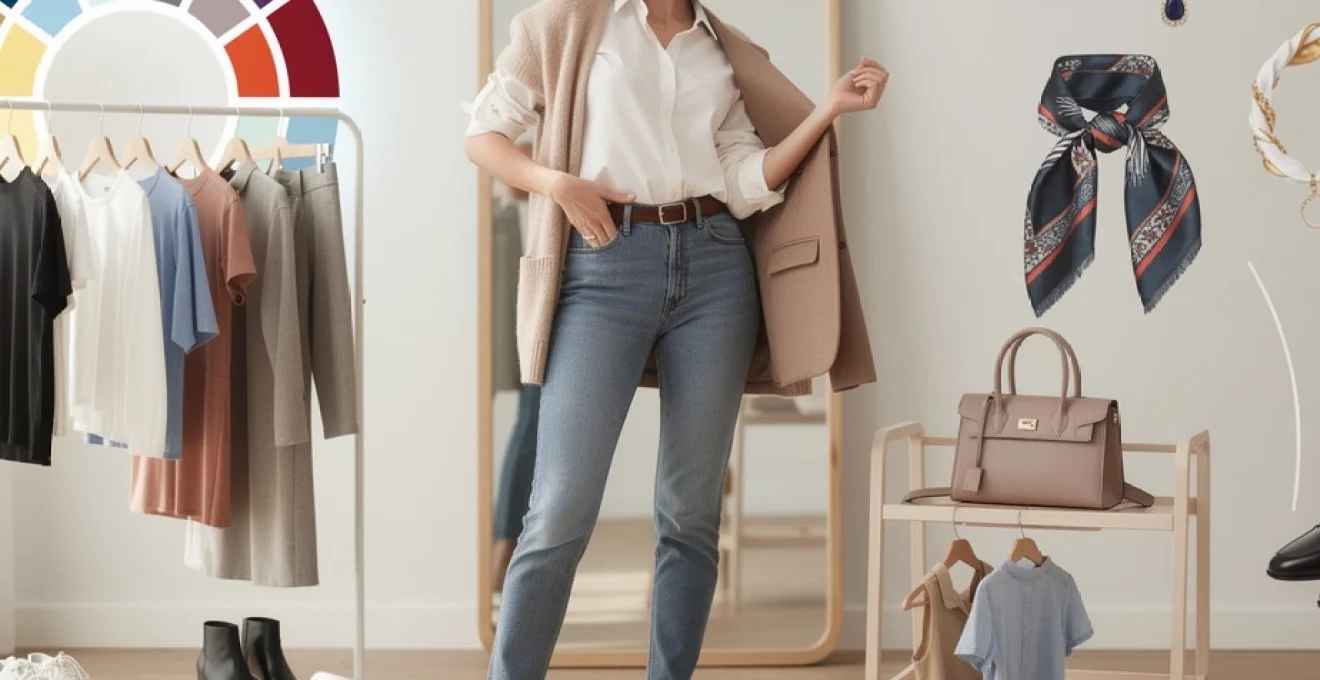
The fashion industry continues to evolve at breakneck speed, yet the most sophisticated style enthusiasts understand that true elegance comes not from constant consumption, but from masterful curation and creative styling of existing garments. Recent studies indicate that the average person wears only 20% of their wardrobe regularly, leaving 80% of clothing underutilised and forgotten. This presents an extraordinary opportunity for style transformation without financial investment or environmental impact.
Professional stylists and fashion consultants have long recognised that the art of dressing well lies not in quantity, but in understanding how to manipulate proportion, colour, and texture to create visually compelling ensembles. The most impactful style refreshes often come from mastering fundamental techniques that maximise the potential of every garment already hanging in your wardrobe.
Strategic wardrobe layering techniques for maximum visual impact
Layering represents one of the most transformative approaches to refreshing your existing wardrobe, offering endless possibilities for creating new silhouettes and visual interest. Professional stylists consider layering an advanced skill that requires understanding of proportion, texture contrast, and colour coordination to achieve sophisticated results.
Mastering the french tuck method for silhouette enhancement
The French tuck technique involves partially tucking the front portion of a shirt or blouse into bottoms whilst leaving the back untucked, creating an asymmetrical hemline that adds visual interest and defines the waistline. This method works particularly well with oversized shirts, loose-fitting blouses, and casual tees, transforming boxy silhouettes into more tailored appearances.
When executing the French tuck, focus on creating a gentle drape rather than a tight tuck. The technique works best when you tuck approximately one-third of the front hem, allowing the remaining fabric to create subtle volume. This approach is especially effective for petite frames as it creates the illusion of longer legs whilst maintaining proportional balance.
Advanced belt positioning for waist definition and proportion control
Strategic belt placement can dramatically alter your silhouette and create entirely new outfit dynamics from existing pieces. High-waisted belt positioning over dresses, oversized jumpers, or long cardigans creates an empire waistline that elongates the lower body and adds structure to flowing garments.
For a more contemporary approach, try positioning belts at the natural waist over blazers or coats to create a cinched silhouette that emphasises the narrowest part of your torso. This technique transforms boxy outerwear into fitted, feminine pieces that flatter various body types whilst adding a polished finishing touch to casual ensembles.
Cardigan and blazer draping techniques for textural depth
Transform traditional blazers and cardigans into statement pieces through strategic draping methods. The shoulder-drape technique involves wearing blazers or cardigans over the shoulders without inserting arms through sleeves, creating a cape-like effect that adds architectural interest to simple outfits.
For cardigans, try the backwards styling method by wearing them reversed with the buttons at the back, creating an entirely different neckline and silhouette. This approach works particularly well with V-neck or scoop-neck cardigans, transforming them into sophisticated layering pieces that add textural contrast to your ensemble.
Sleeve manipulation strategies: rolling, pushing, and scrunching
Sleeve styling represents a subtle yet impactful way to refresh garments and create more polished appearances. The three-quarter push involves gently pushing long sleeves up to three-quarter length, creating casual sophistication that works for both professional and leisure settings.
The French roll technique creates a more structured appearance by folding sleeves in precise increments, whilst the casual scrunch method involves loosely gathering sleeves at the forearm for a relaxed, effortless aesthetic. These techniques can instantly update dated pieces and create visual interest in simple garments.
Colour theory application for wardrobe coordination
Understanding colour theory principles enables you to create sophisticated combinations from existing garments, transforming disparate pieces into cohesive, professionally styled ens
pembles.
Whilst runway collections may appear complex, the underlying logic is simple: colours that share undertones or sit in harmonious relationship on the colour wheel are easier to mix and re-wear. By applying a few foundational principles of colour theory to the clothes you already own, you can instantly expand your outfit options without purchasing a single new piece.
Monochromatic styling with tonal variation principles
Monochromatic dressing involves building an outfit from different shades of the same colour family, creating a streamlined, elongated silhouette. Instead of relying solely on black, experiment with head-to-toe navy, camel, olive, or soft grey to refresh your style without buying new clothes. Varying the depth and intensity of the colour prevents the look from feeling flat and adds subtle sophistication.
Begin by selecting one anchor piece you already love – for example, charcoal trousers or a cream knit. Then, layer in garments and accessories that share the same undertone but differ slightly in lightness or saturation. Imagine your outfit as a paint swatch card: you want related tones that move from light to dark. This approach is particularly effective if you prefer a minimalist wardrobe but still want outfits that appear intentional and polished.
Texture plays a crucial supporting role in monochromatic styling. Combining matte and shiny surfaces, such as wool with silk or denim with fine knitwear, introduces depth without disrupting the cohesive colour story. If you are hesitant about bold colour, start with tonal neutrals; once you become comfortable, you can apply the same principles to richer shades like burgundy, forest green, or rust.
Complementary colour pairing using the itten colour wheel
The Itten colour wheel remains one of the most practical tools for understanding harmonious colour relationships, even if you never physically reference it while getting dressed. Complementary colours sit opposite each other on the wheel – think blue and orange, red and green, or yellow and violet. When paired correctly, these combinations create dynamic contrast that makes outfits appear considered and contemporary.
To apply this concept using existing garments, first identify the dominant colours already present in your wardrobe. If you own many blue pieces, for instance, consider how touches of warm rust, tan, or soft apricot (all within the orange family) could provide balance. You do not need perfect textbook shades; near neighbours on the wheel still provide the visual energy that makes complementary pairings so effective.
For those cautious about bold combinations, use complementary colours in different proportions. A navy trouser and denim shirt can act as your calm base, while a burnt orange belt or copper-toned earrings supply just enough contrast. Think of it as seasoning in cooking: a small amount can transform the flavour of the entire dish without overwhelming it. Over time, you may find yourself experimenting more confidently with bolder, high-impact pairings drawn from the same principle.
Neutral base integration with strategic accent placement
A neutral-heavy wardrobe is not a limitation; it is a flexible foundation for endless outfit variations when used intentionally. Black, white, beige, navy, charcoal, and chocolate brown function as visual “quiet zones” that allow accent colours to shine. By learning to build a neutral base and then adding carefully placed focal points, you can refresh your style without increasing the size of your wardrobe.
Start by assembling base outfits from your most versatile neutral pieces: tailored trousers, simple knits, classic shirts, and structured outerwear. Once the foundation is in place, introduce one or two accent colours through accessories, layering pieces, or footwear. A camel coat with a white tee and denim jeans, for example, feels instantly elevated when paired with a scarlet lip, burgundy scarf, or emerald handbag you already own but rarely reach for.
The key is restraint. Limiting your accents to one colour family per outfit prevents visual clutter and makes your styling appear deliberate. Consider using accent colours near your face – scarves, earrings, necklaces, and tops – to draw attention upwards and enhance your natural features. Over time, you will begin to recognise which accent shades consistently make you feel energised, allowing you to lean into them more confidently when refreshing older pieces.
Seasonal colour analysis application for existing garments
Seasonal colour analysis, often described in terms such as spring, summer, autumn, and winter palettes, helps you determine which undertones harmonise best with your complexion. Whilst professional consultations can be insightful, you can apply the basic framework at home using clothes you already own. The aim is not rigid categorisation, but greater awareness of which colours make you look rested and which appear to drain you.
Begin by trying on tops or draping scarves in different shades under natural light, paying attention to how your skin, eyes, and hair respond. Do cooler, blue-based colours make you look brighter, or do warmer, golden tones feel more flattering? Notice which pieces consistently attract compliments – these are strong clues to your most harmonious palette. As you build outfits, place your most flattering colours close to your face and allow less supportive shades to appear in trousers, skirts, or shoes.
Once you have a rough understanding of your best tones, “shop” your wardrobe through that lens. You may rediscover long-neglected pieces that happen to align with your ideal palette. Conversely, clothes in less flattering colours can often be balanced by layering a more suitable shade on top or adding strategic accessories. Rather than discarding everything that does not fit perfectly, think of seasonal colour analysis as a tool for smarter styling choices with what you already have.
Accessory integration for style transformation
Accessories represent the most efficient way to refresh your style without buying new clothes, functioning as visual punctuation marks in every outfit. Industry research consistently shows that small styling changes – a statement necklace, structured bag, or modern shoe – have a disproportionate impact on perceived polish. When you learn to deploy accessories strategically, even your oldest basics can feel current and intentional.
Statement jewellery focal point creation and balance
Statement jewellery is most effective when it serves as a clear focal point rather than competing with every other element in your look. Think of a bold necklace, sculptural earrings, or a substantial cuff bracelet as the “headline” of your outfit; the rest of your pieces should support, not overshadow, that feature. This is especially powerful when you are working with simple, well-loved basics and want to create a refreshed, elevated impression.
To avoid overpowering your frame, apply a simple balance rule: one statement piece per visual zone (ears, neck, wrists/hands). For example, if you choose large earrings, keep necklaces minimal or omit them entirely, instead pairing with a clean neckline or subtle ring. Conversely, a dramatic pendant sits best with understated studs. You can also use jewellery to redirect attention – a long pendant draws the eye vertically for a lengthening effect, while ear-hugging hoops highlight your jawline.
If you own heirloom jewellery or pieces you rarely wear because they feel “too much” for everyday life, experiment with styling them against casual fabrics. A crystal necklace over a plain grey sweatshirt or vintage brooch on a denim jacket instantly bridges the gap between formal and relaxed, creating a personalised, fashion-forward contrast. Often, the jewellery you already have simply needs a new context rather than a new companion piece.
Scarf styling methods: parisian knots and italian draping
Scarves are among the most versatile tools for refreshing outfits, especially when you experiment with different tying techniques. The classic Parisian knot, where the scarf is folded in half, looped around the neck, and pulled through, creates a neat, symmetrical finish that suits tailored coats and structured blazers. It frames the face, adds warmth, and introduces colour or pattern in a concentrated, intentional way.
Italian-style draping offers a softer, more relaxed alternative. Here, the scarf is casually looped once around the neck, allowing one end to fall slightly longer than the other, or simply draped over the shoulders without a knot. This works beautifully with lightweight fabrics such as silk or modal, creating fluid lines and gentle movement as you walk. If you have scarves languishing in a drawer, try styling them at different lengths and positions – closer to the throat for formality, lower and looser for ease.
Do not overlook non-traditional placements. A silk square can be folded into a narrow band and tied around a ponytail, threaded through belt loops, or wrapped around the handle of a favourite bag to add interest. These small shifts can make long-owned pieces feel suddenly current. Consider scarves as your portable colour and print library: by rotating them through various outfits, you continually refresh your look without altering the core garments.
Bag selection for proportional harmony and outfit elevation
Handbags do far more than carry essentials; they significantly influence the overall proportion and mood of an outfit. The scale, structure, and colour of your bag can either reinforce or disrupt the silhouette you create with your clothes. For instance, a structured top-handle bag lends polish to denim and a T-shirt, while a slouchy tote relaxes the formality of a tailored blazer and trousers.
When selecting from bags you already own, consider both proportion and placement. Petite frames often benefit from medium-sized bags that do not overwhelm the body, whereas taller individuals can comfortably carry larger shapes. Crossbody straps that sit at the widest part of your hips may emphasise that area, so experiment with adjusting the drop length higher or lower to see which position flatters you most. Treat this process like adjusting the focal point of a photograph; small shifts can change the entire composition.
Colour is equally influential. A bag in a bold accent shade can act as the central colour anchor for an otherwise neutral outfit, pulling together disparate elements into a cohesive whole. Conversely, a bag in a shade close to your outerwear creates an uninterrupted vertical line that appears more refined. Before assuming you need a “perfect” new bag, revisit the ones you already own and style them with fresh intention – changing where and how you wear them often yields surprising results.
Footwear selection for silhouette modification
Footwear subtly but powerfully alters your silhouette, affecting not only height but also posture and the visual weight of your lower half. The same pair of jeans can look relaxed with trainers, elegant with pointed flats, or commanding with ankle boots. By consciously rotating through the shoes you already own, you can shift the entire mood of an outfit without changing a single garment.
To elongate the leg line, choose shoes in a shade similar to your trouser or tight colour, or opt for low-contrast nude tones that echo your skin. Pointed or almond toes extend the visual length of the foot, whereas rounded toes create a softer, more casual effect. Block heels add stability and presence, while sleek loafers communicate understated professionalism. Ask yourself: do you want this outfit to feel grounded and practical, or light and refined? Your answer will guide your shoe choice.
Experiment with the “wrong shoe” theory by deliberately pairing dressier pieces with casual shoes and vice versa. A satin skirt with clean white trainers or tailored trousers with chunky sandals introduces a modern tension that keeps outfits from feeling predictable. Often, you will find that shoes you reserve for specific occasions – evening sandals, statement boots – become far more versatile when reimagined with everyday basics.
Garment alteration without professional tailoring
Professional tailoring is invaluable, but many impact-driven adjustments can be made at home using simple techniques. The aim is not to execute complex pattern changes, but to refine fit, length, and silhouette so existing garments serve your current lifestyle and body more effectively. Think of these alterations as small architectural edits that unlock new ways to wear familiar pieces.
Temporary solutions are particularly useful if you are experimenting. Fabric-friendly tape or small binder clips hidden at the back of a waistband can help you test new hemlines or nipped-in silhouettes before committing to permanent changes. Rolling or cuffing trousers to just above the ankle instantly modernises older cuts, especially when paired with streamlined shoes. Similarly, tying the ends of a button-down shirt at the waist can transform a long, boxy style into a cropped layer ideal for high-rise bottoms.
For simple permanent alterations, learn a few foundational skills: sewing on buttons securely, taking in a side seam by a small margin, or hemming straight-leg trousers. Numerous step-by-step tutorials are available online, and practising on less precious items first builds confidence. Even a basic knowledge of hand-stitching allows you to repair loose seams or adjust strap lengths, potentially rescuing garments you had mentally written off.
If you own pieces that almost work but not quite – a dress that feels slightly too long, a blazer whose sleeves swamp your hands – identify the single most disruptive issue and address that first. Often, one precise change is enough to render the item wearable again. The goal is sustainable style: extending the active life of what you already own through thoughtful, low-cost interventions rather than defaulting to replacement.
Mix-and-match formula development
One of the most effective ways to refresh your style without buying new clothes is to create reliable outfit formulas using existing pieces. A formula is essentially a repeatable structure – for example, “tailored trousers + relaxed knit + structured shoe” – that you can reinterpret with different items and colours. This not only streamlines your morning routine but also ensures your wardrobe is working hard for you.
Start by identifying three to five outfits in which you consistently feel confident. Analyse what they have in common: is it a particular silhouette, such as fitted top with wide-leg bottom, or a recurring combination of textures like denim with soft knitwear? Once you recognise these patterns, you can deliberately construct similar looks with other garments you already own. It is similar to having a favourite recipe; once you know the basic method, you can substitute ingredients without losing the overall effect.
To make this process tangible, consider creating a simple outfit matrix. Choose three top categories (e.g. shirts, knits, tees), three bottom categories (e.g. jeans, tailored trousers, skirts), and three outer layers (e.g. blazers, cardigans, jackets). Then, challenge yourself to build at least one outfit from each intersection. You may discover unexpected pairings – that floral blouse with your pinstripe trousers, or the long cardigan over a dress you previously wore only on its own – that suddenly feel fresh.
Documenting successful combinations is invaluable. Take quick mirror photos when you land on an outfit you like and save them in a dedicated album on your phone. On days when you feel stuck, you can “shop” this visual archive instead of assuming you need something new. Over time, these formulas become second nature, allowing you to rotate through more of your wardrobe and reduce the temptation to impulse shop.
Seasonal transition styling methodologies
Seasonal shifts are often when we feel the strongest urge to buy new clothes, yet they also present the best opportunity to reimagine what we already own. By approaching transitions strategically – layering intelligently, rotating fabrics, and redefining how you categorise certain pieces – you can navigate changing temperatures with minimal additions. Think of each new season as an invitation to re-style, not to re-stock.
Begin by identifying “bridge” pieces in your wardrobe: garments that work across multiple seasons when layered differently. A lightweight dress, for example, can move from summer to autumn when worn with opaque tights, ankle boots, and a chunky cardigan. Conversely, a fine-gauge roll-neck can slide under slip dresses, shirts, or blazers to extend their wear into cooler months. By thinking in terms of adaptability rather than strict seasonal boundaries, you multiply your outfit possibilities.
Fabric pairing is another powerful tool. As temperatures drop, gradually introduce heavier textures – wool, corduroy, cashmere – alongside remaining lighter pieces such as cotton and linen. The contrast not only adds visual richness but also keeps you comfortable in unpredictable weather. In spring, reverse the equation by mixing emerging warm-weather items with structured outer layers until the climate stabilises. This staggered approach prevents the all-or-nothing wardrobe switch that often triggers unnecessary shopping.
Finally, treat seasonal wardrobe reviews as deliberate styling sessions rather than administrative chores. As you rotate clothes in and out of storage, evaluate which pieces you are genuinely excited to wear again and which consistently remain untouched. Ask yourself why: is it fit, colour, or simply that your lifestyle has changed? Use those insights to style neglected items in new ways or to decide, consciously and sustainably, which pieces should be donated, sold, or altered. In doing so, you align your wardrobe with your current reality, ensuring that refreshing your style comes from intention rather than acquisition.