
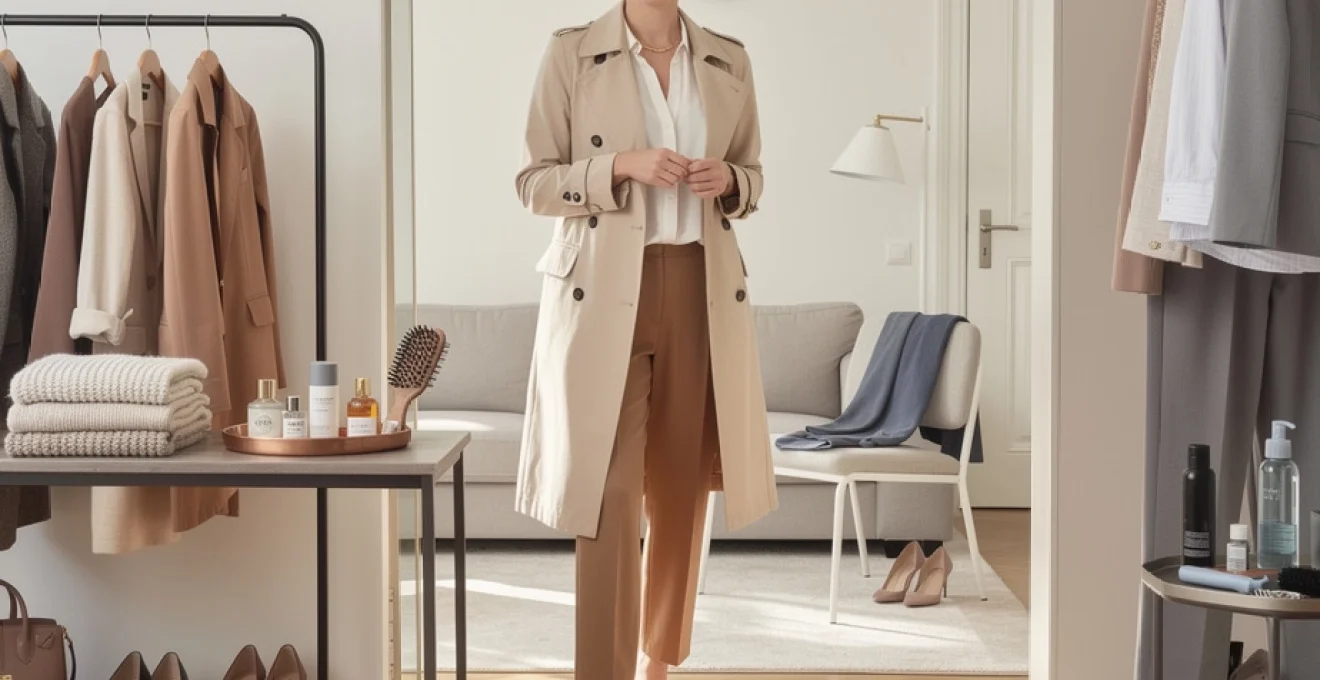
Looking consistently polished and put-together has become more challenging in today’s fast-paced world, yet it remains one of the most powerful tools for professional success and personal confidence. The difference between appearing effortlessly stylish and perpetually dishevelled often lies not in expensive clothing or hours of preparation, but in mastering strategic systems that work seamlessly with your lifestyle. Understanding these foundational principles can transform your daily appearance from reactive scrambling to purposeful presentation.
The secret to maintaining a consistently polished appearance lies in developing sustainable routines and making intelligent choices about wardrobe investments, grooming protocols, and time management. Rather than relying on daily inspiration or extensive morning routines, successful style maintenance requires systematic approaches that function regardless of your energy levels or time constraints. These methods focus on creating frameworks that support your best self-presentation whilst accommodating the realities of modern life.
Essential wardrobe foundation systems for effortless daily styling
Building a wardrobe that consistently delivers put-together looks requires strategic planning rather than impulse purchasing. The foundation of effortless style lies in creating systematic approaches to clothing selection, storage, and coordination that eliminate daily decision fatigue whilst maximising outfit possibilities.
Capsule wardrobe architecture using the 5-4-3-2-1 formula
The 5-4-3-2-1 formula represents a revolutionary approach to capsule wardrobe construction that ensures maximum versatility with minimal pieces. This system includes five neutral base pieces, four coordinating tops, three statement pieces, two outerwear options, and one signature accessory category. This mathematical approach eliminates guesswork whilst creating numerous outfit combinations from a carefully curated selection.
Implementation begins with selecting five foundational pieces in neutral colours that form the backbone of your wardrobe. These typically include well-fitted trousers, a classic blazer, a versatile dress, quality jeans, and a coordinating skirt or additional trouser option. The four coordinating tops should complement these bases whilst offering variety in textures and necklines. Your three statement pieces provide personality and visual interest, preventing the monotony often associated with minimalist wardrobes.
The psychological benefit of this system extends beyond mere convenience. Research indicates that individuals who implement structured wardrobe systems report increased confidence and reduced morning stress levels. The predictability of successful outfit combinations eliminates the anxiety associated with last-minute clothing decisions, allowing you to focus mental energy on more important daily priorities.
Investment piece selection criteria for maximum Cost-Per-Wear value
Strategic investment in high-quality pieces requires understanding the relationship between cost, durability, and frequency of use. The cost-per-wear calculation becomes your guiding principle: divide the purchase price by the expected number of times you’ll wear the item to determine its true value. Items worn weekly for a year justify significantly higher initial investments than occasional special-event pieces.
Quality indicators transcend brand names and price tags. Examine construction details such as reinforced seams, quality button attachment, and fabric weight consistency. Natural fibres generally provide superior longevity and appearance retention compared to synthetic alternatives, though modern fabric technology has created excellent synthetic options that rival natural materials in performance and aesthetics.
Investment pieces should serve multiple functions within your wardrobe ecosystem, adapting to various occasions and seasonal requirements whilst maintaining their structural integrity and aesthetic appeal over time.
The selection process requires honest assessment of your lifestyle and genuine clothing needs. A beautiful silk blouse represents poor value if your daily environment doesn’t accommodate delicate fabrics. Conversely, a well-constructed wool blazer that transitions seamlessly from professional meetings to casual weekend activities justifies premium pricing through its versatility and durability.
Colour palette psychology and the rule of three coordination method
Colour coordination significantly impacts perceived put-togetherness, yet many individuals struggle with effective colour matching. The Rule of Three simplifies this process by limiting each outfit to a maximum of three colours, including neutrals. This constraint forces thoughtful selection whilst preventing the visual chaos that accompanies poorly coordinated colour schemes.
Understanding your personal colour palette involves identifying undertones in your skin, hair, and eyes to determine which colour
undertones work best. Broadly, people fall into warm, cool or neutral categories. Warm undertones usually glow in earthy tones like camel, olive, rust and warm ivory, while cool undertones tend to look fresher in charcoal, navy, true white and jewel tones. If both gold and silver jewellery suit you equally, you may sit in the neutral camp and can often wear a broader spectrum without clashing.
The Rule of Three also applies to your overall colour palette, not just individual outfits. Selecting one dominant base colour (such as navy, black or camel), one secondary neutral (grey, cream or white) and one to two accent colours creates a wardrobe where pieces naturally harmonise. Over time, this disciplined approach to colour purchasing means you can reach into your wardrobe in low light or under time pressure and still emerge looking coordinated, because nearly everything already works together.
Fabric technology and wrinkle-resistant material selection
Even the most carefully planned outfit can look tired if fabrics crease, cling or lose structure an hour after you leave the house. Modern fabric technology offers numerous wrinkle-resistant and performance blends that maintain a polished look from morning commute to evening commitments. When you prioritise these materials in high-friction categories such as trousers, shirts and dresses, you significantly reduce the maintenance required to look put-together in everyday life.
Look for fabric labels that combine natural fibres with small percentages of elastane, Lycra or polyester, as these blends often provide both comfort and crease resistance. Technical cottons, travel-specific wool blends and certain viscose mixes are designed to bounce back after sitting, commuting or packing in a suitcase. A simple test in the fitting room—scrunching a small section of fabric in your hand for 10 seconds and observing how quickly it relaxes—can reveal how the garment will behave during real-world wear.
Wrinkle-resistant fabrics are particularly valuable for those with demanding schedules, frequent travel or limited time for ironing and steaming. Whilst pure linen may photograph beautifully, it can quickly undermine a crisp, professional appearance if you spend your day in meetings or presentations. Choosing smarter fabric technology in your core pieces is akin to setting your style on autopilot: the garments do more of the work for you, so you can focus on performance rather than constant outfit management.
Advanced personal grooming protocols for consistent appearance standards
Clothing alone cannot create a consistently polished impression; grooming forms the crucial foundation that supports every outfit. When your skin, hair, nails and facial features are maintained through sustainable routines, even simple clothing combinations appear elevated. Advanced grooming protocols do not necessarily mean complicated or expensive treatments—they rely on strategic, repeatable systems that deliver predictable results with minimal daily decision-making.
Strategic skincare regimen design using active ingredient layering
A strategic skincare routine focuses less on owning numerous products and more on using a curated selection in the correct order and frequency. Active ingredient layering refers to the intentional combination of proven components—such as retinoids, vitamin C, niacinamide and exfoliating acids—to address specific concerns whilst protecting the skin barrier. When executed correctly, this approach leads to clearer, more even-toned skin that reduces your reliance on heavy makeup to look put-together.
Dermatological guidelines typically recommend a simple morning structure of gentle cleanser, antioxidant serum (commonly vitamin C), lightweight moisturiser and broad-spectrum SPF 30 or higher. Evening routines often revolve around thorough cleansing, targeted treatment (such as a retinoid, AHA/BHA exfoliant or niacinamide serum) and a nourishing moisturiser to support overnight repair. The key to safe layering is introducing one active ingredient at a time, starting with low frequencies and gradually building up as your skin tolerates the product.
Think of active ingredient layering as building a training programme for your skin: you would not run a marathon without gradually increasing distance, and your skin should not be exposed to multiple strong actives at full strength on day one. Pay close attention to signs of irritation such as persistent redness, burning or excessive dryness, and adjust frequency accordingly. Over time, a disciplined, well-designed regimen produces a healthy, luminous complexion that instantly contributes to a more polished overall appearance—even on makeup-free days.
Hair styling efficiency techniques with heat-protectant integration
Hair often acts as the visual frame for your face; when it looks intentionally styled, your entire look appears more cohesive. The challenge lies in achieving this consistently without spending excessive time each morning. Developing two or three reliable hair styling “modules”—for example, a quick blow-dry with volume, a sleek low bun and a polished ponytail—allows you to adapt to varying time constraints whilst maintaining a high standard of presentation.
Heat tools can dramatically speed up styling, but only when paired with rigorous heat-protectant use. Modern heat-protectant sprays and creams coat the hair shaft, reducing moisture loss and cuticle damage from straighteners, curling irons and blow-dryers. Integrating a heat protectant into your routine is non-negotiable if you regularly use styling tools; skipping this step is comparable to ironing silk without checking the temperature—it may look fine once or twice, but cumulative damage becomes visible over time.
For maximum efficiency, consider batch-styling where possible. Washing and heat-styling your hair two to three times per week, then relying on dry shampoo, smoothing serums and simple updos in between, drastically reduces daily effort. You might ask, “Is it realistic to look put-together on day three hair?” With the right foundational blow-dry, a protective product and a repertoire of quick styles, the answer is yes—and your hair will likely be healthier for it.
Nail care maintenance systems for professional presentation
Hands are frequently visible during conversations, meetings and daily interactions; neglected nails can subtly undermine an otherwise polished look. A nail care maintenance system focuses on regular, light-touch upkeep rather than occasional, intensive rescue sessions. This includes keeping nails at a uniform length, maintaining clean cuticles and ensuring polish—if worn—is either freshly applied or fully removed rather than chipped.
Many professionals find success with a fortnightly or three-weekly at-home manicure schedule supplemented by quick weekly check-ins. During your main session, shape nails with a fine-grit file, gently push back cuticles with a soft tool, apply a strengthening base coat and finish with a neutral or sheer colour that shows chips less readily. On busy weeks, a clear gloss or nail strengthener alone provides a clean, intentional look with minimal effort, making it an excellent option for demanding lifestyles.
Think of neutral nails as the “capsule wardrobe” of grooming—they coordinate with every outfit and require fewer emergency fixes. If salon appointments form part of your self-care routine, consider opting for hard-wearing finishes such as gel or dip manicures in understated shades. These typically last 2–3 weeks with minimal maintenance, ensuring your nails contribute positively to your overall put-together impression even when your schedule is intense.
Eyebrow architecture and facial symmetry enhancement methods
Eyebrows act as structural anchors for the face, influencing perceived symmetry, expression and even age. Well-shaped brows create an immediate lifting effect, drawing attention to the eyes and balancing facial proportions. Conversely, over-plucked, uneven or untidy brows can distract from an otherwise cohesive look. Eyebrow architecture refers to the deliberate shaping and grooming strategies used to create harmonious proportions tailored to your unique bone structure.
Professional mapping techniques typically identify three key points: the brow start (aligned with the inner corner of the eye), the arch (roughly above the outer edge of the iris) and the tail (extending towards the outer corner of the eye). Even if you maintain your brows at home, using a pencil or thin brush to mark these points before tweezing or trimming can prevent overly aggressive removal. Many people benefit from an initial professional shaping session, followed by simple at-home maintenance of stray hairs between appointments.
Daily enhancement need not be complex. A tinted brow gel can quickly add definition and hold, whilst a fine brow pencil fills sparse areas with hair-like strokes. If full makeup is not part of your routine, prioritising brows and lashes alone can still dramatically increase your perceived “put-togetherness”. In many ways, brows function like the frame of a painting: when the frame is balanced and well-maintained, everything within it appears more intentional and refined.
Time-optimised morning routine engineering
Aligning your grooming and styling systems with realistic time constraints is essential for sustaining a polished appearance over the long term. A time-optimised morning routine treats your preparation like a streamlined workflow rather than a sequence of ad hoc tasks. The objective is not to rush, but to design a predictable structure that delivers consistent results in a fixed timeframe—often 20 to 40 minutes, depending on your needs.
Begin by reverse-engineering your ideal departure time and allocating time blocks to key activities: skincare and makeup, hair, dressing, and essential admin tasks such as preparing a bag or organising documents. Many people discover they are losing valuable minutes through micro-delays—searching for jewellery, locating a specific blazer, or deciding between two lip colours. Pre-planning mitigates this: laying out your outfit the night before, pre-packing your bag and keeping everyday accessories in a dedicated tray can save more time than any single product or tool.
Consider using “routine stacking” to increase efficiency. For example, you might apply a hydrating mask while preparing breakfast, or allow your heat protectant to absorb while you choose shoes and accessories. Grouping similar tasks—such as doing all skincare steps at the bathroom sink before moving to a dedicated area for makeup and hair—reduces mental switching costs. Over time, this engineered sequence becomes almost automatic, freeing cognitive bandwidth and ensuring that looking put-together becomes the default outcome rather than an occasional success.
Posture mechanics and body language optimisation techniques
Even the most meticulously curated outfit can be undermined by slouched posture or closed body language. How you carry yourself communicates confidence, competence and energy before you say a single word. Improving posture mechanics is not purely aesthetic; research links good alignment with reduced musculoskeletal pain and increased feelings of alertness, both of which support a consistently polished presence.
A practical starting point involves awareness of three anchor points: feet grounded hip-width apart, shoulders gently rolled back and down, and spine lengthened as though a string were lightly drawing the crown of your head upwards. This alignment distributes weight evenly and opens the chest, creating an immediate impression of poise. Incorporating short daily exercises—such as wall angels, planks or simple back-strengthening movements—can gradually correct habitual slouching and make upright posture more comfortable to maintain.
Body language optimisation extends beyond static posture to include how you move through space. Purposeful, measured walking, deliberate gestures and steady eye contact all reinforce the message that you are composed and in control. Have you ever noticed how someone in a basic T-shirt and jeans can still appear remarkably put-together? Often, it is their posture and presence doing the heavy lifting. When clothing, grooming and body language all align, the overall effect is exponentially greater than any single element could achieve alone.
Emergency style recovery protocols and quick-fix solutions
Even with the best systems in place, unexpected situations will arise: a spilled coffee, a sudden meeting, a missed alarm. Emergency style recovery protocols ensure that a minor mishap does not derail your entire day or your sense of professionalism. Rather than improvising under pressure, you establish predetermined responses—much like a personal “style contingency plan”—that you can activate within minutes.
A well-stocked emergency kit is the cornerstone of this approach. Depending on your environment, this might live in your desk drawer, car or everyday bag and include items such as a mini lint roller, double-sided fashion tape, stain-removal wipes, a compact hairbrush, spare hair ties, blotting papers, a neutral lipstick, safety pins and a small sewing kit. These tools address the most common wardrobe malfunctions and grooming issues quickly, allowing you to restore a polished appearance with minimal disruption.
Clothing-based protocols are equally important. Keeping a neutral blazer, a pair of classic shoes and a simple scarf or necklace at the office, for instance, enables you to instantly elevate a casual outfit if an unscheduled presentation or client visit arises. Similarly, a “one-minute hairstyle”—such as a sleek low bun or polished ponytail—can transform slightly dishevelled hair into an intentional style. Ask yourself: if you had only five minutes to upgrade your current appearance, what are the two or three actions that would make the greatest visible difference? Identifying these in advance is the essence of effective emergency style planning.
Ultimately, consistently looking put-together in everyday life is less about perfection and more about robust systems that support you on both good days and challenging ones. When your wardrobe, grooming, routines, posture and contingency plans all work together, showing up as your most polished self becomes not an occasional achievement, but a reliable standard you can maintain with confidence.