
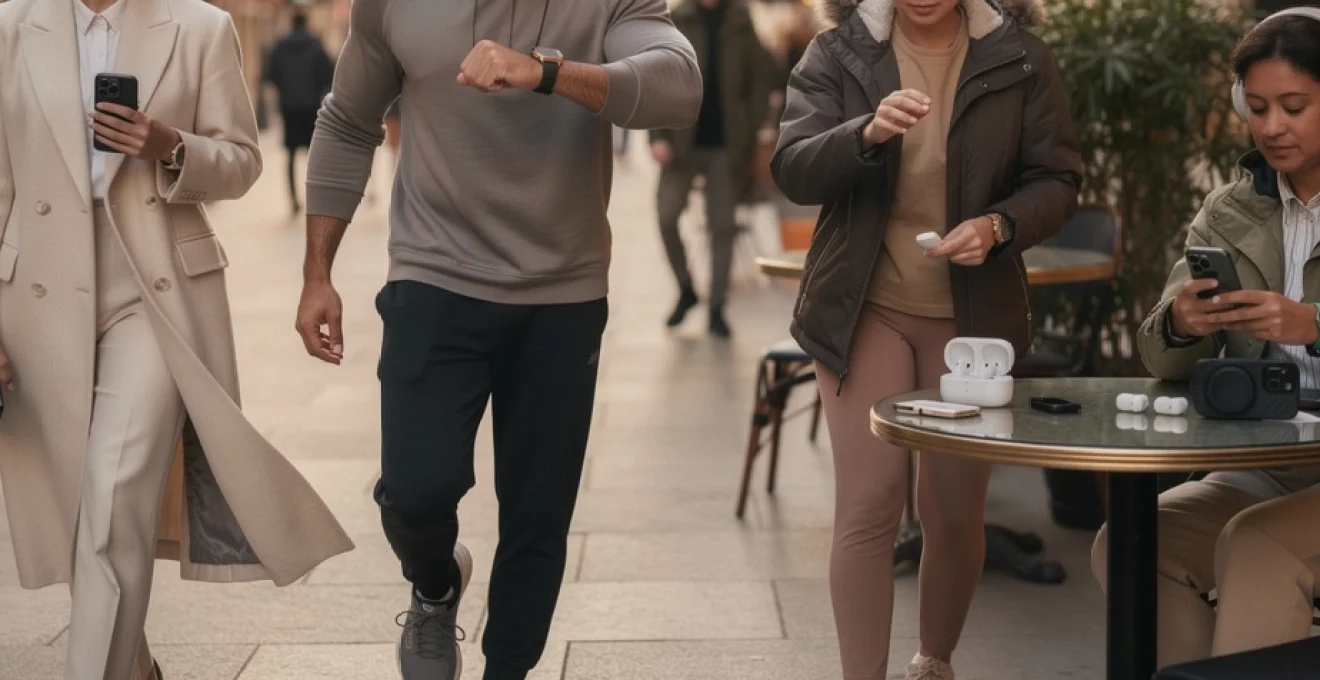
The boundary between technology and fashion has dissolved, creating a new paradigm where tech accessories serve as powerful style statements rather than mere functional tools. Today’s consumers approach their smartwatches, wireless earbuds, and phone cases with the same consideration they once reserved for jewellery and handbags. This transformation reflects a broader cultural shift where digital devices have become extensions of personal identity, requiring the same aesthetic attention as traditional fashion accessories.
The global wearable technology market, valued at approximately £85 billion in 2023, demonstrates how consumers increasingly prioritise products that seamlessly blend cutting-edge functionality with sophisticated design. From luxury fashion houses collaborating with tech giants to independent designers creating bespoke phone cases, the industry has recognised that modern consumers refuse to compromise between style and technological advancement. This evolution has fundamentally altered how brands approach product development, marketing strategies, and consumer engagement across both fashion and technology sectors.
Smart device integration in contemporary fashion ecosystems
The integration of smart devices into contemporary fashion ecosystems represents a fundamental shift in how consumers conceptualise personal accessories. Modern wearable technology has transcended its utilitarian origins to become sophisticated fashion statements that complement and enhance personal style. The most successful smart devices now function as seamless extensions of the wearer’s aesthetic preferences whilst delivering advanced technological capabilities.
Contemporary fashion brands have recognised that consumers seek devices that adapt to their lifestyle rather than forcing them to adapt to technology. This philosophy has driven innovation in materials, design languages, and customisation options across the smart device landscape. The result is a marketplace where technological sophistication and aesthetic appeal are no longer mutually exclusive considerations.
Apple watch series 9 as premium lifestyle signalling
The Apple Watch Series 9 exemplifies how premium smartwatches have evolved into sophisticated lifestyle signalling devices. Its refined design language, featuring a larger and brighter display with enhanced colour accuracy, positions it as a statement piece rather than merely a fitness tracker. The device’s ability to seamlessly transition from boardroom meetings to weekend adventures demonstrates how modern consumers expect their accessories to adapt to multiple lifestyle contexts.
Apple’s strategic partnership programme with luxury fashion brands has elevated the Series 9 beyond traditional tech accessory status. The availability of premium materials including titanium and ceramic cases, coupled with designer band collaborations, enables users to curate their devices according to personal style preferences. This customisation capability has made the Apple Watch a canvas for self-expression, similar to how consumers approach traditional jewellery selection.
Samsung galaxy watch ultra in athletic fashion communities
Samsung’s Galaxy Watch Ultra has carved out a distinctive position within athletic fashion communities by emphasising rugged sophistication over minimalist aesthetics. The device’s robust titanium construction and enhanced durability features appeal to consumers who require professional-grade functionality without sacrificing style credentials. Its distinctive square-circular hybrid design creates a bold visual statement that differentiates it from more conventional smartwatch offerings.
The Galaxy Watch Ultra’s success within athletic fashion communities stems from its ability to maintain luxury appeal whilst delivering serious performance capabilities. Features such as 100-hour battery life and advanced health monitoring position it as a serious tool for fitness enthusiasts, whilst premium materials and customisable interfaces ensure it remains appropriate for professional and social contexts.
Fitbit sense 2 positioning in Wellness-Oriented style segments
Fitbit’s Sense 2 demonstrates how wellness-focused wearables can achieve fashion credibility through thoughtful design execution and strategic positioning. The device’s emphasis on stress management, sleep tracking, and mindfulness features aligns perfectly with contemporary wellness culture, positioning it as an essential accessory for health-conscious consumers. Its sleek profile and variety of band options enable seamless integration into diverse style preferences.
The Sense 2’s approach to fashion integration focuses on understated elegance rather than bold statement-making. This design philosophy resonates with consumers who prefer subtle luxury indicators over ostentatious displays of wealth or technology adoption. The device’s ability to provide comprehensive health insights whilst maintaining aesthetic discretion has made it particularly popular among professional women seeking wellness technology that complements their personal brand.
Garmin fenix 7X adoption among outdoor fashion enthusiasts
The Garmin Fenix 7X represents the convergence of serious outdoor functionality with increasingly sophisticated
design aesthetics, making it increasingly visible in outdoor fashion communities. Once associated almost exclusively with ultra-endurance athletes and professional explorers, the Fenix 7X has crossed over into mainstream style as a rugged statement piece that signals an affinity for adventure. Its oversized bezel, sapphire crystal lens, and bold colourways pair naturally with technical outerwear, utilitarian streetwear, and the wider gorpcore movement, where performance gear is worn as everyday fashion.
For outdoor fashion enthusiasts, the Garmin Fenix 7X operates as both a practical navigation tool and a visible indicator of lifestyle values. The watch’s extended battery life, multi-band GPS, and sport-specific profiles reinforce its credibility among serious users, whilst interchangeable straps in materials like nylon, silicone, and leather allow for contextual styling from hiking trails to urban environments. This dual role—high-spec equipment and visual shorthand for an active, outdoors-oriented identity—explains its steady adoption in fashion editorials, influencer content, and capsule collections centred on performance-inspired style.
Luxury tech accessory market dynamics and consumer psychology
The luxury tech accessory segment showcases how pricing, design, and branding intersect with consumer psychology to transform everyday gadgets into aspirational objects. As wearables and audio devices become more homogeneous in baseline functionality, brands differentiate through materials, craftsmanship narratives, and status-driven positioning. Consumers are no longer evaluating solely on specifications; they are assessing how a pair of headphones or a smartwatch will signal taste, cultural literacy, and socio-economic standing.
In this context, luxury tech accessories operate similarly to designer handbags or premium sneakers: they function as semiotic tools that communicate belonging to particular tribes or lifestyles. The willingness to pay substantial premiums for limited editions, co-branded collaborations, or bespoke finishes reflects a deeper desire for conspicuous—but increasingly nuanced—consumption. Understanding this psychology is essential for brands seeking to develop tech accessories as fashion statements rather than commodity hardware.
Premium pricing strategies for AirPods pro and bang & olufsen headphones
Apple’s AirPods Pro and Bang & Olufsen’s premium headphones illustrate two distinct but complementary approaches to luxury pricing in tech accessories. AirPods Pro leverage Apple’s ecosystem lock-in and cultural ubiquity to justify a premium price point for what has effectively become a default audio accessory in many urban environments. Their instantly recognisable silhouette and white finish operate as subtle status markers, signalling participation in Apple’s broader lifestyle universe.
Bang & Olufsen, by contrast, leans heavily into audio heritage, Scandinavian design minimalism, and artisanal material choices to sustain even higher price tiers. Products like the Beoplay H95 use aluminium, lambskin, and carefully tuned acoustic profiles to position themselves as audiophile-grade fashion objects. For consumers, the decision to invest in such headphones often parallels the logic behind buying a mechanical watch over a basic quartz model: the perceived emotional, aesthetic, and cultural value outweighs the purely functional need.
Hermes apple watch edition as status symbol commodification
The Hermès Apple Watch Edition represents one of the most explicit examples of status symbol commodification in the tech accessory landscape. By combining Apple’s flagship smartwatch with Hermès’ equestrian-inspired leathercraft and iconic branding, the collaboration transforms a mass-market device into a limited, high-prestige object. The signature double tour straps and exclusive watch faces elevate the product from a fitness tracker to a luxury timepiece alternative.
From a consumer psychology perspective, purchasing an Hermès Edition is less about incremental functionality and more about signalling refined taste and access to heritage luxury. The higher price point, often more than double a standard Apple Watch, capitalises on scarcity, brand equity, and the desirability of cross-industry collaborations. For many buyers, the device becomes a wearable signifier comparable to a logo handbag or designer belt, aligning them with a specific social and aesthetic milieu.
Louis vuitton horizon earphones market positioning analysis
Louis Vuitton’s Horizon Earphones occupy a niche at the intersection of high fashion and portable audio, illustrating how far the concept of tech as jewellery has progressed. Priced significantly above mainstream wireless earbuds, they rely on the brand’s monogram, lacquered finishes, and premium charging case design to rationalise their luxury positioning. The underlying audio technology, co-developed with established audio specialists, ensures competitive performance but is not the primary selling point.
Instead, the Horizon Earphones function as micro icons of the Louis Vuitton universe, visible every time the case is placed on a café table or retrieved from a monogrammed tote. This visibility is crucial: in crowded urban environments where tech accessories are constantly on display, consumers are willing to pay more for items that extend their existing luxury wardrobes into the digital realm. The earphones therefore operate as entry-level luxury for some audiences and as complementary brand reinforcement for existing Vuitton clients.
Montblanc smart headphones brand collaboration impact
Montblanc’s entry into smart headphones highlights how heritage brands leverage collaborations and licensing to stay relevant in a technology-driven landscape. Known primarily for writing instruments and leather goods, Montblanc has used audio accessories to reposition itself as a broader lifestyle brand for modern professionals. By partnering with established audio engineers and integrating features such as active noise cancellation and adaptive sound profiles, the brand ensures functional credibility while foregrounding its design DNA.
The impact of these smart headphones extends beyond direct sales figures. They serve as mobile billboards for Montblanc’s renewed identity, particularly in airport lounges, co-working spaces, and premium hospitality environments where affluent users congregate. The combination of discreet branding, high-quality materials, and compatibility with business travel routines reinforces Montblanc’s association with global mobility and executive sophistication, strengthening the brand ecosystem as a whole.
Influencer-driven tech accessory adoption patterns
Influencers have become pivotal in shaping how tech accessories are perceived, adopted, and styled within digital culture. Unlike traditional advertising, influencer content embeds devices and accessories into aspirational yet ostensibly authentic lifestyle narratives. When a creator pairs wired headphones with a vintage blazer or shows a stack of colourful phone cases organised like nail polish, they are teaching audiences new visual grammars for integrating technology into everyday outfits.
These adoption patterns often begin in niche communities—such as wellness creators showcasing Oura rings, or Y2K-inspired influencers styling beaded phone straps and retro digital cameras—before diffusing into mainstream fashion consciousness. As we scroll through TikTok and Instagram, we are repeatedly exposed to curated tech aesthetics that normalise treating devices like jewellery or handbags. This repetition accelerates trend cycles: products that might once have taken years to become style staples can now achieve viral status in a matter of days.
Material innovation and aesthetic convergence in wearable technology
Material innovation sits at the heart of the convergence between tech accessories and fashion, allowing devices to meet expectations for comfort, durability, and visual appeal. As consumers become more discerning, they scrutinise not only specifications but also the tactility, weight, and environmental footprint of their accessories. In response, brands are experimenting with advanced alloys, ceramics, recycled composites, and bio-based polymers to differentiate their products.
This wave of innovation mirrors the evolution of performance fabrics in sportswear: just as Gore-Tex and recycled nylon transformed outdoor apparel, cutting-edge materials are redefining what a smartwatch, phone case, or pair of headphones can look and feel like. The result is a generation of wearable technology that aspires to the same level of design literacy as luxury fashion, blurring the boundary between hardware and haute couture.
Titanium and ceramic applications in apple watch ultra design
The Apple Watch Ultra showcases how premium materials like titanium and ceramic can elevate a device from utilitarian tool to covetable design object. Titanium offers a compelling blend of strength, lightness, and corrosion resistance, making the watch comfortable for all-day wear whilst signalling technical sophistication. Ceramic components, when used in bezels or case backs, add a scratch-resistant, lustrous finish reminiscent of high-end timepieces from traditional Swiss manufacturers.
From a style perspective, these materials communicate durability and refinement in equal measure. The muted sheen of titanium pairs effortlessly with both performance outerwear and minimalist tailoring, while ceramic accents echo the glossy finishes found in luxury jewellery. For consumers, choosing an Apple Watch Ultra is not simply about extra battery life or dive-ready features; it is a decision to wear a piece of industrial design that aligns with broader trends in understated, premium aesthetics.
Sustainable material integration in fairphone accessories
Fairphone has become a reference point for sustainable tech accessories, demonstrating that ethical considerations can coexist with strong aesthetic appeal. The brand’s ecosystem of modular cases, screen protectors, and chargers is designed around repairability and responsible sourcing, addressing growing consumer concerns about e-waste and supply chain transparency. By foregrounding recycled plastics and fair-trade materials, Fairphone positions its accessories as conscious choices rather than disposable add-ons.
Visually, these products embrace a straightforward, functional aesthetic that communicates honesty and environmental responsibility. For style-conscious consumers who prioritise values-driven purchasing, carrying a Fairphone with matching accessories acts as a quiet statement of alignment with circular design principles. In an era where sustainability is becoming a core part of personal branding, such tech accessories help users project a narrative of mindful consumption.
Graphene-enhanced phone cases by pitaka and peak design
Brands like Pitaka and Peak Design are experimenting with graphene-enhanced composites to create phone cases that are both ultra-thin and exceptionally strong. Graphene’s remarkable properties—high tensile strength, thermal conductivity, and lightness—enable protective shells that avoid the bulk associated with traditional rugged cases. This matters stylistically: users can maintain the slim profile of flagship smartphones while still signalling an appreciation for cutting-edge engineering.
The aesthetic language of these cases often leans towards technical minimalism, with subtle patterns and muted colour palettes that complement contemporary streetwear and office attire alike. In many ways, graphene phone cases function like high-performance sneakers: they offer genuine functional benefits while also operating as visible markers of technological awareness. For early adopters, owning such accessories is a way to demonstrate engagement with the latest material science without needing to explain specifications in detail.
Bio-based polymer development in pela case manufacturing
Pela Case illustrates how bio-based polymers can transform an everyday object like a phone case into a conversation piece around sustainability. Made from a proprietary blend of plant-based materials and recycled content, Pela cases are designed to be compostable in controlled conditions, challenging the assumption that protective tech accessories must be made from conventional plastics. Their soft-touch finish and flexible structure provide a distinctive tactile experience that differentiates them from hard-shell competitors.
From a fashion standpoint, Pela leverages colour and illustration to position its cases as cheerful, eco-conscious style accents. Pastel tones, botanical motifs, and limited-edition artist collaborations allow users to treat their phones as rotating canvases for self-expression. The combination of playful aesthetics and credible environmental claims resonates strongly with younger consumers, especially those for whom eco-luxury—the blending of sustainability and style—is becoming the default expectation rather than a niche preference.
Cross-industry collaborations reshaping tech accessory aesthetics
Cross-industry collaborations between fashion houses, streetwear labels, and technology manufacturers are redefining what tech accessories can look like. When brands such as Hermès, Dior, or Louis Vuitton reinterpret earbuds, watches, or phone cases, they import their visual heritage—monograms, colour codes, signature hardware—into the world of consumer electronics. The result is a hybrid product that carries the cultural capital of both sectors.
These collaborations function as powerful storytelling devices. A limited-edition smartwatch band co-designed with a luxury maison signals a different lifestyle narrative from a standard silicone strap, even if the underlying technology remains identical. For tech brands, partnerships offer instant access to new style-conscious audiences; for fashion labels, they provide relevance in an increasingly digital, device-centric culture. As we look ahead, it is likely that the most successful tech fashion statements will be those born from genuine, long-term collaborations rather than superficial logo placements.
Social media amplification of tech fashion trends and viral accessories
Social media platforms have become accelerators for tech fashion trends, turning niche accessories into global phenomena almost overnight. A single viral TikTok showcasing a beaded phone charm, a retro camcorder worn on a cross-body strap, or a stack of colour-coordinated smartwatch bands can generate millions of impressions. In this environment, tech accessories act like digital-era street style: they are photographed, shared, and replicated at unprecedented speed.
Platforms such as Instagram, TikTok, and Pinterest also encourage accessories for your accessories, from AirPods cases with charms to strap systems for smart glasses and cameras. This layering of objects creates visually rich content that performs well in algorithm-driven feeds, further reinforcing the behaviour. For brands, the key challenge is to design tech accessories that look as compelling in a vertical video as they feel in real life—striking the right balance between novelty, practicality, and long-term desirability. As we continue to document our lives through screens, it is clear that what we choose to put on those screens—and around them—will remain central to how we express personal style in the digital age.