
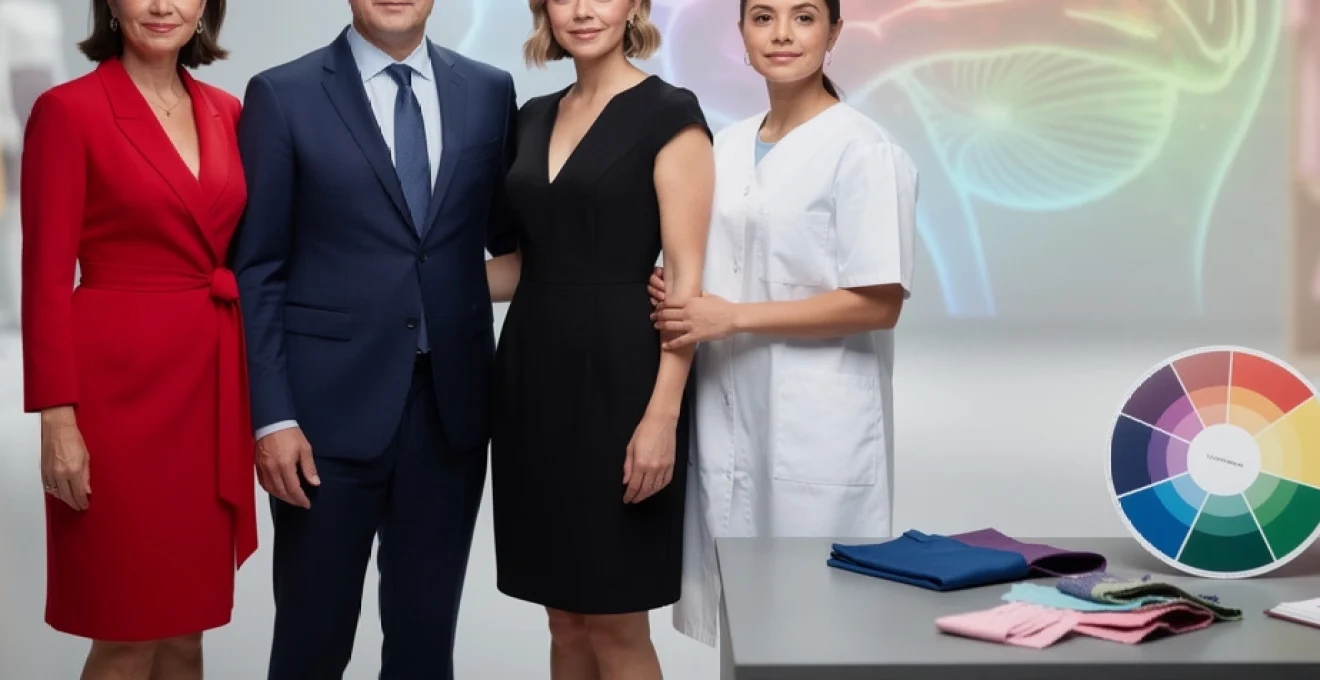
Every morning, you stand before your wardrobe and make dozens of unconscious decisions. The navy blazer for that important presentation. The soft grey sweater when you’re feeling withdrawn. That vivid red dress reserved for moments when you need to command attention. These choices aren’t random—they’re psychological negotiations between your internal state and the image you wish to project to the world. The colours adorning your body communicate volumes before you utter a single word, triggering neurological responses in both yourself and those around you. Understanding the intricate relationship between chromatic selection and psychological impact transforms fashion from mere aesthetics into a sophisticated tool for self-expression and social navigation.
The science underpinning colour psychology in clothing extends far beyond superficial style preferences. Research across neurobiology, cultural anthropology, and behavioural psychology reveals that colour perception influences mood regulation, professional credibility, interpersonal attraction, and even cognitive performance. The garments you select each day don’t simply reflect your personality—they actively shape your mental state and alter how others perceive your competence, approachability, and authority. This bidirectional relationship between clothing colour and psychological experience represents one of fashion’s most powerful yet underappreciated dimensions.
Chromatic symbolism and cultural associations in fashion psychology
Colours carry profound symbolic weight that varies dramatically across cultures and historical periods. What signifies mourning in one society may represent celebration in another, and these cultural associations profoundly influence our clothing choices. Western fashion traditions have codified specific meanings for various hues—meanings that advertising, media, and social conditioning have deeply embedded in collective consciousness. These associations operate largely beneath conscious awareness, yet they powerfully guide both our wardrobe selections and our interpretations of others’ sartorial choices.
The psychological impact of colour symbolism extends beyond intellectual understanding to visceral emotional responses. When you encounter someone wearing particular colours, your brain automatically accesses stored associations, triggering immediate judgments about that person’s character, intentions, and social status. These split-second assessments occur in the amygdala before conscious thought intervenes, making colour psychology a remarkably efficient communication channel. Fashion designers and marketers have long exploited these associations to evoke specific emotional responses and construct brand identities that resonate with target audiences.
Red clothing: dominance, attraction and the waitress study phenomenon
Red occupies a unique position in fashion psychology as arguably the most psychologically potent colour in human wardrobes. Extensive research demonstrates that red garments significantly enhance perceived attractiveness, with studies showing that both men and women rate individuals wearing red as more sexually appealing than those in other colours. The famous “waitress study” revealed that servers wearing red shirts received substantially larger tips from male customers—a phenomenon attributed to red’s evolutionary associations with fertility, health, and sexual receptivity. This colour triggers heightened physiological arousal, elevating heart rate and blood pressure in observers.
Beyond attraction, red signals dominance and competitive advantage. Athletic studies have documented that competitors wearing red uniforms enjoy statistically significant performance advantages, possibly because red displays trigger submissive responses in opponents or boost the wearer’s confidence. In professional contexts, red clothing communicates assertiveness and authority, though it can also be perceived as aggressive or confrontational depending on saturation and context. You’ll notice that red appears frequently in power dressing scenarios—lipstick for important meetings, ties for political debates, dresses for award ceremonies—because it demands attention and projects confidence.
The psychological impact of red varies considerably based on cultural context and gender norms. In Chinese culture, red symbolises prosperity and good fortune, making it the preferred colour for celebrations and auspicious occasions. Western associations link red with passion, danger, and prohibition, creating more ambivalent responses. Women wearing red often face double-edged judgments—enhanced attractiveness accompanied by assumptions about sexual availability. Understanding these complex associations allows you to deploy red strategically, leveraging its psychological power whilst navigating its potential social complications.
Blue attire: corporate credibility and the IBM effect on professional dress codes
Blue has achieved unparalleled dominance in professional wardrobes, a phenomenon partly attributable to IBM’s historic dress code requiring dark blue suits. This “Big Blue” association cemented blue’s connection with corporate competence, technological expertise, and business acumen. Psychological research consistently demonstrates that blue clothing enhances perceptions of trustworthiness, reliability
and calm authority. Darker navy tones are especially associated with intelligence and stability, which is why they dominate interview outfits, police uniforms, airline crews and corporate dress codes. When you wear a blue suit or shirt, you tap into decades of visual conditioning that tells observers you are competent, measured and dependable. In customer-facing roles, blue clothing has been shown to increase perceived service quality and customer satisfaction, partly because it reduces perceived threat and increases interpersonal trust. For anyone navigating formal environments, blue attire functions as a low-risk, high-credibility option that quietly reinforces your professional identity.
The “IBM effect” illustrates how organisational dress norms can crystallise around specific colours and then diffuse into broader culture. As large technology and financial institutions adopted navy as their unofficial uniform, smaller firms, schools and even political candidates followed, using blue clothing to visually borrow credibility. This does not mean all blues are equal in fashion psychology. Light powder blues feel approachable and friendly, ideal for collaborative settings or client meetings where rapport matters. Electric or highly saturated blues signal creativity and modernity, making them popular in tech startups and design fields that want to appear innovative without losing the reassuring qualities blue provides.
Black garments: power dressing and the chanel little black dress revolution
Black occupies a paradoxical place in clothing psychology: it simultaneously symbolises mourning, rebellion, sophistication and authority. Historically associated with clerical austerity and Victorian grief, black shifted status in the early 20th century when Coco Chanel introduced the “little black dress” as a democratic, modern uniform for women. By stripping away ornamentation and relying on black’s inherent visual weight, Chanel reframed the colour as a canvas for autonomy and understated luxury. Since then, black garments have become the backbone of power dressing, from sharply tailored suits to minimalist evening wear.
Psychologically, black clothing functions as a protective shell. It absorbs light rather than reflecting it, much like a social armour that conceals emotional states and body contours. Research on sports uniforms suggests that black increases both perceived and actual aggression; teams wearing black receive more penalties and are judged as more hostile, even when behaviour is identical. In professional settings, the same intensity translates into perceptions of seriousness, competence and control. A black blazer or dress can project authority and focus, but overuse may also create emotional distance, signalling unapproachability or rigidity. The key is context: combining black with softer textures or accent colours can temper its severity while preserving its empowering effects.
From a styling perspective, many people default to black because it feels “safe” and slimming, yet this safety can sometimes become a psychological hiding place. If every outfit revolves around black, it may be worth asking whether the colour truly expresses your identity or simply helps you disappear. Introducing small variations—charcoal instead of jet black, or black paired with a bold accessory—can maintain the benefits of power dressing while allowing more nuance in how you are perceived. When used deliberately, black remains one of the most effective tools for shaping first impressions in both social and professional arenas.
White clothing: purity perception and medical professional uniform psychology
White, like black, is loaded with symbolic meaning that shifts across cultures. In many Western traditions, white is associated with purity, innocence and new beginnings, which is why bridal gowns and christening outfits are commonly white. In several Eastern cultures, however, white is the colour of mourning and funerals, representing the soul’s passage rather than romantic idealism. Fashion psychology must therefore always consider cultural context when interpreting white clothing. In daily wear, white conveys cleanliness, simplicity and clarity—qualities that make it especially potent in environments where hygiene and trust are paramount.
The classic white lab coat demonstrates how clothing colour can shape both self-perception and public trust. Studies on medical professional uniforms show that patients often rate doctors in white coats as more competent and trustworthy than those dressed casually, even when qualifications are identical. This is a textbook example of enclothed cognition: the wearer internalises the symbolic meaning of the garment (scientific expertise, precision, care), which subtly alters behaviour, while observers respond to the visual cue with increased confidence and compliance. White’s high visibility also signals sterility and transparency, reinforcing the idea that nothing is being hidden.
Outside clinical settings, white clothing can act as a psychological “reset button.” Many people choose white shirts, T-shirts or dresses when they want to feel fresh, organised or emotionally decluttered. Yet white also demands more vigilance: stains and creases are immediately visible, which can heighten self-consciousness for some wearers. If you find white stressful to maintain, incorporating it in smaller doses—such as a white shirt under a coloured blazer—allows you to harness its associations with clarity and professionalism without the practical burden of head-to-toe white. Used strategically, white can signal openness and integrity in a way few other colours can match.
Neurobiological responses to chromatic stimuli in apparel selection
While cultural symbolism explains part of our response to clothing colour, brain science reveals a deeper layer. Colour perception begins as a physical interaction between light and photoreceptors, but quickly cascades into emotional and cognitive reactions. When you choose a vibrant sweater or avoid a particular shade, you are not only expressing taste; you are also regulating neural activation patterns linked to arousal, stress and reward. Understanding these neurobiological responses helps explain why some outfits feel energising while others feel draining, even when the cut and fabric are identical.
Wavelength processing in the visual cortex during colour perception
Colour begins with wavelengths of light striking the retina, where three types of cone cells—sensitive to short (blue), medium (green) and long (red) wavelengths—encode spectral information. This data travels along the optic nerve to the lateral geniculate nucleus and then to the primary visual cortex (V1), where the brain constructs a basic representation of hue, brightness and contrast. From there, higher visual areas such as V2 and V4 refine colour perception, integrating it with shape, motion and context. By the time you register a red dress or blue suit, multiple cortical regions have collaborated to transform raw light into meaningful experience.
Different wavelengths do not just look different; they also produce varying levels of physiological arousal. Longer wavelengths like red and orange are processed as more intense and urgent, leading to increased heart rate and heightened attention. Shorter wavelengths like blue and green are generally experienced as cooler and more distant, correlating with lower arousal states. When you select warm or cool clothing colours, you are indirectly modulating how stimulating you appear to others and how stimulated you feel yourself. This is why a red tie can feel “louder” than a navy one, even if the garments are otherwise identical.
Importantly, the brain does not process colour in isolation. Contextual cues—lighting, surrounding colours, cultural expectations—shape how the visual cortex interprets chromatic input. A white shirt under fluorescent office lighting may feel clinical, while the same shirt at a beach wedding feels relaxed and celebratory. For wardrobe planning, this means we should think of clothing colour as part of a broader visual environment rather than a fixed property. The same garment can support focus, calm or excitement depending on when and where it is worn.
Dopaminergic pathways activated by saturated hues in fashion contexts
Beyond the visual cortex, colour interacts with the brain’s reward circuitry, particularly dopaminergic pathways in regions such as the ventral tegmental area (VTA) and nucleus accumbens. Highly saturated hues—vivid reds, electric blues, intense yellows—tend to be more attention-grabbing and can activate reward responses when they align with personal preferences or positive associations. This is the neurobiological foundation of “dopamine dressing”: the idea that certain colours can give you a psychological lift, much like a favourite song or a small treat.
When you put on a bold, saturated garment that you love, your brain anticipates positive social feedback (“You look great today”) and personal enjoyment (“I feel like myself in this”). This expectation alone can increase dopamine release, creating a feedback loop where the outfit genuinely improves your mood. Of course, this effect depends heavily on individual history. If bright orange reminds you of an unpleasant school uniform, the same hue may trigger avoidance rather than reward. The goal is not to chase generic “happy colours” but to identify which saturated hues your own reward system has tagged as energising.
Fashion marketers intuitively leverage these neural tendencies by using vivid colours in advertising and seasonal collections. Limited-edition drops in striking tones create a sense of novelty and urgency that further stimulates the reward system. For your personal wardrobe, a practical approach is to keep a small “dopamine capsule”: a few high-saturation pieces you can reach for when energy or confidence is low. Think of them as visual espresso shots—powerful in moderation, especially when balanced with more neutral staples.
Cortisol reduction through cool-toned clothing choices
Just as certain colours can stimulate dopamine-driven excitement, others appear to support stress reduction. Cool-toned shades—soft blues, muted greens, gentle lavenders—are consistently associated with lower physiological arousal in environmental psychology studies. Exposure to blue and green environments has been linked to reduced heart rate and perceived stress, and while clothing-specific research is still emerging, it is reasonable to infer similar mechanisms at play when you wrap yourself in cool hues.
Cortisol, the body’s primary stress hormone, fluctuates throughout the day in response to perceived threats and demands. While your shirt colour will not override chronic stressors, it can contribute to a more soothing sensory environment. Wearing cool-toned clothing in high-pressure settings—exams, presentations, medical appointments—may help you feel marginally calmer and more composed. At the same time, observers often read these colours as non-threatening and approachable, which can reduce interpersonal friction and the social stress that accompanies it.
If you are prone to anxiety or sensory overload, experimenting with a “cool palette day” can be a simple self-regulation tool. Choose garments in blues, greens and soft greys, and notice whether your body feels any different compared to days dominated by intense reds or blacks. While colour is only one piece of the stress puzzle, aligning your clothing with your nervous system’s need for calm can be a surprisingly effective micro-intervention in your daily routine.
Colour theory applications: munsell system and seasonal colour analysis
So how do we translate symbolic, cultural and neurobiological insights into practical wardrobe decisions? Colour theory provides the bridge. Systems like the Munsell colour model and seasonal colour analysis offer structured ways to understand why certain shades flatter you while others feel discordant. Rather than guessing in front of a mirror, you can use frameworks that account for hue, lightness and saturation, as well as your skin undertone and overall contrast level. This transforms clothing colour selection from trial-and-error into an informed, almost scientific process.
Hue, value and chroma considerations in personal wardrobe psychology
The Munsell system breaks colour into three core attributes: hue (what we casually call colour—red, blue, green), value (lightness to darkness) and chroma (intensity or saturation). When a garment “doesn’t look right,” the issue often lies in one of these dimensions rather than the basic hue. You might love blue, for example, but find that very pale, low-value blues make you look washed out, whereas medium-value navy brings your features into focus. Understanding this allows you to refine your wardrobe to the specific blues that support your appearance and confidence.
Chroma plays a particularly important role in mood and self-presentation. High-chroma colours are vivid and assertive, projecting extroversion and energy; low-chroma colours are softer, more muted and often read as sophisticated or introspective. If you are naturally reserved, you may feel overwhelmed in very saturated outfits, as if the colour is wearing you rather than the other way around. Conversely, if you have a loud, expansive personality, ultra-muted tones can feel like being turned down too low. The goal is congruence: choosing hue, value and chroma combinations that align with both your physical colouring and your psychological comfort zone.
For practical wardrobe planning, you can think in terms of a simple internal checklist: What hue family am I in? How light or dark is this compared to my natural colouring? How intense is it, and how does that intensity make me feel? Over time, these questions become intuitive, helping you build a cohesive colour palette that supports how you want to look and feel, rather than leaving you with a closet full of beautiful but unworn mistakes.
Carole jackson’s colour me beautiful framework for skin undertone matching
Seasonal colour analysis, popularised by Carole Jackson’s 1980s bestseller Colour Me Beautiful, takes these technical concepts and translates them into user-friendly categories. Jackson proposed that people’s colouring could be grouped into four seasonal palettes—Spring, Summer, Autumn and Winter—based on undertone (warm vs. cool), value (light vs. dark) and chroma (clear vs. muted. While modern analysts often use more nuanced systems, the core idea remains influential: when your clothing colours echo your skin, eyes and hair, you appear more vibrant and harmonious.
In this framework, “Spring” and “Autumn” types have warm undertones, suiting gold jewellery and colours with yellow-based warmth, while “Summer” and “Winter” types lean cool, favouring blue-based hues and silver accents. Winters, for example, often look striking in high-contrast combinations like black and white or jewel tones like emerald and sapphire, which align with their naturally clear, cool colouring. Summers, by contrast, shine in softer, cool pastels and dusty tones that mirror their lower-contrast features. This is not about rigid rules but about discovering which part of the spectrum makes your face look rested and your eyes brighter without extra effort.
From a psychological standpoint, accurate seasonal analysis can boost self-esteem by reducing decision fatigue and wardrobe regret. When you know your best palette, shopping becomes more focused and affirming: instead of chasing every trend, you filter options through the lens of your colouring and identity. If you are curious about your season but unsure where to start, pay attention to patterns in compliments. Do people say “That colour makes your eyes pop” when you wear teal but not olive? Do you feel more alive in cool pink than in rusty orange? These small data points are clues to your underlying palette and how to align your clothing with it.
Pantone seasonal forecasting influence on consumer clothing behaviour
While personal colour analysis focuses on the individual, organisations like Pantone shape colour trends on a global scale. Each year, Pantone announces a “Colour of the Year” and seasonal forecasts that influence designers, retailers and marketers across fashion, interiors and branding. These forecasts draw on cultural mood, technological shifts and sociopolitical trends—essentially, a macro-level reading of collective psychology expressed through colour. For consumers, this means that certain hues become suddenly omnipresent, from window displays to social media feeds.
The psychological impact of Pantone’s choices is twofold. On one hand, trending colours create a sense of belonging: wearing the “right” shade signals that you are current and culturally attuned, which can enhance social confidence. On the other hand, constant trend cycling can pressure individuals into buying colours that clash with their undertone or personal identity, leading to wardrobes full of pieces that feel off once the novelty fades. Recognising trend colours as suggestions rather than prescriptions allows you to engage selectively, integrating only the shades that genuinely support your look and mood.
One practical strategy is to treat Pantone trends as accents rather than foundations. If a particular year’s hero colour harmonises with your palette, you might invest in a larger piece—a coat, dress or suit. If it doesn’t, you can still nod to the trend through accessories like scarves, shoes or jewellery that sit further from your face and have less impact on how your skin appears. In this way, you participate in the broader cultural conversation about colour while maintaining psychological and aesthetic alignment with who you are.
Emotional congruence theory and mood-expressive dressing patterns
Emotional congruence theory suggests that we tend to select stimuli—music, environments, even clothing—that match our current mood states. In practice, this means that when you feel low, you may unconsciously reach for darker, more muted colours, while high spirits draw you toward brighter, lighter hues. Wardrobes often become visual diaries of emotional habits: someone struggling with burnout might find a sea of charcoal, navy and black, whereas a person in a creative upswing gravitates toward cobalt, coral or lime.
Dressing in line with your mood can feel validating, like giving your internal weather a visible form. However, it can also trap you in emotional echo chambers. If every anxious day is dressed in grey, the colour itself may start to reinforce heaviness, much like looping a sad playlist. One useful experiment is mood-contrasting: on a low-energy morning, intentionally choose a slightly brighter or warmer colour than you feel drawn to. You do not have to jump from black to neon yellow; even shifting from charcoal to mid-blue or from taupe to soft rose can gently nudge your emotional state upward.
Over time, paying attention to your mood-dressing patterns can increase emotional literacy. Ask yourself: When I wear this colour, do I feel more like myself or less? Is my outfit supporting the state I want to move toward, or simply mirroring where I already am? By treating clothing colour as an adjustable variable rather than a fixed outcome of mood, you gain an accessible tool for self-regulation—subtle but surprisingly impactful in the flow of everyday life.
Gender divergence in chromatic preferences: pink and blue socialisation
Few colour debates are as entrenched as the association of pink with girls and blue with boys, yet historically this has not always been the case. In the early 20th century, some Western fashion advice columns recommended pink for boys (seen as a strong, diluted red) and blue for girls (considered delicate and serene). The now-familiar pink–girl, blue–boy divide solidified only in the mid-20th century through targeted marketing, children’s media and toy design. This illustrates how rapidly cultural norms around clothing colour can shift—and how powerfully they shape individual preferences through socialisation.
From infancy, many children are surrounded by gendered colour cues: pink blankets, blue bibs, pastel dresses or navy dungarees. These cues function as early training in social identity, signaling how others are likely to treat them and what behaviours are expected. Over time, repeated exposure can create genuine aesthetic preference; a girl praised every time she wears pink may come to associate the colour with approval and belonging. Similarly, a boy teased for choosing purple or teal may learn to restrict his palette to “safe” masculine colours like black, blue and grey, even if he internally enjoys brighter options.
As adults, some people continue to embrace these gendered colour norms, finding comfort and community in them, while others actively rebel, using unexpected colours as a form of identity expression or political statement. The key from a psychological perspective is autonomy: are your colour choices freely chosen, or are they constrained by fear of judgment? If you have always avoided certain hues because they were coded as “for the other gender,” experimenting in low-stakes contexts—pyjamas, accessories, workout wear—can be a way to test whether those colours might actually feel right for you. Fashion becomes not just self-expression, but a site for gently questioning inherited scripts.
Enclothed cognition research: adam and galinsky’s white coat experiments
The concept of enclothed cognition, introduced by Hajo Adam and Adam Galinsky in 2012, offers one of the most compelling frameworks for understanding why what we wear changes how we think. In their famous white coat experiments, participants were asked to wear a lab coat during attention-related tasks. Those who believed the coat belonged to a doctor performed significantly better than those who either wore no coat or were told it was a painter’s coat. The physical garment was identical; what changed was the symbolic meaning the wearer attached to it.
This finding highlights a crucial point: clothing colour and style influence cognition not only through how others see us, but through the identities we temporarily inhabit when we put them on. A crisp white shirt might prompt you to sit straighter and think more analytically because you associate it with competence and structure. A brightly coloured dress may encourage playfulness and openness, reflecting memories of holidays or celebrations. Even if some specific studies have proven difficult to replicate, meta-analyses indicate a robust overall effect: our clothes act as cues that prime certain mental frameworks and behaviours.
For everyday life, enclothed cognition suggests we can design “uniforms” for different mental states we wish to access. Need focus for deep work? You might reserve a particular combination—perhaps a navy shirt and structured trousers—that your brain learns to associate with concentration. Want to feel more socially confident at events? A specific colour or accessory that you consistently wear on good days can become a portable anchor for that mindset. The aim is not to become dependent on any one garment, but to recognise that your wardrobe is part of your psychological toolkit. By choosing colours and pieces that align with the roles you need to play, you give your brain subtle but powerful cues about how to show up.