
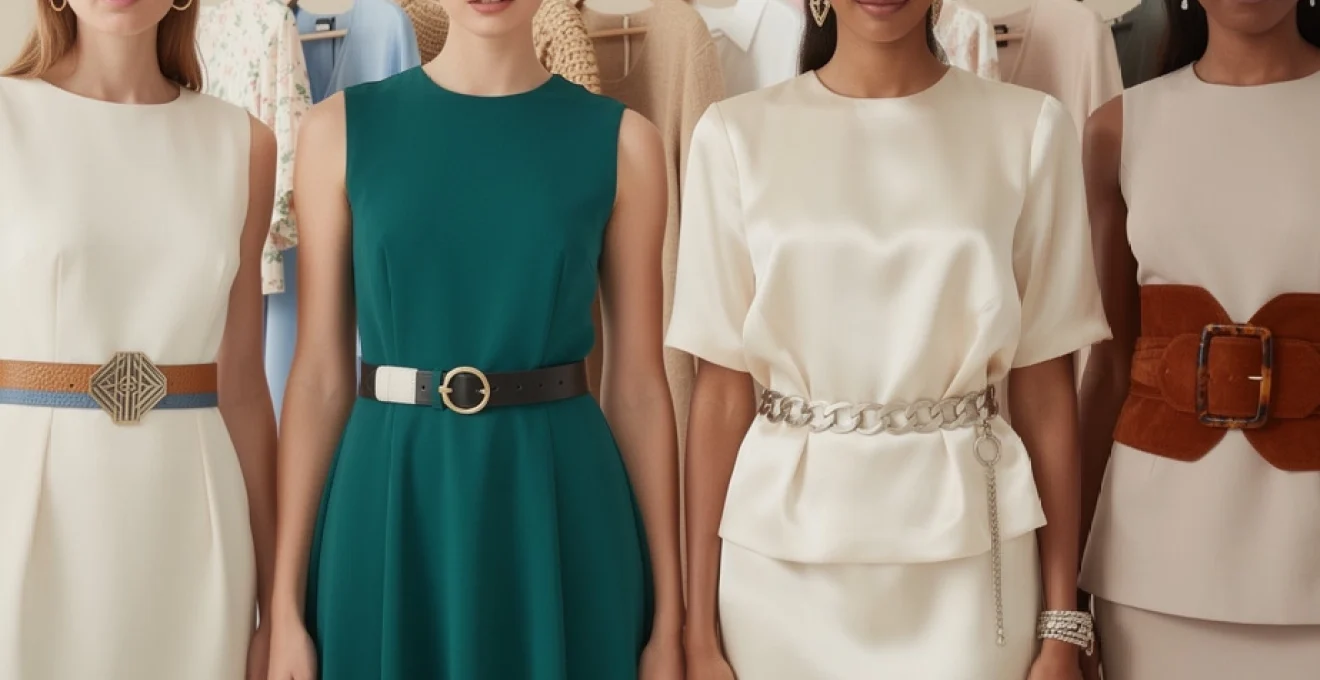
A simple dress hangs in your wardrobe, comfortable and well-made, yet somehow it never delivers the visual impact you crave. Perhaps it’s a black shift, a navy midi, or a neutral linen piece that feels perpetually incomplete. The answer to this sartorial dilemma isn’t a complete wardrobe overhaul—it’s often a single, carefully chosen accessory that changes everything. Statement belts possess an extraordinary transformative power, capable of redefining proportion, creating shape where none exists, and injecting personality into the most understated garments. Unlike subtle accessories that quietly complement, these bold pieces command attention through distinctive hardware, luxurious materials, or striking proportions. Understanding how to deploy them strategically elevates your styling capability from basic to exceptional, turning that overlooked dress into a garment you’ll reach for repeatedly.
The fashion industry has long recognised the architectural potential of belts. From the cinched waists of 1950s couture to the contemporary interpretations seen on runways worldwide, these accessories serve as both functional tools and artistic statements. When you master the principles of belt placement, material pairing, and proportional balance, you unlock the ability to manipulate silhouette and visual weight with precision. This expertise transforms your relationship with your existing wardrobe, revealing possibilities previously hidden within pieces you already own.
Anatomical positioning: where to place your statement belt for maximum visual impact
Placement determines everything when styling statement belts with dresses. The human eye naturally follows horizontal lines, making belt positioning one of the most powerful tools for manipulating perceived body proportions. Understanding where to position your belt transforms a simple dress from shapeless to structured, from forgettable to memorable. The key lies in recognising that different dress styles demand different approaches, and your body’s natural contours provide essential guideposts for optimal placement.
High-waist placement above the natural waistline for empire silhouettes
Positioning a statement belt just below the bustline creates the classic empire silhouette, characterised by its elongating effect and flattering vertical emphasis. This placement works exceptionally well with flowing maxi dresses or tunic-length pieces where you want to establish definition in the upper body. The technique involves securing the belt approximately two to three inches below the bust, creating a new visual focal point that draws the eye upward. This positioning particularly flatters those seeking to minimise focus on the midsection whilst creating the illusion of longer legs. When selecting belts for this placement, consider medium-width options between 1.5 to 2 inches that provide structure without overwhelming the frame. The high-waist approach works beautifully with billowing fabrics like chiffon or cotton voile, where the belt acts as an anchor point that prevents the silhouette from appearing completely shapeless.
Natural waist cinching for hourglass definition in A-Line dresses
The natural waist—typically located at the narrowest point of your torso, roughly level with your navel—represents the most universally flattering belt position for creating classic hourglass proportions. This placement proves particularly effective with A-line dresses, fit-and-flare styles, or any garment that benefits from emphasised waist definition. When you position a statement belt at this anatomical landmark, you create a clear visual division between upper and lower body, establishing balanced proportions that feel intentional rather than accidental. For maximum impact, ensure the belt sits flush against your body without gaping or rolling, which requires proper sizing and occasionally the strategic use of fashion tape or a coordinating under-belt. This positioning accommodates bolder statement pieces with substantial buckles or wider widths between 2.5 to 3.5 inches, as the natural waist provides sufficient visual real estate to showcase dramatic hardware. The technique transforms straight-cut dresses into structured ensembles and enhances already defined silhouettes for amplified femininity.
Hip-slung positioning for Drop-Waist and shift dress styles
Contrary to conventional wisdom, not every belt requires waist-level positioning. Hip-slung placement—where the belt rests on the hip bones rather than the natural waist—creates contemporary, relaxed silhouettes particularly suited to shift dresses, drop-waist styles, and deliberately oversized pieces. This approach originated in
1920s fashion and has re-emerged on recent runways as a way to convey ease and movement. When you rest a statement belt lower on the hips, you shift the visual centre of gravity downwards, which can be particularly flattering on longer torsos or for those who prefer to de-emphasise the waist. Opt for softer, more flexible belts—think supple leather, braided designs, or chain belts—that conform to the curve of the hips rather than cutting straight across. This hip-slung placement works especially well with simple T-shirt dresses or straight-cut shifts, where the belt adds relaxed structure without compromising the intended ease of the silhouette. To avoid shortening the legs, pair this styling with heeled ankle boots or pointed flats, which help maintain an elongated line.
Asymmetrical belt draping techniques for contemporary minimalist looks
Asymmetrical belt placement offers a refined way to introduce visual interest into minimalist dresses without resorting to bold prints or complex layering. Instead of fastening your statement belt dead-centre, experiment with positioning the buckle slightly off to one side or allowing an elongated belt tail to drape diagonally across the body. This subtle disruption of symmetry draws the eye along a diagonal line, which naturally slims and elongates the torso. The technique works particularly well with clean, architectural dresses in solid colours—think white shirt dresses, black column styles, or neutral knit midis—where the belt becomes the primary design feature.
To achieve this look, choose a belt with either a distinctive buckle or an extended length that can be looped, knotted, or wrapped. Leather tie belts, obi-style sashes, and slender strap belts with simple hardware lend themselves especially well to asymmetrical styling. Position the buckle or knot just off the hip bone, then allow the remaining length to fall at an angle across the skirt. This creates movement even when you are standing still, much like a sculptural piece of jewellery for your midsection. Asymmetrical draping also offers a useful styling solution if traditional belt placement feels too rigid or if you are working with a very minimal dress that needs a single, directional statement.
Material selection and textile pairing: matching belt fabrics to dress compositions
The most transformative statement belts are not only visually striking; they are also materially harmonious with the dresses they accompany. Pairing the wrong fabric combination can result in pulling, puckering, or an oddly mismatched finish that undermines the sophistication of your outfit. When you think of your dress as the canvas and your belt as the frame, it becomes clear that texture, weight, and finish must work together rather than compete. Strategic textile pairing allows you to amplify the inherent character of a simple dress—softening, sharpening, or enriching its mood with a single accessory.
As fabric technology continues to evolve, we see more hybrid dresses that blend natural fibres with performance materials, from ponte knits with stretch to eco-conscious viscose blends. This makes material awareness even more crucial. A rigid, heavy belt on a delicate jersey dress, for instance, can cause distortion at the seams, while a fine chain on a dense wool knit may simply disappear. By aligning belt materials with the weight, drape, and surface quality of your dress, you ensure that the statement remains intentional and comfortable throughout the day.
Leather statement belts with cotton jersey and linen weaves
Leather remains the most versatile choice for styling statement belts with everyday dresses, particularly those made from cotton jersey and linen. These natural fabrics share a casual, breathable quality that pairs beautifully with the inherent structure of leather. A smooth, mid-weight leather belt provides the necessary rigidity to define the waist of a slouchy T-shirt dress or a relaxed linen shift without overwhelming the fabric. The contrast between the softness of cotton or linen and the polish of leather creates a balanced, elevated look that still feels effortless.
When working with thinner jersey or lightweight linen, pay close attention to belt width and backing. Wider belts with a soft suede underside distribute pressure more evenly, reducing the risk of the belt digging in and creating unwanted lines. Textured leathers—such as pebbled, crocodile-embossed, or woven styles—can add dimension to otherwise flat fabrics, acting almost like a built-in accessory. For ultra-casual day dresses, consider tan, cognac, or chocolate leather belts, which echo the relaxed, organic feel of cotton and linen while providing a refined finishing touch.
Metallic chain belts for silk charmeuse and satin finishes
Silk charmeuse and satin dresses offer inherent fluidity and shine, making them ideal partners for metallic chain belts. The light-reflective quality of these fabrics is echoed and amplified by polished metal links, creating a cohesive, evening-ready statement. A chain belt draped loosely over the hips of a bias-cut slip dress, for instance, adds definition without interrupting the fabric’s natural movement. This combination is particularly effective for cocktail and occasion wear, where you want your statement belt to read as jewellery as much as a functional accessory.
Because silk and satin can be delicate, choose chain belts that are smooth to the touch and free from sharp edges that might snag the weave. Opt for medium-gauge links that have enough presence to stand out but are not so heavy that they distort the drape of the dress. Gold-tone chains pair beautifully with warm hues like champagne, copper, and deep red, while silver or gunmetal flatter cool tones such as navy, emerald, and black. For maximum versatility, select adjustable chain belts with multiple fastening points, allowing you to switch between high-waist and hip-slung styling depending on the dress and occasion.
Woven raffia and jute belts for organic cotton and chambray textiles
For warm-weather dressing, woven raffia and jute belts harmonise perfectly with organic cotton and chambray dresses. These natural fibres share a tactile, slightly rustic quality that evokes beach holidays and relaxed summer afternoons. When you pair a breezy, tiered cotton sundress with a wide raffia belt, you instantly create a more defined, resort-ready silhouette without adding heat or bulk. The porous structure of these belts allows air to circulate, making them practical choices for high temperatures.
Chambray shirt dresses and simple denim-look styles also respond well to jute or raffia belts, which break up the uniformity of blue tones while maintaining an easygoing mood. Look for belts featuring subtle leather trims or tonal stitching to add durability and polish. Because these materials often come in sandy neutrals or sun-faded hues, they integrate seamlessly into holiday capsules and casual weekend wardrobes. Think of them as the summer equivalent of your go-to leather belt: versatile, comfortable, and capable of pulling together a simple dress with minimal effort.
Velvet and suede belt options for wool crepe and ponte knit dresses
When temperatures drop, wool crepe and ponte knit dresses become wardrobe staples, offering structure and warmth. To complement their denser, more architectural feel, velvet and suede belts provide a rich, tactile counterpoint. A wide velvet belt on a black wool crepe midi dress, for instance, adds depth and a subtle play of light that feels instantly more luxurious and evening-appropriate. Suede, with its matte, velvety surface, pairs especially well with ponte knits, echoing their soft firmness while introducing a sophisticated, textural layer.
These pairings are particularly effective for office-to-evening scenarios, where you may want your dress to transition with only a quick accessory change. Swap a slim daytime leather belt for a plush suede or velvet option with a statement buckle, and your simple dress is suddenly elevated for dinner or an event. Opt for jewel tones—such as forest green, burgundy, or midnight blue—to enhance the depth of darker winter dresses, or choose taupe and stone shades to soften lighter neutrals. Because suede and velvet can be more delicate in wet weather, reserve them for indoor occasions or pair them with protective outerwear when commuting.
Colour theory application: strategic belt hue selection for dress enhancement
Colour is one of the most powerful tools at your disposal when using statement belts to transform simple dresses. The right belt hue can carve out a waist, brighten the complexion, or shift the entire mood of an outfit. By applying basic colour theory—focusing on complementary contrasts, tonal layering, and strategic neutrals—you move beyond default black belts and begin to use colour as a deliberate styling instrument. This is particularly impactful with monochrome dresses, which function as blank canvases for experimentation.
Modern wardrobes increasingly lean towards neutral bases—black, navy, beige, white—precisely because they are so adaptable. A single jewel-toned or metallic statement belt can refresh these dresses multiple times over, offering different visual narratives depending on your choice. Asking yourself what you want the belt to do—stand out dramatically, subtly refine, or quietly anchor—will guide your colour decisions and make the styling process far less overwhelming.
Complementary colour blocking with jewel-toned statement belts
Complementary colour blocking leverages contrast to create high-impact, visually striking combinations. When you pair a simple dress with a jewel-toned statement belt in a hue opposite or near-opposite on the colour wheel, the result is dynamic and modern. For example, an emerald green belt on a soft blush dress, or a sapphire blue belt on a warm camel midi, instantly energises the outfit. These vibrant belts draw the eye directly to the waist, making them particularly effective if your goal is to highlight and define this area.
Because jewel tones—emerald, ruby, amethyst, and topaz—carry inherent richness, they elevate even the most basic cotton or jersey dresses. They function almost like a bold lipstick: a small dose delivers outsized impact. When exploring complementary colour belt combinations, keep the rest of your accessories restrained. Simple metallic earrings or neutral shoes ensure the colour contrast remains focused around your midsection, where the statement belt is doing the majority of the visual work.
Monochromatic tonal layering for sophisticated depth
Monochromatic styling, where your belt and dress sit within the same colour family, offers a more subtle but equally powerful approach. Instead of stark contrast, you are working with variations in depth and tone—think navy dress with an ink-blue belt, or sand-coloured linen paired with a deeper caramel waist cincher. This tonal layering creates depth and interest while maintaining a cohesive, elongated line. It is particularly flattering if you prefer a refined, low-contrast aesthetic that still feels considered and styled.
Monochromatic belts are excellent for professional environments, where you may want to define your waist without introducing a bold colour that competes with your overall look. The key is to choose a belt that is either one or two shades darker than your dress to ensure it reads as intentional definition rather than disappearing entirely. Texture becomes especially important here: a croc-embossed, patent, or suede finish in the same tone as your dress can add dimension without breaking the colour flow.
Neutral palette anchoring with cognac, tan, and black leather
Neutral belts—particularly in cognac, tan, and black leather—function as the anchoring pieces of a versatile wardrobe. These hues pair with almost any dress colour, from bright prints to muted solids, making them ideal for everyday wear. A cognac belt over a white shirt dress, for instance, softens the starkness of white and adds warmth, while a black belt on a jewel-hued knit midi creates a sharp, graphic line that feels polished and modern. Neutral belts are the ones you will reach for repeatedly, precisely because they integrate seamlessly into multiple style narratives.
When working with patterned dresses, a neutral belt can also help calm visual noise and create a focal point. If you have a floral or abstract print dress that feels overwhelming, adding a tan or black belt at the natural waist provides a grounding element that makes the print more wearable. Consider also hardware colour when choosing neutral belts: warm-toned buckles (gold, brass) enhance the richness of cognac and tan, while cooler metals (silver, gunmetal) complement black and grey leathers for a contemporary finish.
Hardware and embellishment details: buckle styles that elevate simple silhouettes
While belt colour and material establish the foundation of your look, hardware and embellishments are often what turn an accessory into a true statement piece. Buckles act as miniature sculptures at the centre of your outfit, drawing the eye and signalling the overall style direction—bohemian, nautical, architectural, or casual. The size, shape, and finish of your buckle should be considered as carefully as jewellery, particularly when you are styling a simple dress that relies on accessories for character.
Recent runway collections have underscored the importance of hardware, with designers revisiting classic motifs—Western, Art Deco, maritime—and updating them with modern proportions and finishes. For everyday wearers, this translates into an abundance of options that can be tailored to the mood of each dress. The goal is not to add decoration for its own sake but to choose buckle details that reinforce the story your dress is already telling.
Oversized western-style buckles for bohemian maxi dresses
Oversized Western-style buckles introduce a bold, nostalgic edge that pairs beautifully with bohemian maxi dresses. Think flowing floral prints, tiered skirts, or peasant-style silhouettes grounded by a substantial leather belt featuring engraved metalwork or a horseshoe-shaped buckle. This combination tempers the sweetness and volume of a boho dress with structure and attitude, preventing the overall look from veering into costume territory. The contrast between soft fabric and solid metal creates a visually compelling balance.
When styling a Western-inspired statement belt, keep the rest of your accessories aligned but measured. Suede ankle boots, simple hoop earrings, and perhaps a subtle fringe bag maintain the theme without overwhelming it. Opt for antique brass or burnished silver hardware rather than ultra-shiny finishes; these patinated metals feel more authentic and integrate more naturally with earthy colour palettes and organic prints. If your maxi dress has a high waist seam, position the belt slightly above or below it to avoid competing horizontal lines.
Gold-plated d-ring hardware for nautical-inspired shirt dresses
Gold-plated D-ring belts offer a sleek, functional aesthetic that complements nautical-inspired shirt dresses and crisp cotton styles. The clean, circular form of the D-ring echoes maritime hardware, making it a natural partner for navy-and-white palettes, Breton stripes, and utility details like patch pockets or epaulettes. A canvas or grosgrain belt with gold D-ring hardware cinched over a white or navy shirt dress instantly sharpens the silhouette, evoking a polished, resort-ready look.
Because D-ring closures allow for infinite adjustability, they are particularly practical for dresses in lighter fabrics that may shift slightly throughout the day. You can snug the belt a little tighter after sitting or walking without being limited to pre-punched holes. To maintain cohesion, echo the gold hardware in small doses—perhaps through a watch, delicate bracelet, or buttons—rather than adding multiple competing metallics. The overall effect is understated yet distinctly intentional, like a subtle nod to classic yachting style.
Sculptural art deco buckles for cocktail and evening wear
For cocktail and evening dresses, sculptural Art Deco-inspired buckles deliver a sophisticated focal point that rivals statement jewellery. Think geometric shapes, fan motifs, or stepped metal designs rendered in polished gold, chrome, or enamel. When paired with a simple black sheath or minimalist slip dress, an Art Deco statement belt transforms the entire ensemble, lending it a vintage-meets-modern glamour. The belt becomes the decorative hero, allowing you to keep other accessories restrained.
This style of buckle works particularly well with structured fabrics—crepe, satin-backed crepe, or heavy silk—where the clean lines of the dress provide a stable backdrop. Position the belt at the natural waist to create an hourglass effect, or slightly above for an empire-style elongation. Because these buckles are visually dense, choose belts with relatively clean straps to avoid over-complication. A smooth leather or satin-covered belt allows the sculptural hardware to take centre stage, much like a brooch at the heart of your outfit.
Woven elastic belts with tortoiseshell clasps for casual day dresses
For everyday wear, woven elastic belts with tortoiseshell clasps strike a balance between comfort and style. Their stretch construction accommodates movement and minor size fluctuations, making them ideal for shirt dresses, T-shirt dresses, and knit day styles that you wear for hours at a time. The mottled, amber tones of tortoiseshell hardware add soft visual interest without the starkness of solid metal, blending especially well with earthy neutrals, denim blues, and warm whites.
These belts are particularly useful for travel or busy days when you need an accessory that adapts to different activities. Cinch a simple cotton dress at the waist in the morning, then loosen the belt slightly for a more relaxed, hip-slung effect later in the day. Because the clasp is often front-and-centre, ensure it aligns neatly at your midline for the most flattering result. Treat tortoiseshell hardware almost like a print: let it be the only patterned element in an otherwise solid-colour outfit for a quietly elevated finish.
Width proportions and scale balance: selecting belt dimensions for different dress styles
Beyond colour and material, the width of your statement belt plays a critical role in how it interacts with a dress. Belt width influences perceived torso length, hip width, and overall proportion, making it a key factor in creating a balanced silhouette. As a general guideline, wider belts command more attention and create stronger shape definition, while slimmer belts provide subtle refinement and are more forgiving across different body types. Matching belt dimensions to dress styles ensures that your accessory enhances the garment rather than fighting against it.
Think of belt width in relation to both your body scale and the amount of visible fabric. A petite frame in a short, minimal dress may be overwhelmed by a very wide belt, whereas the same belt on a taller person in a long column dress can look perfectly balanced. Similarly, a voluminous skirt often benefits from a more substantial belt to visually anchor the fabric. Understanding these relationships allows you to use width strategically, turning simple dresses into tailored, proportional ensembles.
Wide obi-style belts for column and sheath dress silhouettes
Wide obi-style belts, often ranging from 3 to 5 inches in width, are powerful tools for sculpting shape in column and sheath dresses. These straight, body-skimming silhouettes can sometimes read as severe or unforgiving, particularly in solid dark colours. Introducing a wide, wrap-style belt at the waist softens the line and creates a defined hourglass, all while maintaining the clean, modern aesthetic of the dress. The overlapping panels and ties of an obi belt also add a subtle, architectural interest that feels intentional rather than decorative.
Because obi belts cover more surface area, they are best suited to dresses with simpler necklines and minimal embellishment. A sleeveless black column dress, for instance, becomes dramatically more wearable when paired with a cognac leather obi that wraps and ties slightly off-centre. This not only highlights the waist but also adds a focal point that breaks up the verticality of the dress. For professional environments, choose obi belts in structured leather or thick, matte fabrics; for evening, consider satin or metallic finishes for added drama.
Medium-width belts for fit-and-flare and wrap dresses
Medium-width belts—typically between 1.5 and 2.5 inches—are the workhorses of dress styling, particularly for fit-and-flare and wrap silhouettes. These dress styles already emphasise the waist through their cut, so a belt in this width range reinforces the design without overwhelming it. A 2-inch belt with a simple buckle, for example, can tidy up the waistline of a wrap dress, ensuring it stays securely in place while highlighting the narrowest part of the torso. The result is a clean, intentional finish that feels both feminine and stable.
For fit-and-flare dresses with fuller skirts, a medium-width statement belt helps balance volume by providing a proportionate counterpoint above. The key is to ensure that the belt does not extend so wide that it encroaches on the bust or hip area, which can visually compress the torso. Instead, it should sit comfortably at the natural waist, with enough height to be noticeable but not so much that it dominates. Textured leathers, subtle prints, or understated hardware can offer interest while maintaining everyday practicality.
Skinny belt applications for oversized shirt dresses and tunics
Skinny belts, usually under 1 inch in width, excel at adding definition to oversized shirt dresses and tunic styles without disrupting their relaxed character. When you cinch a loose, menswear-inspired shirt dress with a slender belt, you create a gentle blousing effect above the waist that reads as effortless rather than constricted. This works particularly well for linen, chambray, or crisp cotton dresses that might otherwise feel boxy or shapeless. A thin belt in a contrasting colour provides just enough visual break to signal intentional styling.
Because skinny belts exert less visual weight, they can be positioned with more flexibility—at the natural waist, slightly higher for an empire effect, or even at the hips for a laid-back silhouette. They are also excellent for layering under outerwear, as they add minimal bulk. If you are petite or have a shorter torso, skinny belts can be especially flattering, creating waist definition without visually shortening the body. Choose versions with delicate buckles or minimal hardware to maintain the lightness and adaptability that make skinny belts so versatile.
Seasonal styling adaptations: statement belt configurations across fashion calendars
As the seasons change, the way we style statement belts with simple dresses naturally evolves. Fabric weights, colour palettes, and layering needs all shift, and your belt choices should respond accordingly. Rather than viewing belts as static accessories, consider them as seasonal tools that can help you transition favourite dresses across spring, summer, autumn, and winter. A single dress can serve multiple roles throughout the year when paired with seasonally appropriate belts and complementary pieces.
This adaptive approach is particularly valuable for building a sustainable, cost-effective wardrobe. Instead of purchasing new dresses each season, you can rely on strategic belt styling to refresh and recontextualise what you already own. From braided leathers and woven straw to corset-style cinchers, the right belt configuration allows a simple dress to feel perfectly attuned to the current weather and aesthetic mood.
Spring floral dresses with braided leather and pastel belt accents
Spring often heralds the return of floral dresses and lighter fabrics, making it an ideal season to experiment with braided leather and pastel belts. A soft, printed midi dress paired with a slim braided belt in blush, dove grey, or pale tan creates a gentle, romantic silhouette that mirrors the freshness of the season. The braided texture adds subtle interest without competing with the print, functioning almost like a delicate frame around a painting.
If your spring dress collection leans heavily towards pastels or soft neutrals, introducing a slightly deeper pastel belt—such as dusty rose over a pale pink dress—can create just enough contrast to define the waist. This is also a great time to play with lighter metallic hardware, like brushed gold or rose gold, which complement spring’s softer light. Layering a light cardigan or denim jacket over the dress and belting on top can further enhance shape while still keeping you prepared for unpredictable temperatures.
Summer linen shifts enhanced by woven straw and canvas belts
In summer, comfort and breathability take priority, making linen shifts and lightweight cotton dresses go-to options. To elevate these simple, airy styles, woven straw and sturdy canvas belts offer both practicality and seasonal relevance. A natural straw belt over a white linen shift, for instance, instantly conjures images of coastal holidays and open-air markets. The textural contrast between the smooth linen and the woven belt adds dimension without adding heat.
Canvas belts with minimalist metal or D-ring buckles also work beautifully with summer shirt dresses and utility-inspired styles. Their durability makes them ideal for travel, city explorations, or beachside walks, where you may be sitting, standing, and moving frequently. Opt for sun-bleached colours like sand, khaki, or soft olive, which integrate easily with summer wardrobes and complement sun-kissed skin tones. If you prefer a more graphic look, a striped canvas belt can add a subtle nautical twist to the simplest of dresses.
Autumn midi dresses paired with cognac leather and bronze hardware
Autumn dressing invites richer tones and layered textures, and statement belts are no exception. Midi dresses in knit, crepe, or lightweight wool pair particularly well with cognac leather belts featuring bronze or antique gold hardware. This combination introduces warmth and depth, echoing the natural hues of the season—fallen leaves, evening light, and weathered wood. A rust or forest green dress cinched with a cognac belt, for example, feels immediately grounded and seasonally appropriate.
As temperatures drop, you may add blazers, trench coats, or long cardigans over your dresses. Positioning a cognac belt over both dress and outer layer can create a cohesive, column-like effect that elongates the body while keeping proportions in check. Bronze hardware, with its slightly muted sheen, complements autumnal fabrics like tweed, corduroy, and brushed wool without feeling overly glossy. This is also an excellent time to experiment with slightly wider belts that stand up to the weight of heavier fabrics.
Winter sweater dresses transformed with wide corset-style belts
Winter often brings heavier knits and sweater dresses, which can sometimes feel bulky or shapeless. Wide corset-style belts provide an elegant solution, carving out structure and definition without sacrificing warmth. When you wrap a substantial belt—whether leather, faux leather, or structured fabric—around the waist of a chunky knit dress, you instantly create an hourglass silhouette. The belt acts almost like tailoring, refining the shape of the garment while allowing the softness and comfort of the knit to remain intact.
For a sophisticated winter look, pair a charcoal or cream sweater dress with a black or deep burgundy corset belt featuring strong vertical seaming or panel details. This not only highlights the waist but also adds a textural focal point that stands up to heavier coats and boots. To keep the effect cohesive, ensure your belt is proportionate to the thickness of your knit; a very narrow belt risks being lost, while a wide, structured style holds its own. With the right corset-style belt, your simplest winter sweater dress can feel as considered and impactful as a fully tailored outfit.