
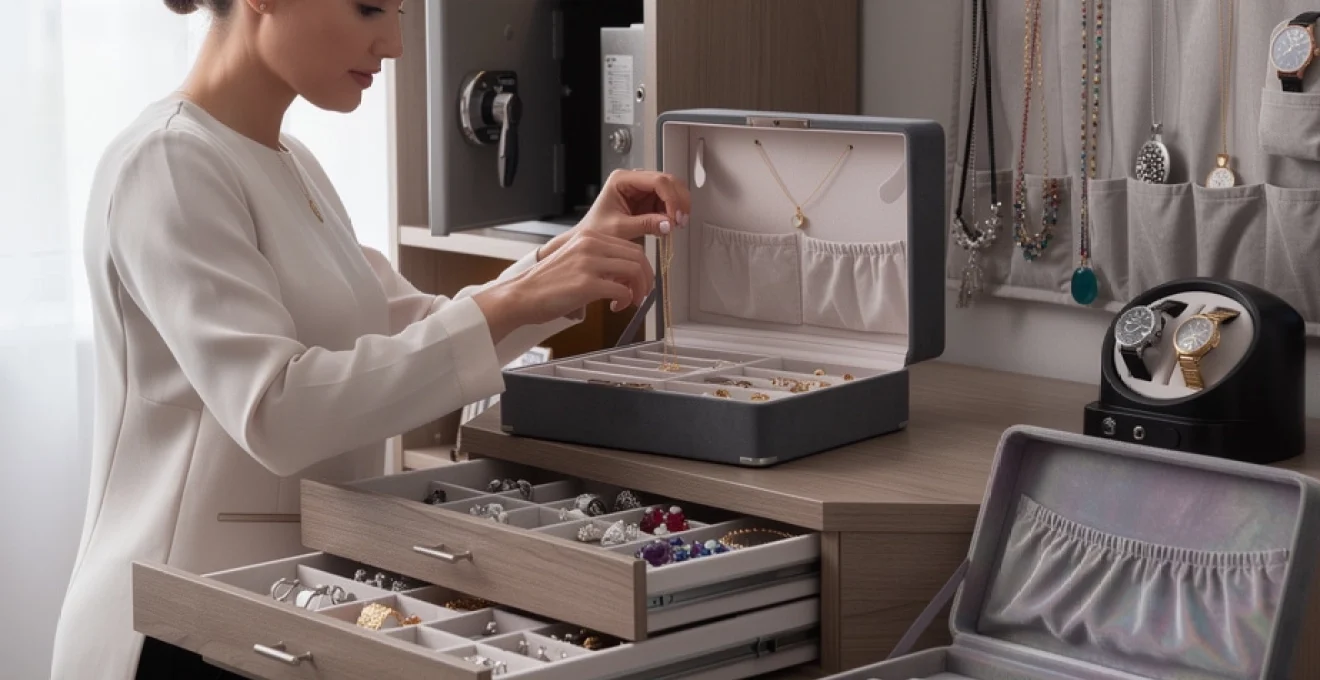
Your jewelry collection represents more than just sparkling adornments—these pieces often carry profound sentimental value, commemorate milestone moments, and constitute significant financial investments. Whether you’ve inherited treasured heirlooms, received thoughtful gifts, or carefully curated your own collection, the manner in which you store these precious items directly influences their longevity, lustre, and overall condition. Poor storage practices can lead to tarnishing, scratching, tangling, and irreversible damage that diminishes both aesthetic appeal and monetary value. Understanding the science behind jewelry degradation and implementing professional-grade storage solutions ensures your collection remains as radiant as the day you first wore each piece. This comprehensive guide explores the technical aspects of jewelry preservation, from material-specific requirements to environmental controls that protect your most cherished possessions.
Understanding jewellery material properties and storage requirements
Each type of jewelry material possesses unique chemical and physical properties that dictate specific storage requirements. Recognising these material characteristics forms the foundation of effective preservation strategies. Without this knowledge, even well-intentioned storage efforts may inadvertently accelerate deterioration rather than prevent it.
Gold alloy composition and oxidation prevention techniques
Gold jewelry rarely consists of pure 24-karat gold due to the metal’s inherent softness. Instead, most pieces utilise gold alloys containing varying percentages of copper, silver, zinc, or nickel to enhance durability. These alloy components create vulnerability to oxidation processes, particularly in higher humidity environments. The copper content in rose gold, for instance, can develop a greenish patina when exposed to moisture and oxygen over extended periods. Preventing this oxidation requires storing gold jewelry in low-humidity environments, ideally with relative humidity levels maintained between 45-55%. Individual soft pouches or compartmentalised boxes lined with acid-free materials provide optimal protection whilst preventing surface scratches from contact with other pieces.
Sterling silver tarnish formation and Anti-Tarnish storage solutions
Sterling silver, composed of 92.5% pure silver and 7.5% other metals (typically copper), exhibits particularly high susceptibility to tarnishing—a chemical reaction between silver and sulphur compounds present in air. This reaction produces silver sulphide, the dark coating that dulls your silver jewelry’s brilliant shine. Atmospheric pollutants, certain foods, and even the natural oils on your skin accelerate this tarnishing process. Combat these effects by implementing anti-tarnish storage solutions that actively absorb sulphur compounds. Specialized anti-tarnish cloths impregnated with silver-protective compounds create a barrier against oxidation. Additionally, anti-tarnish strips containing activated carbon or zeolite minerals neutralise airborne sulphur before it contacts your silver pieces. Always ensure silver jewelry is thoroughly cleaned and completely dry before storage, as moisture dramatically accelerates the tarnishing reaction.
Platinum and palladium scratch resistance considerations
Whilst platinum and palladium boast exceptional density and corrosion resistance, these precious metals remain vulnerable to surface scratching despite their durability. Platinum, particularly, develops a characteristic patina over time—a textured surface finish some collectors appreciate whilst others prefer to avoid. Unlike gold, which loses minute amounts of metal when scratched, platinum simply displaces, creating texture changes rather than material loss. Store platinum and palladium pieces separately from harder materials, particularly diamonds and other gemstones, which can easily scratch these metals’ surfaces. Individual chamois leather pouches or dedicated compartments within velvet-lined jewelry boxes provide adequate protection whilst maintaining the pieces’ original polished finish.
Gemstone mohs hardness scale and separation protocols
The Mohs hardness scale, ranging from 1 (talc) to 10 (diamond), provides essential guidance for gemstone storage protocols. Diamonds, ranking 10 on this scale, can scratch virtually any other gemstone or precious metal. Conversely, softer gemstones like opals (5-6.5), pearls (2.5-4.5), and turquoise (5-6) require protection from harder materials to prevent surface damage. Implement a separation protocol whereby harder gemstones never contact softer ones during storage. This means storing your diamond rings completely separately
from pieces set with softer stones and never placing loose diamonds directly beside other jewellery in a shared compartment. Consider a simple rule of thumb: harder stones always “live alone” or in dedicated slots, while softer stones share space only with materials of equal or lower hardness. When in doubt, separate by type and wrap individual pieces in soft, non-abrasive cloth. This small habit dramatically reduces micro-scratches, chips, and visible wear across your entire jewellery collection.
Pearl nacre dehydration prevention methods
Pearls occupy a unique category because they are organic gemstones composed primarily of calcium carbonate and layers of delicate nacre. Unlike harder, crystalline gemstones, pearl surfaces can dehydrate, craze (develop fine cracks), or lose lustre if stored incorrectly. To prevent nacre dehydration, avoid extremely dry environments, such as heated air vents or direct sunlight, which can strip moisture from the outer layers. Instead, store pearls at stable room temperature in a slightly humid, but not damp, environment—roughly the same conditions comfortable for human skin.
Always keep pearl jewellery in soft, breathable pouches or compartments lined with microfiber, cotton, or high-quality velvet rather than airtight plastic bags. While limiting air exposure helps most metals, pearls actually benefit from a bit of air circulation, as completely sealed containers can trap residual moisture, encouraging mould growth on silk threads. Never store pearls in direct contact with harder gemstones or metals; their nacre scratches very easily. After each wear, gently wipe pearls with a soft cloth to remove acids, sweat, and cosmetics before placing them back into storage, as these residues can erode nacre over time.
Professional jewellery storage solutions and compartmentalisation systems
Once you understand how different materials behave, the next step is selecting professional jewellery storage solutions that support those needs. Thoughtful compartmentalisation not only protects against physical and chemical damage but also makes your collection easier to navigate. The goal is to create a system in which every ring, necklace, earring, and bracelet has a defined “home.” When your storage mimics what you might see in a high-end boutique or museum display, you reduce clutter, prevent accidental damage, and actually enjoy wearing more of what you own.
Anti-tarnish lined jewellery boxes with individual compartments
High-quality jewellery boxes remain one of the most effective ways to store jewellery properly and avoid damage. Look for designs featuring anti-tarnish linings made from treated fabrics that neutralise sulphur compounds and reduce oxidation, especially for silver, gold-plated, and mixed-metal pieces. Individual compartments, ring rolls, and earring grids ensure that items do not rub against one another, minimising scratches and tangled chains. For larger collections, modular boxes with removable trays let you adapt your setup as your jewellery wardrobe grows.
When evaluating a jewellery box, consider the internal layout as carefully as the exterior aesthetic. Does it have long compartments for chains, cushioned sections for rings, and deeper wells for chunky bracelets or bangles? Are there separate sections where you can divide fine jewellery from fashion pieces and organise by metal type? A well-designed jewellery box should support these best practices so that you are not forced to pile items together. If your current box is hard-lined or non-padded, you can upgrade its protective capabilities by adding small anti-tarnish pouches and adhesive felt or velvet inserts to cushion each space.
Stackable velvet tray organisers for drawer storage
If you prefer a clutter-free surface on your dressing table, stackable velvet tray organisers for drawers offer an elegant, space-saving alternative to freestanding boxes. These shallow trays typically feature multiple compartments of varying sizes, ideal for categorising jewellery by type, metal, or frequency of wear. Soft velvet or microfiber linings create a gentle resting surface that protects against abrasion and reduces the risk of gemstones scratching softer metals. Stacked vertically, they allow you to store a surprisingly large collection in a single drawer while keeping everything visible at a glance.
To maximise efficiency, dedicate one tray to daily essentials—stud earrings, signature rings, and a few go-to necklaces—so you are not rifling through your entire collection each morning. Deeper trays can hold less frequently worn statement pieces, while narrow compartments are perfect for delicate chains that need to stay separated. Think of these trays as a filing system for your jewellery: the clearer your categories, the quicker you can locate and return each piece. Labelling the front edge of each tray or mentally assigning each layer a specific category (for example, “gold rings” or “silver chains”) adds an extra level of organisation.
Hanging fabric organisers for chain and necklace management
Long chains and pendant necklaces are particularly prone to tangling when stored flat or piled into a box. Hanging fabric organisers—often designed with rows of hooks, loops, or clear pockets—offer a practical solution for chain and necklace management. By allowing each piece to hang freely, you minimise stress on clasps and prevent knots that can be difficult and sometimes impossible to undo without damage. Transparent pockets also support “see-everything-at-once” visibility, which helps you remember and rotate through more of your pieces.
When selecting a hanging organiser, prioritise soft, non-abrasive materials and sturdy hardware that can comfortably bear the weight of heavier chains without stretching or tearing. Mount organisers inside wardrobe doors or on a wall away from direct sunlight and steam from bathrooms. For mixed collections, you might reserve one organiser for fashion necklaces and another for fine chains to reduce metal cross-contamination and scratching. As with all storage, avoid overcrowding; if a hook looks overloaded, it is time to redistribute pieces to maintain both order and safety.
Specialised watch winders and timepiece storage cases
Watches, particularly automatic or mechanical timepieces, have distinct storage requirements that go beyond basic scratch prevention. Automatic watches rely on regular movement to keep their internal mechanisms lubricated and running accurately. Specialised watch winders gently rotate these timepieces at set intervals, simulating wrist movement and preventing lubricants from stagnating. High-quality winders offer programmable settings tailored to different brands and calibres, protecting both function and value over the long term.
Even if you do not require a winder, dedicated watch storage cases are essential for avoiding crystal scratches, bezel dings, and strap deformation. Look for cases with individual padded cushions that support the watch bracelet or strap in its natural, curved position, rather than flattening it. For watches with leather bands, store them away from excessive heat and humidity to prevent cracking or mould. It is also wise to separate steel or titanium watches from softer gold or platinum pieces to minimise the risk of harder metals leaving marks. Treat your watches as miniature machines: the more securely and thoughtfully they are stored, the longer they will perform and look their best.
Environmental factors affecting jewellery preservation
Even the most advanced jewellery boxes and organisers cannot compensate for unfavourable environmental conditions. Air quality, humidity, temperature, and exposure to light and chemicals all play critical roles in how quickly jewellery degrades. Managing these environmental factors is similar to caring for artwork or fine instruments: minor adjustments in where and how you store pieces can significantly slow down wear and ageing. By taking a few preventative steps, you can greatly extend the life of metals, gemstones, and organic materials in your collection.
Relative humidity control for precious metal storage
Relative humidity is one of the most important yet overlooked variables in jewellery preservation. Excess moisture in the air accelerates corrosion, tarnishing, and even structural weakness in certain metal alloys, while very low humidity can contribute to dehydration of organic materials like pearls and certain inlays. Ideally, jewellery should be stored in environments where relative humidity is stable, generally around 40–50% for most homes. In climates where ambient humidity is consistently higher, you may need to create micro-environments within your storage system to protect sensitive pieces.
Desiccant solutions such as silica gel packets or rechargeable dehumidifying capsules can be placed discreetly inside jewellery boxes, drawers, and safes to maintain an optimal micro-climate. Conversely, if your home is extremely dry, avoid placing pearl and opal pieces directly next to powerful dehumidifiers or heating vents. Consider using a small digital hygrometer to monitor humidity levels in rooms where you store high-value jewellery. This simple device offers real-time feedback so you can make informed adjustments rather than guessing whether conditions are suitable.
UV light exposure effects on coloured gemstones and organic materials
Ultraviolet (UV) light, primarily from direct sunlight but also from some artificial sources, can gradually alter the appearance of coloured gemstones and organic materials. Certain gems, such as amethyst, kunzite, and some treated topaz, may fade or shift in colour with prolonged exposure. Organic materials—including pearls, coral, ivory, and some resins—can yellow, dry out, or become brittle under intense light. While the changes may be subtle at first, cumulative exposure over months and years can significantly diminish a piece’s visual impact and value.
To mitigate UV damage, avoid storing jewellery on open trays or stands near windows, skylights, or bright lamps. If you enjoy displaying a few favourite pieces on your dresser, choose a shaded area and rotate the items regularly, much like rotating artwork to limit light exposure. Closed jewellery boxes, drawers, and safes naturally block UV rays, making them ideal for long-term storage of light-sensitive pieces. You might think of UV light as slow, invisible “bleach” for certain materials; keeping jewellery out of its direct path is one of the easiest protective measures you can take.
Temperature fluctuation impact on metal expansion and gemstone stability
While jewellery is crafted to be worn in everyday conditions, repeated exposure to extreme temperature swings can stress both metals and gemstones. Metals expand with heat and contract with cold; over time, these cycles can loosen prongs and settings, particularly in pieces that are already slightly worn. Some gemstones, especially those with internal inclusions or cleavage planes (such as emeralds or tanzanite), are more vulnerable to thermal shock and may crack if rapidly heated or cooled. Even adhesives used in some costume jewellery and doublets can fail under fluctuating temperatures.
For optimal preservation, store jewellery at a stable room temperature away from direct heat sources like radiators, fireplaces, or sunny windowsills. Avoid leaving pieces in vehicles, conservatories, or uninsulated loft spaces where temperatures can swing dramatically between day and night. If jewellery has become very cold or hot—for example, after being worn outside in winter—allow it to return slowly to room temperature before placing it into a closed box or safe. Think of temperature management as giving your jewellery a gentle, steady climate rather than subjecting it to sudden “weather changes.”
Chemical vapour damage from household products and perfumes
Even when jewellery is not being worn, it can be exposed to harmful chemical vapours from everyday products. Cleaning agents, air fresheners, perfumes, hairsprays, and even certain types of wood or adhesives in furniture can emit compounds that react with metals and coatings. Silver, in particular, is sensitive to sulphur-containing vapours, while plated and coated pieces can discolour or peel more quickly when stored near aggressive chemicals. Over time, these invisible exposures may leave pieces looking dull, spotted, or unevenly tarnished.
To reduce chemical vapour damage, avoid storing jewellery in bathrooms, kitchens, or laundry rooms where cleaning products and steam are frequently used. Do not keep jewellery boxes directly on shelves that also host strong fragrances, nail polish removers, or solvent-based products. When getting ready, make jewellery the final step in your routine: apply perfumes, lotions, and hairspray first, allow them to dry completely, and only then put on your pieces. During storage, keeping jewellery in closed containers, lined drawers, or safes provides an additional barrier against airborne chemicals circulating in your home.
Advanced protection methods for heirloom and investment pieces
Heirloom and investment jewellery often requires a higher level of protection than everyday accessories. These pieces may feature rare gemstones, intricate antique settings, or bespoke craftsmanship that would be difficult or impossible to replace. For such items, it helps to borrow preservation strategies from museums and professional archives. By combining archival materials, controlled micro-climates, and secure storage environments, you can ensure that your most valuable jewellery not only retains its beauty but can be safely passed down to future generations.
Museum-grade archival tissue paper wrapping techniques
Museum-grade archival tissue paper, typically acid-free and lignin-free, is designed to protect delicate surfaces over long periods without causing discolouration or chemical reactions. When wrapping heirloom jewellery, gently cushion each piece in a layer or two of this tissue before placing it into its box or compartment. The tissue acts as a buffer against abrasion, absorbing minor shocks and preventing direct contact between metal components or gemstones. For pieces with protruding settings or sharp prongs, you can loosely wrap the vulnerable areas first, then enclose the entire item in a secondary layer.
Proper wrapping technique is important: avoid compressing the tissue too tightly, which can place unnecessary pressure on stones or delicate filigree work. Instead, think of the tissue as a soft cocoon that supports but does not squeeze the jewellery. Never substitute standard coloured tissue paper, which often contains dyes and acids that can leach onto metal or gemstones over time. When used in conjunction with quality boxes and controlled environments, archival tissue becomes a discreet yet powerful tool in long-term jewellery preservation.
Silica gel desiccant packets for moisture absorption
Silica gel desiccant packets are a simple but highly effective way to control moisture in confined storage spaces, particularly safes, lockboxes, and sealed drawers. These packets contain porous beads that attract and hold water molecules, lowering relative humidity in their immediate surroundings. For jewellery, this helps slow corrosion, tarnish, and mould growth, especially in regions with consistently high ambient humidity. You will often find similar desiccants used in packaging for electronics, camera equipment, and pharmaceuticals for the same reason.
To use silica gel safely, position packets so they do not rest directly on your jewellery, especially on very soft surfaces like pearls or vintage fabrics. Replace or recharge (if using reusable types) according to manufacturer guidelines, typically every few months, depending on local conditions. A useful analogy is that silica gel functions as a miniature dehumidifier inside your jewellery storage, quietly working in the background to preserve metals and organic materials. Combining desiccants with anti-tarnish linings and stable room temperature creates a robust environmental defence for high-value items.
Anti-tarnish strips with silver ion technology
For collections with significant sterling silver or silver-plated pieces, anti-tarnish strips based on silver ion or activated carbon technology offer targeted protection. These strips are designed to absorb or neutralise sulphur and other reactive gases before they interact with your jewellery, significantly reducing the rate at which tarnish forms. Unlike polishing, which physically removes metal each time it is performed, using these strips is a preventive strategy that preserves metal thickness and detail. You simply place a strip within the storage container, drawer, or display case, allowing it to protect all items within that micro-environment.
Most anti-tarnish strips have a defined lifespan, often around six to twelve months, depending on air quality and container size. Marking the replacement date on a small label inside your jewellery box helps you stay on schedule. While these strips are highly effective, they work best when combined with good basic practices: jewellery should be clean, dry, and stored in closed, padded compartments. Think of them as an additional layer of “invisible armour” for your silver, supporting but not replacing regular inspection and gentle maintenance.
Climate-controlled safe deposit box storage standards
For the most valuable or irreplaceable pieces—such as investment-grade diamonds, rare coloured gemstones, or historic heirlooms—climate-controlled safe deposit boxes or high-security home safes offer the best overall protection. Many modern bank vaults and premium safes maintain relatively stable temperature and humidity, reducing environmental stress on jewellery stored for extended periods. Additionally, these secure facilities dramatically lower the risk of theft or catastrophic loss from fire, flooding, or other disasters. If you only wear certain items on very special occasions, off-site storage can be a wise component of your overall protection strategy.
When using a safe deposit box, pack jewellery in cushioned, labelled containers so pieces remain organised and well-supported inside the confined space. Combine the box environment with archival materials, such as acid-free tissue and desiccant packets, to fine-tune the micro-climate. For home safes, choose models rated for both fire and burglary resistance, and position them in locations with relatively stable environmental conditions. Remember that secure storage should go hand in hand with up-to-date insurance and documentation, including detailed appraisals and photographs, so that your investment is protected both physically and financially.
Preventing physical damage through proper handling and arrangement
Even the best storage system cannot compensate for careless handling. Many instances of jewellery damage occur not in the box, but in the few seconds when pieces are put on, taken off, or moved from one place to another. Treating your jewellery as precision objects rather than casual accessories goes a long way towards reducing chips, bends, and broken clasps. Simple habits—like fastening clasps before storage, removing rings before manual tasks, and carrying pieces in protective pouches—can dramatically cut the risk of accidental damage.
Always handle jewellery over a soft surface, such as a folded towel or padded tray, especially when dealing with small earrings or pieces with delicate stones. If an item slips from your hands, the cushioning helps prevent impact damage. When arranging jewellery inside a box or tray, keep heavier items, such as chunky bracelets or large pendants, in separate compartments away from fragile chains and pavé-set rings. Avoid overfilling any one section; pressure from overcrowding can distort thin bands or force prongs out of alignment.
Another key principle is to establish “transition zones” in your home—designated spots where you routinely put on and take off jewellery. A small tray on a bedside table, a velvet-lined dish by the sink (used only temporarily, never near open drains), or a catch-all bowl on a dresser helps ensure pieces are not left in random, unsafe locations. From these zones, items should move directly back to their long-term storage rather than being scattered across surfaces, pockets, or handbags. With consistent practice, these routines become second nature and significantly reduce the chances of losing or damaging treasured pieces.
Travel storage solutions for jewellery security and protection
Travelling with jewellery introduces a whole new set of risks: increased handling, unfamiliar environments, and greater exposure to theft or loss. Proper travel storage helps you enjoy your favourite pieces on the go without compromising their safety. A dedicated travel jewellery case—compact yet well-structured—should be part of every frequent traveller’s essentials. Look for designs featuring ring rolls, zipped pockets for loose items, padded panels for earrings, and individual hooks or loops for necklaces to prevent tangling.
When packing jewellery, select only what you realistically expect to wear and avoid travelling with your most irreplaceable heirlooms unless absolutely necessary. Keep jewellery in your carry-on luggage rather than checked bags, reducing the risk of loss or extreme temperature exposure in cargo holds. For day-to-day activities at your destination, use hotel safes or portable lockable pouches to secure items when they are not being worn. If you plan to swim or engage in sports, designate a specific, secure place in your room where jewellery is always stored during these activities, instead of leaving pieces on poolside tables or beach towels.
Travel environments can also be more humid or chemically aggressive than your home, particularly near oceans or in tropical climates. Salt air and chlorinated water can rapidly attack metals and settings, so remove jewellery before swimming and store it in a dry, enclosed case with small desiccant packets. After wearing pieces in hot or humid conditions, gently wipe them with a soft cloth before placing them back into the case to remove sweat, sunscreen, and sunscreen residue. By approaching travel storage with the same level of planning you give to your itinerary, you ensure that your jewellery arrives home in the same pristine condition in which it left.