
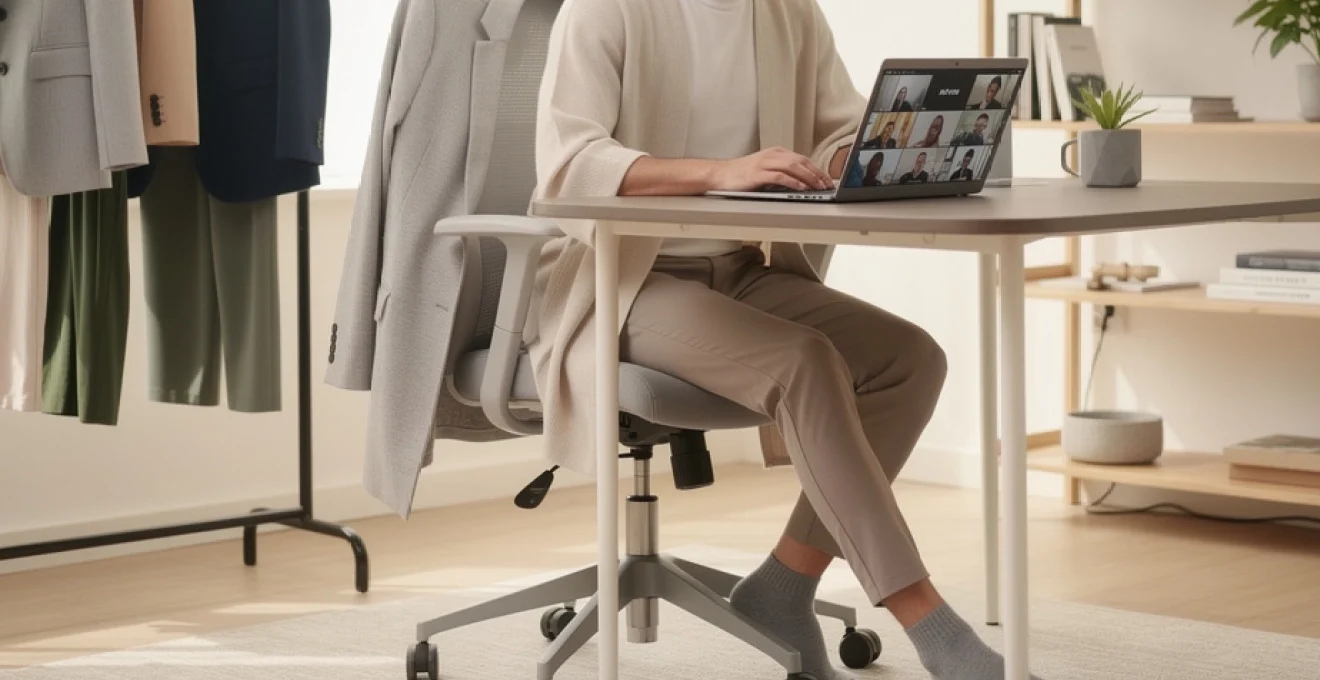
The landscape of professional attire has undergone a remarkable transformation since remote work became mainstream. What once seemed like a temporary shift has evolved into a permanent fixture of modern work culture, fundamentally changing how professionals approach their daily wardrobe choices. The challenge now lies in striking the perfect balance between comfort and professionalism whilst working from the sanctuary of your own home.
Gone are the days when working from home meant compromising on style or sacrificing comfort for appearance. Today’s remote workers demand clothing that seamlessly transitions from video calls to household tasks, maintaining both psychological confidence and physical comfort throughout extended work sessions. This evolution has sparked innovation in textile technology and garment design, creating opportunities for a more thoughtful approach to home office attire.
The psychological impact of dressing intentionally whilst working remotely cannot be understated. Research consistently demonstrates that clothing choices directly influence cognitive performance, mood regulation, and professional self-perception. When you dress with purpose, even in your home environment, you signal to your brain that work time requires focus and professionalism, creating mental boundaries that enhance productivity and maintain work-life separation.
Essential fabric technologies and materials for home office comfort
Modern textile innovation has revolutionised the concept of comfortable professional wear, introducing materials that respond to your body’s changing needs throughout the workday. These advanced fabrics represent a paradigm shift from traditional workwear, offering solutions that were unimaginable just a decade ago.
Moisture-wicking synthetic blends for All-Day wear
Synthetic moisture-wicking fabrics have transcended their athletic origins to become essential components of professional home office wardrobes. These engineered materials utilise capillary action to draw perspiration away from the skin, distributing it across the fabric’s surface for rapid evaporation. Polyester blends enhanced with microdenier fibres provide exceptional breathability whilst maintaining the crisp appearance expected in professional settings.
The science behind moisture management involves fibre structure modification at the molecular level. Contemporary blends combine hydrophobic synthetic fibres with hydrophilic natural fibres, creating a dual-layer system that moves moisture efficiently while preventing bacterial growth. This technology proves particularly valuable during lengthy video conferences or high-stress presentations when traditional fabrics might become uncomfortable.
Natural fiber performance: merino wool and bamboo properties
Merino wool stands as nature’s most sophisticated performance fabric, offering unparalleled temperature regulation and odour resistance. Unlike conventional wool, merino fibres measure less than 24 microns in diameter, creating a soft handfeel that rivals luxury cotton whilst providing superior thermal management. The crimp structure of merino fibres creates microscopic air pockets that insulate in cold conditions and release heat when temperatures rise.
Bamboo-derived fabrics represent another breakthrough in sustainable performance textiles. Bamboo viscose demonstrates exceptional antibacterial properties and moisture absorption rates up to 60% higher than cotton. The smooth fibre structure reduces friction against skin, making bamboo garments ideal for extended sitting periods. Additionally, bamboo cultivation requires minimal water and pesticides, appealing to environmentally conscious professionals.
Temperature-regulating textiles: phase change materials and cooling fabrics
Phase Change Materials (PCMs) represent the cutting edge of thermal regulation technology in textiles. These substances absorb, store, and release thermal energy as they change between solid and liquid states, maintaining consistent body temperature regardless of environmental fluctuations. Garments incorporating PCM technology can maintain comfortable skin temperature within a 2-3 degree range for up to eight hours.
Cooling fabric technologies utilise various approaches to enhance thermal comfort. Jade-infused fibres conduct heat away from the body, whilst graphene-enhanced textiles provide superior heat dissipation. Some innovative fabrics incorporate ceramic particles that reflect body heat back to cooler areas, creating natural air conditioning effects. These technologies prove especially valuable for professionals working in home offices with limited climate control options.
Stretch recovery technology in modern workwear fabrics
Contemporary stretch technologies extend far beyond traditional elastane blends. Modern recovery systems utilise memory polymers that return to their
original shape after repeated wear, preventing bagging at the knees or sagging at the seat. This is particularly important when you are moving between your desk, the sofa, and the kitchen throughout the day. High-quality stretch recovery fabrics combine a low percentage of elastane or spandex with tightly constructed weaves, resulting in trousers and knit blazers that feel as comfortable as loungewear yet retain a polished silhouette.
Many modern work-from-home trousers now incorporate four-way stretch, allowing the fabric to move both horizontally and vertically. This multi-directional elasticity supports natural body movement during tasks such as sitting cross-legged, stretching, or adjusting posture at your desk. When choosing pieces for a comfortable yet professional work-from-home outfit, look for garments tested for recovery over multiple wear cycles; brands will often highlight this in their technical descriptions.
Strategic layering systems for remote work environments
Home office environments rarely offer the controlled, consistent temperatures of corporate buildings. Radiators click on and off, loft offices overheat, and ground-floor rooms can feel chilly even in summer. A strategic layering system allows you to regulate your temperature quickly without sacrificing style. By thinking like an outdoor athlete—but translating that logic into refined, work-appropriate pieces—you can create work-from-home outfits that flex with your day.
Base layer selection: technical undershirts and seamless construction
The base layer forms the foundation of your work-from-home wardrobe, sitting closest to the skin and managing moisture and friction. Technical undershirts made from moisture-wicking blends or ultra-fine merino offer a second-skin feel while preventing that clammy sensation that comes from wearing basic cotton all day. Seamless construction further enhances comfort by eliminating bulky seams that can rub when you are leaning back in your chair or typing for long periods.
When selecting base layers for remote work, prioritise lightweight, breathable fabrics in neutral tones that will not show through your shirts or blouses. Fitted short-sleeve or long-sleeve tops work particularly well under cardigans and unstructured blazers, maintaining a smooth line under more tailored outer layers. You might think of these pieces as the “invisible infrastructure” of your outfit—rarely seen, but critical to how comfortable and confident you feel from your first call to your last email.
Mid-layer versatility: cardigan weight distribution and thermal efficiency
The mid-layer is where your work-from-home style becomes visible. Cardigans, lightweight sweaters, and fine-knit vests provide insulation while allowing you to adapt quickly as your body temperature changes. The key is to consider both weight distribution and thermal efficiency. Heavier knits concentrated around the shoulders and upper torso keep your core warm without adding bulk at the wrists, which can interfere with typing and mouse use.
Look for cardigans with a high percentage of natural fibres such as merino or cotton, ideally with a density that feels substantial but not bulky. A mid-weight knit (around 10–14 gauge for most yarns) tends to drape cleanly over base layers without clinging. This kind of piece can be slipped on for early-morning calls, then draped over your chair when the sun hits your office window in the afternoon. Over time, you will notice which cardigan weights suit each season—almost like having a climate-control dial built into your wardrobe.
Outer layer adaptability: blazer structure and drape mechanics
For many professionals, the blazer remains the quickest way to signal authority and polish on camera. However, traditional suiting can feel restrictive when you are working at a laptop for hours. The solution lies in modern, partially structured blazers that prioritise drape and mobility. Unlined or half-lined designs reduce weight and allow the fabric to move more fluidly, while soft shoulders avoid the stiffness associated with formal office wear.
From a mechanical perspective, a well-cut blazer should hang cleanly from the shoulder line, creating vertical lines that frame your torso on screen. Choosing fabrics with a small amount of stretch—around 2–4% elastane—helps the blazer flex as you reach for files, adjust your standing desk, or sit back in your chair. You might reserve fully structured, sharp-lapelled pieces for occasional client presentations and opt for jersey blazers or knitted jackets on typical work-from-home days, achieving a balance between visual impact and physical ease.
Transitional pieces: kimono-style jackets and open-front designs
Not every day calls for a blazer, yet you may still want something more intentional than a sweatshirt. Transitional pieces such as kimono-style jackets, open-front cardigans, and lightweight duster coats bridge the gap between loungewear and tailoring. Their relaxed structure allows for generous airflow and movement, while the vertical lines they create on the body are flattering on camera and in person.
Kimono-style jackets, often cut with wider sleeves and a fluid body, are particularly effective at adding interest to simple base layers like a plain T-shirt or ribbed tank. Think of them as elevated robes—just as comfortable, yet far more appropriate for a surprise executive call. Open-front designs also make it easy to adapt to changing temperatures: you can push sleeves up, knot belts loosely, or remove the piece altogether without disturbing your hair or microphone setup.
Ergonomic footwear solutions for extended sitting periods
Footwear might be the last thing on your mind when working from home, but it plays a crucial role in your posture, circulation, and overall comfort. Spending long hours barefoot or in unsupportive slippers can contribute to lower back pain and fatigue, especially if you use a standing desk part of the day. Ergonomic footwear solutions help align your body correctly and reduce strain during extended sitting periods.
Supportive house shoes or hybrid sneakers with cushioned insoles, arch support, and a stable heel counter are ideal for remote work. These features encourage a neutral foot position, which in turn supports better hip and spine alignment. If you prefer to feel as though you are not wearing shoes at all, look for minimalist designs with structured footbeds rather than completely flat soles. You can think of them as “orthopaedic slippers”—as soft as traditional house shoes yet engineered with your musculoskeletal health in mind.
For professionals who alternate between sitting and standing, anti-fatigue mats combined with supportive footwear create an optimal micro-environment for your feet. Studies have shown that standing on cushioned surfaces can reduce discomfort and joint compression, making it easier to maintain focus during long tasks. Even if you only stand for 15–20 minutes each hour, the right shoes can prevent the aches that often lead to slumping back into your chair prematurely.
Professional video conferencing wardrobe optimisation
When your colleagues and clients predominantly see you through a webcam, your “screen presence” becomes central to your professional identity. This does not mean you need a completely separate wardrobe for video calls; rather, you can curate a small selection of camera-friendly pieces that work harmoniously with your lighting, background, and personal colouring. The goal is to look alert, approachable, and competent with minimal effort.
Start by assessing how different colours appear on your screen. As a rule of thumb, mid-tone shades—such as soft blues, forest greens, and muted terracottas—tend to read well on camera, offering contrast without overwhelming the frame. Extremely bright whites can blow out under artificial light, while very dark blacks may lose detail and flatten your features. If you wear patterns, keep them simple and medium-scale; tiny checks or high-contrast stripes can create a flickering effect on video, while busy prints draw attention away from your face.
Necklines and silhouettes also influence how polished your work-from-home outfits appear online. Structured crew necks, modest V-necks, and clean collared shirts frame the face effectively and accommodate clip-on microphones or earbuds. Avoid tops that slip off the shoulder or require constant adjustment; the most professional pieces are those you can forget you are wearing. A small rotation of well-fitting tops—perhaps three to five that you know look excellent on camera—can simplify your morning decisions and ensure consistency across meetings.
Accessories should enhance, not distract. Consider subtle earrings, a simple necklace, or a slim scarf in a flattering colour to add interest to an otherwise minimal outfit. However, avoid jewellery that clinks against your desk or headset, as even minor noises are amplified through microphones. If you wear glasses, anti-reflective coatings help reduce glare from your screen and ring light, allowing others to maintain eye contact with you more easily.
Sustainable remote work fashion: capsule wardrobe construction
Building a sustainable work-from-home wardrobe is not just about eco-friendly fabrics; it is also about intentional curation. A well-designed capsule wardrobe reduces decision fatigue, minimises clutter, and ensures that every piece you own works hard for you. When your clothing aligns with your lifestyle, values, and working patterns, getting dressed becomes a streamlined part of your morning routine rather than a source of stress.
To create a capsule wardrobe for working from home, begin by identifying your core categories: tops for video calls, comfortable yet presentable bottoms, versatile layers, and ergonomic footwear. You might find that you only need a handful of pieces in each category if they are thoughtfully chosen. For example, three high-quality tops that flatter you on camera, two pairs of smart stretch trousers, a pair of elevated joggers, and two layering pieces can generate dozens of outfit combinations.
Sustainability also involves paying attention to fabric longevity and care requirements. Investing in durable natural fibres and robust blends means your garments will withstand frequent wear and washing without losing their shape or colour. Look for certifications such as OEKO-TEX or GOTS for added reassurance about chemical use and supply chain transparency. By choosing fewer, better items, you reduce textile waste and the temptation to order low-quality fast fashion pieces that rarely leave the wardrobe.
Finally, consider how your work-from-home clothes can transition beyond the home office. Can your knit blazer double as a weekend jacket? Will your bamboo loungewear set look polished enough for a casual coffee meeting? Prioritising multifunctional garments extends the life of each piece and supports a more sustainable relationship with fashion. Over time, you will develop a tightly edited collection that reflects your personal style, supports your wellbeing, and meets the evolving demands of remote work.