
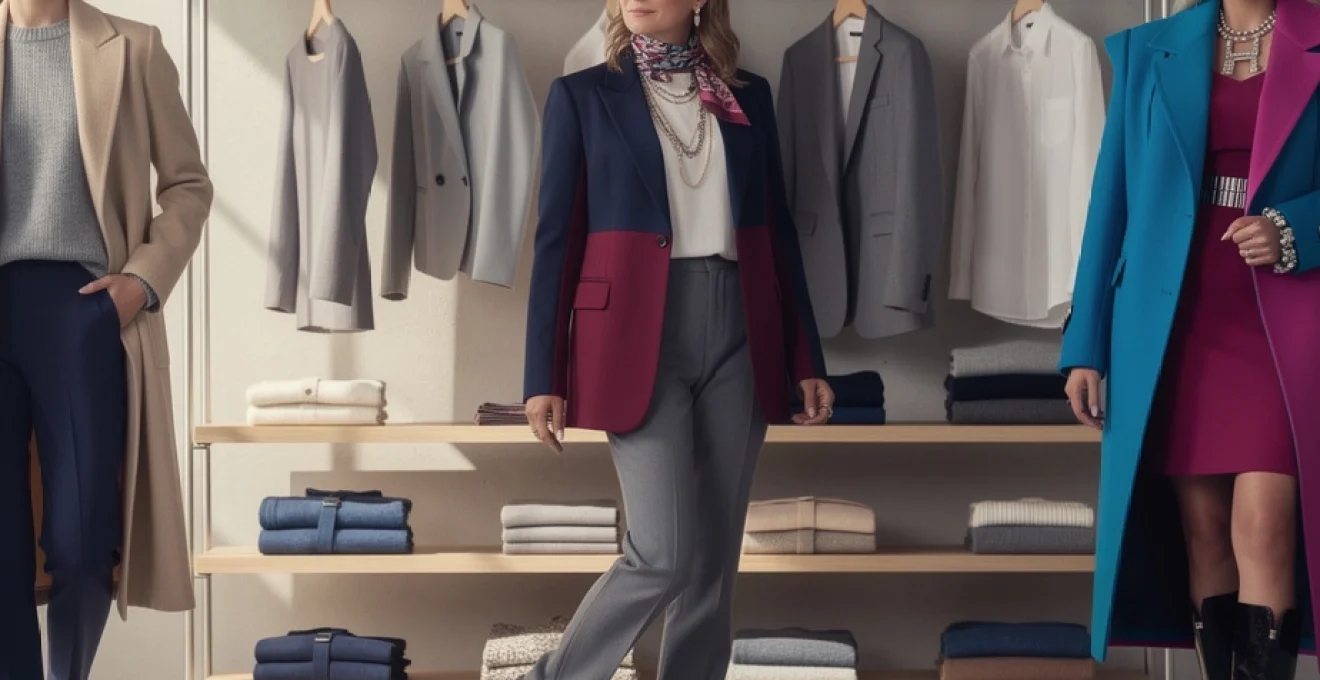
Fashion identity exists on a spectrum where personal expression meets aesthetic philosophy. At one end lies minimalism—the art of intentional reduction, where every piece serves multiple purposes and speaks through quality rather than quantity. At the other extreme sits bold fashion, an unapologetic celebration of colour, texture, and form that transforms clothing into wearable art. The journey between these two poles isn’t about choosing sides; it’s about discovering where your authentic self feels most comfortable whilst remaining open to evolution and experimentation.
Understanding how to navigate this spectrum empowers you to build a wardrobe that truly reflects your multifaceted personality. Your style identity doesn’t need to remain static—it can shift with your mood, life circumstances, or simply your desire for creative expression. Whether you’re currently anchored in neutral territory or ready to embrace statement pieces, the key lies in developing a systematic approach to wardrobe transformation that honours both your comfort zone and your aspirations.
Deconstructing minimalist fashion fundamentals: capsule wardrobe architecture
Minimalist fashion operates on the principle that less truly becomes more when every element serves a purpose. This philosophy extends beyond simple colour palettes to encompass construction quality, versatility, and timeless appeal. The minimalist approach treats your wardrobe as an investment portfolio—each piece carefully selected to maximise return through repeated wear and seamless integration with existing items.
The foundation of minimalist dressing lies in understanding that true elegance emerges from restraint rather than excess. This doesn’t mean sacrificing personal expression; instead, it channels creativity through subtle details like exceptional tailoring, luxurious textures, or perfectly proportioned silhouettes. Think of minimalism as curated abundance—abundant in quality, purpose, and thoughtful selection whilst remaining consciously limited in quantity.
Neutral colour palette selection: beige, grey, and navy foundation systems
Building a cohesive neutral palette requires understanding colour temperature and undertones rather than simply choosing “safe” shades. Beige ranges from warm sand tones with yellow undertones to cool mushroom greys with pink bases. These subtle variations dramatically impact how colours work together and complement your skin tone. Professional stylists recommend selecting three primary neutrals that share similar undertones to ensure seamless coordination.
Grey offers perhaps the most versatile foundation, ranging from charcoal’s dramatic depth to pearl’s gentle luminosity. Mid-tone greys serve as perfect bridges between black and white, whilst darker greys provide sophistication without black’s stark formality. Navy functions as the sophisticated alternative to black, offering warmth and approachability whilst maintaining professional credibility across all contexts.
Quality fabric investment: cashmere, merino wool, and premium cotton essentials
Fabric quality determines both the longevity and perceived value of minimalist pieces. Cashmere represents the pinnacle of luxury fibres, offering unmatched softness and insulation properties whilst maintaining a refined appearance through countless wears. However, not all cashmere equals excellence—ply count, fibre length, and processing methods significantly impact durability and performance. Two-ply cashmere provides optimal balance between softness and resilience.
Merino wool excels in temperature regulation and odour resistance, making it ideal for travel and busy lifestyles. Its fine fibres eliminate the scratchy texture associated with traditional wool whilst providing natural stretch and wrinkle resistance. Premium cotton, particularly Pima and Egyptian varieties, offers breathability and structure essential for tailored pieces. The longer staple fibres create smoother surfaces that age gracefully and maintain their shape through repeated washing.
Silhouette streamlining: clean lines and geometric proportions
Minimalist silhouettes rely on architectural precision rather than decorative elements to create visual impact. Clean lines don’t necessarily mean straight lines—they refer to intentional curves and angles that follow the body’s natural proportions without unnecessary complexity. A well-constructed blazer achieves its elegance through perfect shoulder placement, precise lapel width, and harmonious button positioning rather than contrasting piping or excessive detailing.
Geometric proportions create visual harmony through mathematical relationships between different garment elements. The golden ratio appears frequently
within minimalist design, whether in the relationship between jacket length and trouser rise or the balance of sleeve width to torso fit. When these proportions align, even the simplest outfit appears intentional and elevated. For you, this might mean choosing ankle-length trousers that reveal just enough of the shoe, or selecting a midi skirt that divides the body into visually pleasing thirds instead of cutting you in half.
Streamlined silhouettes also depend on negative space—the areas of your outfit where nothing happens. Just as a gallery uses white walls to showcase artwork, minimalism uses calm, uninterrupted areas of fabric to frame the body. Avoiding excessive ruching, random cut-outs, or cluttered pocket placement allows the eye to rest, which in turn makes any later bold detail or accessory feel far more impactful when you choose to introduce it.
Versatile layering techniques: base, mid, and outer shell coordination
Effective minimalist layering functions like an engineered system: each layer performs a role whilst maintaining overall visual clarity. The base layer should offer comfort and breathability—think fine merino knits, cotton rib vests, or silk camisoles that sit smoothly against the skin. These pieces create a clean surface and consistent colour story, providing the canvas for everything that follows.
The mid layer introduces structure or warmth without bulk. Lightweight cardigans, tailored waistcoats, or slim crew-neck sweaters in your chosen neutral palette work well here. Aim for mid layers that can be worn both solo and under outerwear; this increases your outfit permutations and supports a capsule wardrobe architecture that feels expansive rather than restrictive.
The outer shell—blazers, trench coats, wool overcoats, or minimalist leather jackets—acts as the visual anchor. In a minimalist wardrobe, outerwear often becomes the hero piece, so prioritise impeccable fit and timeless cuts over transient trends. When base, mid, and outer layers share related tones and compatible fabrics, you can peel back or add elements throughout the day without disrupting your overall aesthetic coherence. This is where a minimalist style starts to feel almost modular, allowing you to adapt to changing temperatures, settings, and moods with ease.
Bold fashion expression methods: statement piece integration strategies
Once your minimalist foundations are in place, you gain the freedom to experiment with bold fashion expression without losing cohesion. Rather than replacing your entire wardrobe, you can introduce statement pieces as high-impact variables in an otherwise stable system. This approach ensures that even your most daring outfits still feel considered, wearable, and aligned with your evolving fashion identity.
Think of bold elements as spotlights in a well-designed room: you do not need every lamp switched on to create drama. By strategically integrating colour, pattern, texture, and proportion, you can shift your style along the spectrum from minimalist to maximalist in controlled increments. The result is a wardrobe that supports both quiet days and high-visibility moments, depending on how you assemble the components.
Colour blocking techniques: pantone trend forecasting and seasonal palettes
Colour blocking remains one of the most accessible ways to move from minimalist neutrals toward bolder fashion choices. Instead of complex prints, you work with solid blocks of saturated colour arranged in deliberate combinations. Start by referencing seasonal Pantone colour forecasts, which highlight the hues designers are using globally. Incorporating even one on-trend accent shade into your rotation—say, a cobalt blue blazer or saffron skirt—instantly modernises an otherwise classic look.
To keep colour blocking sophisticated rather than chaotic, anchor each outfit with one of your established neutrals. For example, a navy trouser and beige knit can support a vivid fuchsia coat without feeling overwhelming. Analogous colour schemes (neighbouring hues on the colour wheel, such as teal and cobalt) offer harmony, while complementary pairings (like rust and blue) create bolder, higher-contrast statements. Ask yourself: Do I want my outfit to whisper confidence or to announce it? Your answer determines how far you push the contrast.
As you gain confidence, experiment with three-colour systems where one neutral, one mid-tone, and one vivid shade share the stage. A useful rule is to maintain the brightest hue in a single, uninterrupted area—such as a dress, coat, or wide-leg trouser—allowing your remaining pieces to provide balance. This method respects minimalist structure whilst embracing the expressive power of bold colour.
Pattern mixing methodology: stripe, check, and print coordination systems
Pattern mixing can feel intimidating, but treating it as a system rather than a guessing game makes it surprisingly manageable. Begin with one classic pattern that already exists in many minimalist wardrobes: stripes or checks. A Breton top or fine pinstripe shirt, for instance, offers a linear rhythm that pairs well with more expressive prints. The key lies in controlling either colour or scale so that at least one variable remains calm.
A foundational guideline is to mix patterns that share a colour family. If your striped shirt uses navy and white, pair it with a floral skirt that also features navy in its motif. This creates visual continuity even when the print styles differ. Varying the scale—thin stripes with large florals, micro-checks with bold geometrics—prevents the eye from feeling overwhelmed and supports a more curated, editorial effect.
For those transitioning from strict minimalism, think of pattern as a dial you can turn up gradually. Start with one patterned accessory against a full-neutral outfit, then progress to one patterned garment plus a subtle secondary print. Before long, you will understand which combinations feel like an authentic extension of your fashion identity and which cross into costume territory. The goal is not to appear “busy” but to communicate depth and design awareness.
Texture contrast application: leather, velvet, and metallic accent placement
Texture is often the most underrated tool in moving from minimalist to bold styling, even though it is one of the easiest to apply. Where minimalism leans on smooth wools, crisp cottons, and matte finishes, bold fashion introduces surfaces that catch light or invite touch. A single leather piece—be it a pencil skirt, biker jacket, or structured bag—instantly injects edge into a soft, neutral outfit without adding visual clutter.
Velvet offers a different kind of drama, associated historically with luxury and evening wear. Today, however, a velvet blazer over a white T-shirt, or velvet trousers with a fine-knit jumper, can function as daytime statements when grounded by simple silhouettes. Metallics—whether in the form of a lamé blouse, mirrored heels, or a foil-effect clutch—act as visual exclamation marks. Used sparingly, they operate like jewellery built into the garment itself.
To keep texture contrast intentional, limit yourself to two dominant textures per outfit. For instance, pair smooth wool with patent leather, or silk with a lightly brushed velvet. This way, the contrast remains striking yet sophisticated. Ask yourself which area of your body you want to highlight; place the most distinctive texture there and allow your minimalist pieces to frame it.
Proportional drama: oversized silhouettes and asymmetrical design elements
Playing with proportion is perhaps the most architecturally bold way to evolve your style. Oversized silhouettes—wide-leg trousers, cocoon coats, exaggerated sleeves—create instant drama while remaining comfortable and modern. However, proportional drama works best when balanced by at least one fitted or streamlined element. Wide trousers with a close-fitting turtleneck, or a voluminous shirt with tailored cigarette pants, keep the body visible beneath the fabric canvas.
Asymmetrical design elements, such as diagonal hems, single-shoulder necklines, or off-centre closures, further disrupt expectations. These details function like visual punctuation, guiding the eye along unexpected paths. Think of asymmetry as the sartorial equivalent of jazz: familiar structure, but with deliberate improvisations that make the composition intriguing.
When experimenting with oversized or asymmetrical pieces, keep your colour story restrained at first. Monochrome or tonal outfits allow the design lines to take centre stage without competing distractions. Over time, you can combine dramatic shapes with bolder colours or textures, but grounding your early experiments in minimalist palettes helps ensure the look reads as intentional design rather than accidental misfit.
Personal style analysis: wardrobe audit and identity mapping
Before you can meaningfully shift from minimalist to bold fashion, you need clarity on where you stand today. A structured wardrobe audit reveals not only what you own, but also the hidden patterns in how you dress. Start by grouping items into categories: everyday workwear, weekend casual, occasion pieces, and purely aspirational buys. You will quickly see which categories are oversupplied and which are underserved.
From there, examine each piece using three core questions: Does it fit? Do I wear it? Does it reflect who I want to be now? Items that fail two or more tests belong in a separate pile for alteration, resale, or donation. This process is less about ruthless minimalism and more about aligning your physical wardrobe with your evolving fashion identity. Many people discover that they own more “past self” clothing than pieces that support who they are today.
Identity mapping bridges the gap between your current wardrobe and your desired style spectrum. Create a simple style map with three zones: minimalist core, hybrid transitional, and bold expression. Place existing garments into these zones based on how they feel to you. If the bold expression zone is empty, you have a clear roadmap for future purchases. Conversely, if your bold zone overflows but you lack reliable basics, your first step may be strengthening your minimalist foundation so your statement pieces have something to work with.
Transitional styling frameworks: bridging minimalist and maximalist aesthetics
Transitional styling is where theory becomes daily practice. Rather than jumping from a pure capsule wardrobe to full maximalism overnight, you can adopt frameworks that gradually adjust the balance between simplicity and statement. One effective approach is the “one-shift rule”: for any given outfit, alter just one variable—colour, pattern, texture, or proportion—toward the bold end of the spectrum while keeping the others minimal.
For example, you might pair a classic white shirt and navy trousers with high-impact fuchsia heels (colour shift). Another day, you keep your neutral palette but introduce a graphic printed scarf (pattern shift), or swap your usual wool blazer for a metallic-finish one (texture shift). Over time, you become more fluent in these adjustments, learning how far you can push each lever whilst still feeling like yourself.
Another useful framework is seasonal experimentation. Dedicate one season to exploring a specific bold element—say, colour blocking in spring or statement outerwear in autumn. This time-bound experiment lowers the psychological risk and financial commitment, allowing you to evaluate which changes feel naturally integrated into your lifestyle. Ultimately, transitional styling is less about creating a new persona and more about revealing facets of your existing identity that may have been underexpressed.
Celebrity style case studies: gwyneth paltrow to lady gaga transformations
Studying how public figures navigate the minimalist–maximalist spectrum can provide a practical template for your own evolution. Gwyneth Paltrow, for instance, is often associated with polished minimalism: clean tailoring, muted palettes, and luxurious but understated fabrics. Yet even within this framework, she frequently deploys subtle bold elements—a sharply structured cape, a deep neckline, or an unexpected cut-out—that demonstrate how minimalism can carry drama without loud colour or print.
At the other extreme, Lady Gaga has built a career on maximalist, conceptual fashion that borders on performance art. However, her red carpet appearances in recent years reveal a more nuanced strategy: sculptural gowns in single, saturated hues, or classic silhouettes amplified by one disruptive detail such as exaggerated hips or architectural trains. This shows that even the most daring style icons rely on clear design principles rather than chaos.
Between these poles, you will find countless examples—Zendaya moving fluidly from sleek suiting to avant-garde couture, or Rihanna pairing oversized streetwear with precision-tailored pieces. Observing their choices through the lens of our earlier frameworks (colour, pattern, texture, proportion) helps demystify what can otherwise look like effortless magic. Ask yourself: Which celebrity’s “in-between” looks feel most aligned with how I want to dress? That answer can guide your next set of experiments.
Sustainable fashion evolution: ethical brand selection and wardrobe longevity
Redefining your fashion identity does not have to conflict with sustainable principles; in fact, a considered minimalist-to-bold journey can support more ethical consumption. Building a capsule wardrobe from high-quality, versatile pieces naturally reduces impulse buying and garment turnover. When you add bold elements, choosing them with equal intention—focusing on timeless statements rather than short-lived novelties—extends their relevance season after season.
Ethical brand selection plays a crucial role here. Look for transparency in supply chains, certifications for organic or recycled materials, and clear commitments to fair labour practices. Many contemporary labels now offer both minimalist basics and striking, design-led pieces under the same sustainable umbrella, making it easier to experiment without compromising your values. Treat bold garments as long-term collaborators in your style story rather than disposable props.
Wardrobe longevity also depends on care and maintenance. Investing in proper storage, learning basic repairs, and using quality detergents designed for delicate fibres can dramatically extend the life of both minimalist staples and statement pieces. Consider scheduling periodic “wardrobe maintenance sessions” where you steam, mend, and restyle existing items rather than defaulting to new purchases. Over time, this practice strengthens the bond between your clothes and your evolving identity, proving that a dynamic fashion life and a responsible one can, and should, coexist.