
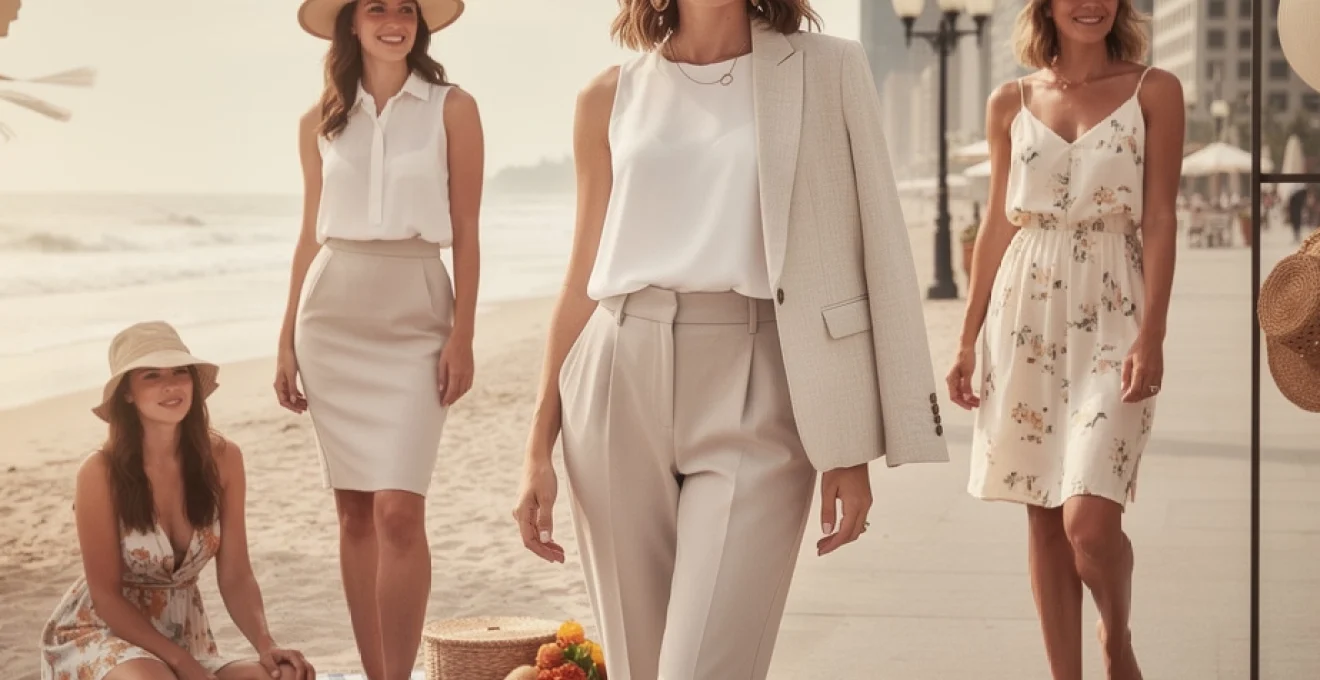
Summer hat styling has evolved far beyond the traditional beach accessory paradigm, transforming into a sophisticated art form that bridges casual coastal living with metropolitan elegance. The modern approach to summer headwear requires understanding how different hat styles, materials, and construction techniques adapt seamlessly across diverse environments. Whether you’re transitioning from a morning beach walk to an afternoon business meeting or moving from city streets to evening social events, the right hat can elevate your entire ensemble while providing essential sun protection and comfort.
Today’s discerning fashion enthusiasts recognise that versatile summer hat styling extends beyond mere sun protection to encompass personal expression, professional appropriateness, and environmental adaptability. The key lies in selecting pieces that maintain their structural integrity and aesthetic appeal across varying temperatures, humidity levels, and social contexts. This sophisticated approach to summer headwear styling has gained particular momentum among urban professionals who refuse to compromise on style for functionality.
Essential hat styles for versatile summer transitions
The foundation of successful summer hat styling rests upon selecting silhouettes that offer maximum adaptability across diverse settings. Contemporary fashion trends favour hat designs that maintain their shape and appeal whether worn with casual beachwear or structured urban attire. Understanding the specific characteristics that make certain hat styles more versatile than others enables you to build a curated collection that serves multiple purposes throughout the summer season.
Modern hat construction techniques have revolutionised how we approach seasonal headwear, with manufacturers now incorporating features that enhance both durability and style flexibility. The most successful summer hat designs share common characteristics: lightweight construction, breathable materials, and proportions that complement various face shapes and outfit styles. These elements combine to create pieces that transition effortlessly between environments while maintaining their aesthetic integrity.
Wide-brim fedoras for urban professional settings
Wide-brim fedoras represent the pinnacle of sophisticated summer headwear, offering an ideal balance between sun protection and professional elegance. These structured pieces typically feature crown heights between 4-5 inches and brim widths ranging from 3-4 inches, proportions that provide substantial shade coverage without overwhelming facial features. The key to professional fedora styling lies in selecting neutral colourways that complement business attire while maintaining the hat’s distinctive character.
Quality fedora construction employs reinforced crown shaping that maintains its form throughout extended wear periods, making these pieces particularly suitable for urban environments where appearance consistency matters. The addition of subtle band details in complementary tones can enhance professional appeal while preserving the hat’s versatility. Professional fedora styling requires attention to proportion matching with collar shapes and neckline choices to achieve harmonious silhouettes.
Panama hat construction and City-to-Coast adaptability
Authentic Panama hats showcase exceptional craftsmanship through their toquilla palm weaving techniques, creating pieces that adapt beautifully to both metropolitan and coastal environments. The distinctive weaving patterns provide natural ventilation while maintaining structural integrity across varying humidity levels. Traditional Panama construction methods result in hats that can be folded for travel without losing their shape, making them ideal for professionals who frequently transition between city and coastal locations.
The versatility of Panama hats extends to their colour absorption properties, with lighter weaves reflecting heat more effectively in urban environments while darker variations provide sophisticated elegance for evening events. Quality Panama hats develop character over time, with the natural fibres adapting to regular wear patterns while maintaining their essential protective qualities. This adaptability makes them particularly valuable for individuals who require consistent style performance across diverse summer activities.
Bucket hat silhouettes for casual Beach-to-Brunch styling
Contemporary bucket hat design has evolved significantly from its utilitarian origins, now incorporating sophisticated materials and proportions that translate beautifully from beach settings to urban casual environments. Modern bucket hats feature crown depths that provide adequate sun protection without creating unflattering proportions, typically measuring between 3-4 inches for optimal versatility. The key to successful bucket hat styling lies in selecting pieces with structured brims that maintain their shape rather than drooping excessively.
Quality bucket hat construction employs materials that resist moisture absorption while providing adequate breathability for active wear. The most versatile designs incorporate subtle textural elements that add visual interest without compromising the hat’s casual appeal. Casual bucket hat styling
Quality bucket hat construction employs materials that resist moisture absorption while providing adequate breathability for active wear. The most versatile designs incorporate subtle textural elements that add visual interest without compromising the hat’s casual appeal. Casual bucket hat styling often relies on pairing these pieces with relaxed silhouettes such as linen shorts, ribbed tank tops, and lightweight shirt dresses, creating looks that feel intentional rather than improvised. When selecting a bucket hat for beach-to-brunch transitions, prioritise neutral tones or soft pastels that harmonise with multiple outfits so you are not locked into a single colour story for the day.
Boater hat proportions and metropolitan sophistication
Boater hats, with their flat crowns and straight brims, introduce an architectural precision that reads as both classic and contemporary in city environments. Traditional boater proportions feature a shallow crown of approximately 3 inches and a firm brim between 2.5 and 3 inches, creating a clean horizontal line that pairs particularly well with structured blazers, shirt dresses, and tailored shorts. This defined geometry makes the boater an excellent choice for those who prefer minimalist summer hat styling with maximum visual impact.
For beach settings, a slightly softer straw boater with a finely woven texture offers comfort and flexibility while maintaining its iconic silhouette. In metropolitan contexts, look for boater hats finished with grosgrain bands or tonal leather trims that echo belt or handbag details for cohesive styling. Because the boater sits higher on the head than a fedora, careful attention to hairstyle—low buns, sleek ponytails, or softly waved hair tucked behind the ears—helps preserve its refined profile throughout the day.
Fabric selection and weather-responsive hat materials
Choosing the right fabric is fundamental to making your summer hat work from beach to city without sacrificing comfort. Different fibres react distinctively to heat, humidity, and UV exposure, influencing everything from breathability to long-term durability. When you understand how materials behave in real-world conditions, you can select summer hats that feel as good at a seaside café as they do on a hot subway platform.
Weather-responsive material selection is particularly important as heatwaves and high-UV days become more frequent in many cities worldwide. Lightweight, breathable weaves help regulate temperature around the head, while denser structures and technical finishes can enhance UV protection. The most effective summer hat wardrobes combine natural and synthetic fibres, leveraging the strengths of each to cover a range of climates and activities.
Natural straw weaves: toquilla palm vs. raffia durability
Toquilla palm and raffia are two of the most sought-after natural straw options for premium summer hats, each offering distinct performance advantages. Toquilla palm, used in authentic Panama hats, is renowned for its fine, tight weave, which delivers excellent sun protection while maintaining impressive flexibility and packability. Its fibres can be woven at various densities, allowing manufacturers to balance breathability and shade according to the hat’s intended use.
Raffia, sourced from the raffia palm, features a slightly more textured, resilient fibre that excels in durability and resistance to cracking. This makes raffia particularly well-suited to wide-brimmed fedoras and beach hats that may be exposed to occasional splashes, salt air, and frequent handling. While both materials are naturally breathable, toquilla palm generally offers a sleeker, more formal appearance ideal for city wear, whereas raffia’s organic texture complements relaxed coastal styling and casual weekend outfits.
Linen-cotton blends for urban heat management
Linen-cotton blends have become increasingly popular in urban summer hat design due to their balanced approach to breathability, structure, and comfort. Pure linen is highly breathable and excellent at moisture wicking, but it can wrinkle easily and sometimes feel too soft to hold architectural hat shapes. Blending linen with cotton enhances structural integrity and surface smoothness, allowing designers to create crisp crowns and brims that still feel cool against the skin.
For city environments where you might move between air-conditioned offices, crowded streets, and outdoor terraces, a linen-cotton blend provides reliable temperature regulation. These fabrics tend to dry quickly, making them particularly suitable for commuter-friendly styles like caps and compact-brim fedoras. When you are evaluating summer hats for hot weather in urban settings, checking the fibre composition label for a linen-cotton blend can be a practical shortcut to all-day comfort.
UV protection ratings in synthetic summer fabrics
Many contemporary summer hats incorporate synthetic fibres specifically engineered for enhanced UV protection, often expressed through UPF (Ultraviolet Protection Factor) ratings. A UPF 50+ hat blocks at least 98% of UV radiation, which can be particularly valuable during midday city commutes or extended beach exposure. These performance fabrics are commonly made from polyester or nylon blends treated with UV-absorbing finishes or constructed with densely woven yarns that physically limit light penetration.
While natural fibres like straw and cotton do offer some inherent UV resistance, their protection can vary widely depending on weave density, colour, and ageing. Synthetic UPF-rated hats deliver more predictable performance, especially after repeated wear and washing. If you are building a versatile summer hat collection, consider incorporating at least one UPF 50+ style—perhaps a sleek fedora or well-structured bucket hat—for days when UV levels are particularly high or when prolonged outdoor activity is planned.
Moisture-wicking technology in performance hat materials
Moisture-wicking technologies, originally developed for athletic apparel, have transformed performance-oriented summer hats into essential accessories for active city living and travel. These fabrics are designed to pull sweat away from the skin and disperse it across a larger surface area, where it can evaporate more quickly. The result is a consistently drier, cooler feeling under the hat, even when temperatures rise or humidity spikes.
Many high-performance summer hats incorporate sweatbands lined with moisture-wicking materials such as technical polyester or bamboo-derived viscose. These elements are particularly valuable if you frequently walk or cycle through the city, or if you prefer to keep your hat on during light exercise. By preventing moisture build-up at the crown and band, these technologies also help maintain the hat’s internal structure and cleanliness over time, supporting both comfort and longevity.
Colour psychology and tonal coordination techniques
Colour selection plays a decisive role in how effortlessly your summer hat transitions between beach and city environments. Light neutrals such as sand, stone, and soft ecru project an understated sophistication while offering practical advantages in high heat by reflecting more sunlight. These tones pair seamlessly with coastal palettes of white linen, soft blues, and sea-glass greens, yet they also integrate smoothly with urban wardrobes dominated by black, navy, and charcoal.
From a psychological perspective, cooler tones—think slate, dove grey, and muted blue—convey calm and control, making them particularly appropriate for professional settings. Warmer accents such as terracotta, caramel, or blush on hat bands or trims can subtly reference beach aesthetics without compromising office-appropriate styling. If you are unsure how to coordinate a summer hat with your outfit, a useful technique is to treat the hat as either a tonal extension of your shoes and belt or as a deliberate contrast colour that echoes a smaller accessory, such as a scarf or bag detail.
Beach-specific styling methodologies and salt-air considerations
Beach environments pose unique challenges for summer hats, from persistent wind and salt-laden air to intense UV exposure and abrasive sand. Successfully styling a hat for these conditions requires more than simply choosing a wide brim; it demands attention to construction details that preserve both comfort and appearance. By approaching beach hat styling methodically, you can ensure your headwear remains secure, functional, and visually polished, even when conditions are less than ideal.
In practice, this means balancing aesthetic choices—such as brim shape and crown height—with practical features like internal adjusters, chin straps, and treated materials. The goal is not to create a purely utilitarian piece but to integrate performance elements so discreetly that they become part of the hat’s overall design language. When done well, your beach-ready summer hat will feel as considered as your favourite city fedora.
Wind-resistant crown shaping for coastal environments
Coastal wind is one of the primary reasons summer hats become uncomfortable or impractical at the beach, yet thoughtful crown shaping can dramatically improve stability. Crowns that sit slightly deeper on the head, with a gentle taper or pinch, create more contact points and friction, which helps keep the hat in place without excessive tightness. This is especially relevant for styles like wide-brim fedoras and Panamas, where the larger surface area of the brim can catch gusts of wind.
Structured internal bands and subtle sizing adjusters further enhance wind resistance by allowing you to fine-tune the fit for different conditions. A well-designed summer hat for windy environments should feel secure but not constrictive, even when you turn your head quickly or bend down to adjust a towel or bag. If you anticipate spending significant time near the water, prioritising crown depth and structural stability will make your hat more wearable—and less likely to end up down the shoreline.
Sand-proof fabric treatments and easy-care finishes
Sand can quickly degrade the appearance and comfort of a summer hat if the material traps grains in its fibres or along stitching lines. Many contemporary beach hats now feature sand-resistant or easy-shake finishes, often achieved through smoother weaves, tighter stitching, or specialised surface treatments. These design choices prevent sand from embedding deeply, allowing you to remove most residue with a light shake or gentle brush.
Easy-care finishes also extend to stain resistance and water repellency, which are particularly valuable when sunscreen, salt spray, and drinks are in close proximity. Selecting a hat with a wipe-clean internal sweatband or removable band insert simplifies post-beach maintenance and reduces long-term discolouration. The more effortless your hat is to care for after a beach day, the more likely it is to remain in regular rotation for city wear as well.
Chin strap integration without compromising aesthetics
Chin straps are one of the most practical additions to a beach-ready hat, but they can easily disrupt the refined lines of an otherwise sophisticated design if not integrated thoughtfully. Discreet attachment points hidden beneath the sweatband or along the inner crown edge allow straps to be removed or tucked away when you transition to city environments. Slim leather cords, tonal woven ties, or softly braided yarns read as intentional design features rather than purely functional additions.
Adjustable sliders and minimal hardware ensure the strap sits comfortably under the chin or loosely around the back of the neck when not in use. When you are styling a summer hat for all-day wear—beach in the morning, city terrace in the afternoon—this kind of flexible chin strap design lets you adapt quickly to changing conditions. You gain the security needed for coastal winds without permanently altering the hat’s urban-ready silhouette.
Urban environment hat styling and professional integration
Integrating a summer hat into urban life requires careful attention to proportion, context, and etiquette. In professional environments, hats must complement rather than compete with tailored garments, while still delivering the practical benefits of shade and temperature regulation during commutes. The aim is to treat your summer hat as a considered part of your overall styling strategy, rather than an afterthought added purely for sun protection.
Successful city hat styling also depends on understanding transitional moments: entering buildings, using public transport, and moving from daytime work settings to evening engagements. Subtle design choices—such as moderate brim widths, structured crowns, and neutral colour palettes—help your summer hat move gracefully through these different contexts. When chosen thoughtfully, a single piece of headwear can support your entire day’s schedule with minimal adjustment.
Office-appropriate brim measurements and workplace etiquette
In most professional settings, moderation is key when it comes to brim size. Brims between 2.5 and 3 inches generally provide sufficient sun protection for walking between buildings while remaining compact enough to avoid overwhelming your features or obstructing colleagues’ sightlines. Oversized floppy brims, while ideal for poolside lounging, can feel theatrical in an office context and are best reserved for off-duty wear.
Workplace etiquette also plays a role: in many corporate environments, hats are removed once indoors, whereas more creative or fashion-forward offices may embrace them as part of daily attire. When in doubt, observe how senior colleagues and leadership dress, and mirror the level of formality you see. Even if you do remove your hat at your desk, a structured, office-appropriate style will still complement your look during commutes and outdoor meetings, reinforcing a coherent personal aesthetic throughout the day.
Public transport considerations and compact hat storage
Public transport introduces practical constraints that often determine which summer hats feel genuinely wearable. Crowded trains and buses can make wide brims cumbersome, as they bump against seat backs and neighbouring passengers. For daily commuting, many urban professionals favour mid-brim fedoras, compact Panamas, or semi-structured bucket hats that maintain shape without demanding excessive personal space.
Storage is another key consideration. Packable designs that can be gently folded or rolled into a tote without permanent creasing are invaluable for those who prefer to remove their hat once on board. Some performance-oriented summer hats incorporate collapsible crowns or reinforced brims that spring back into shape after storage. By selecting city hats with these features, you reduce the risk of damage and ensure your headwear remains pristine from morning journey to evening return.
Evening transition techniques for dinner and social events
Transitioning a summer hat from daytime functionality to evening sophistication hinges on subtle styling adjustments. Swapping daytime accessories—such as canvas totes and sporty sunglasses—for refined elements like leather bags and understated jewellery instantly elevates your overall look. A neutral-toned Panama or boater can appear effortlessly chic when paired with a structured midi dress or tailored trousers and a silk blouse for dinner.
Lighting conditions also influence how your hat reads after dark. Under softer, warmer lighting, textures and trims become more prominent, so hats with refined bands, sleek ribbons, or metallic accents gain extra dimension. If you know your day will end with social engagements, choosing a hat in a versatile shade—ivory, stone, tobacco, or deep navy—ensures it feels intentional rather than out of place as the setting shifts from office to restaurant or rooftop bar.
Business casual integration with structured summer headwear
Business casual dress codes are particularly conducive to incorporating summer hats, as they naturally blend relaxed fabrics with tailored silhouettes. Structured straw fedoras, refined bucket hats in linen-cotton blends, and clean-lined Panamas all coordinate well with chinos, lightweight blazers, and elevated knitwear. The key is maintaining balance: if your hat has a strong presence, keep the rest of your outfit streamlined and minimal.
One effective strategy is to echo the hat’s texture or colour in another element of your outfit, such as a woven leather belt, raffia-trimmed sandals, or a canvas tote with leather handles. This visual repetition ties the look together and prevents the hat from feeling like an isolated statement. Over time, you will likely find that a well-chosen summer hat becomes as integral to your business casual wardrobe as a favourite pair of loafers or a go-to blazer.
Seasonal accessory pairing and complete look coordination
To style a summer hat effortlessly from beach to city, it helps to think in terms of complete look coordination rather than isolated pieces. Accessories—sunglasses, bags, belts, and jewellery—act as visual bridges that help your hat feel context-appropriate in multiple settings. For example, a straw fedora paired with oversized acetate sunglasses and a woven tote signals coastal ease, while the same hat combined with sleek metal-frame shades and a structured leather bag leans metropolitan.
Seasonal textures are equally influential. Pairing your summer hat with natural materials such as linen, cotton voile, raffia, and light leather creates a cohesive warm-weather aesthetic that feels deliberate in photographs and in person. When you approach your summer hat as a central styling element and build supporting accessories around it, every transition—from beach path to city pavement, from morning coffee to late-night terrace—feels more fluid, more intentional, and unmistakably your own.