
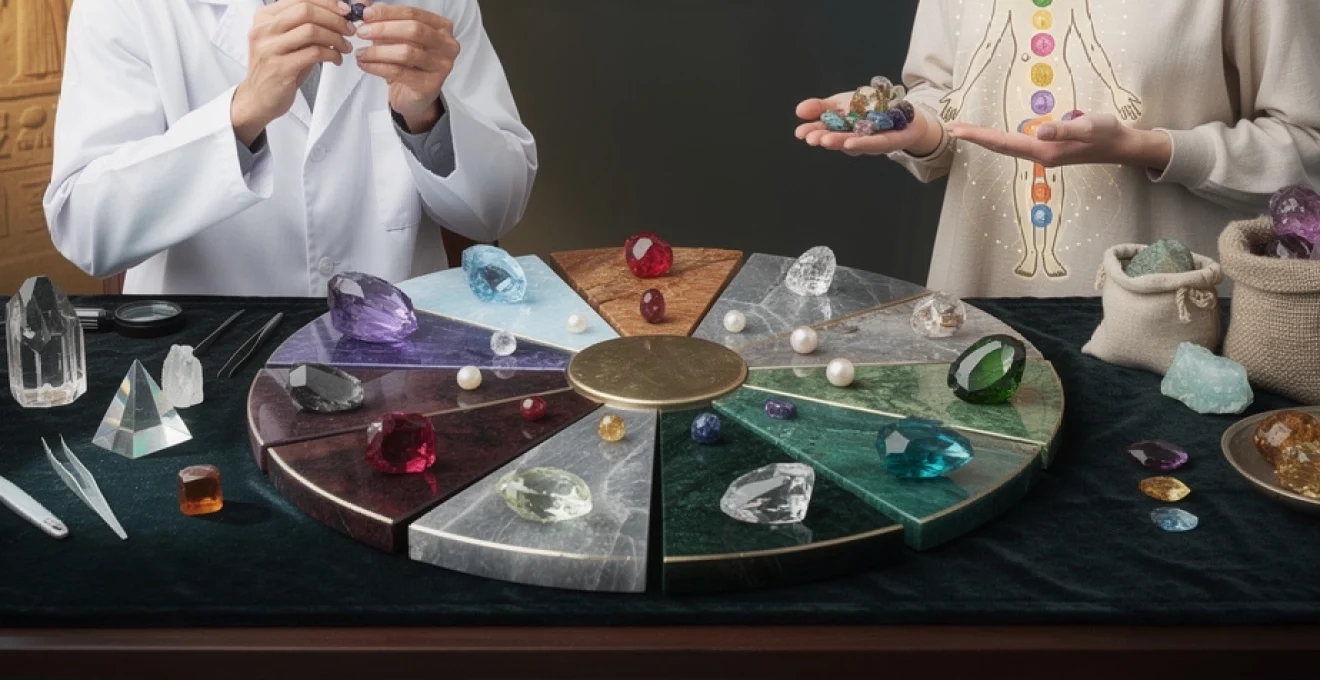
Throughout human history, gemstones have captivated civilisations with their brilliant colours, mystical properties, and enduring beauty. The tradition of birthstones—specific gems associated with each calendar month—represents one of humanity’s oldest connections between celestial cycles and earthly treasures. These precious and semi-precious stones carry centuries of cultural significance, weaving together ancient wisdom, religious symbolism, and modern gemological science into a tapestry that continues to influence jewellery choices today.
From the deep red garnets of January to December’s vibrant turquoise, each birthstone carries unique meanings that reflect the characteristics traditionally attributed to those born in corresponding months. The practice extends far beyond mere ornamentation, embodying beliefs about protection, healing, spiritual guidance, and personal empowerment that have persisted across cultures and millennia.
Historical origins and cultural significance of birthstone traditions
The concept of assigning specific gemstones to calendar months originated from multiple ancient civilisations, each contributing distinct layers of meaning to what has become the modern birthstone system. Archaeological evidence suggests that gemstone calendars existed as early as 4000 BCE, with early Mesopotamian cultures recognising the connection between celestial movements and terrestrial minerals.
These early traditions were not merely decorative; they represented sophisticated understanding of both astronomy and mineralogy. Ancient peoples observed that certain stones seemed to resonate more powerfully during specific times of the year, leading to the development of complex systems that linked gemstone properties with seasonal energies, planetary influences, and human characteristics.
Ancient mesopotamian and egyptian gemstone calendars
Mesopotamian astrologers were among the first to systematically correlate gemstones with calendar months, creating detailed charts that linked twelve stones to lunar cycles and zodiacal positions. The Babylonians developed intricate calendars where each month was governed by specific deities, with corresponding gemstones serving as conduits for divine protection and guidance.
Egyptian civilisation further refined these concepts, incorporating gemstones into elaborate burial practices and religious ceremonies. The pharaohs’ extensive use of lapis lazuli, turquoise, and carnelian reflected beliefs about afterlife protection and spiritual transformation. Egyptian priests maintained detailed records of which stones provided optimal benefits during different months, creating the foundation for many contemporary birthstone associations.
Biblical breastplate of aaron and twelve sacred stones
The Book of Exodus describes Aaron’s sacred breastplate, adorned with twelve precious stones representing the twelve tribes of Israel. This biblical account has profoundly influenced Western birthstone traditions, with scholars identifying the original stones as sardius, topaz, carbuncle, emerald, sapphire, diamond, ligure, agate, amethyst, beryl, onyx, and jasper.
Each stone carried specific theological significance, serving as communication channels between earthly priests and divine wisdom. The breastplate’s construction required precise gemological knowledge, indicating that ancient Hebrew culture possessed sophisticated understanding of mineral properties and their spiritual applications. Many contemporary birthstone meanings trace directly to interpretations of these biblical gems and their associated tribal characteristics.
Hindu navaratna system and vedic astrological connections
Hindu tradition developed the Navaratna system, featuring nine sacred gemstones corresponding to celestial bodies and their astrological influences. This system emphasised the dynamic relationship between gemstone energies and planetary positions, creating personalised recommendations based on individual birth charts rather than calendar months alone.
Vedic texts describe specific rituals for consecrating gemstones, ensuring their protective and beneficial properties remain active. The tradition includes detailed instructions for gem selection, cutting, setting, and wearing, reflecting centuries of accumulated knowledge about mineral metaphysics and their effects on human consciousness.
Medieval european guild standardisation and trade routes
During the medieval period, European gem merchants and guild organisations began standardising birthstone lists to facilitate international trade. The Crusades and expanding trade routes introduced European markets to Asian and Middle Eastern gemstones, creating demand for systematic classification and pricing structures.
Guild records from this period reveal extensive debates about which stones properly belonged to each month, with different regions maintaining distinct traditions. The gradual emergence of standardised lists reflected both commercial necessity and cultural synthesis, as
merchants sought to harmonise devotional, astrological, and commercial traditions into a single, easily marketable birthstone chart. By the early 20th century, organisations such as the American National Retail Jewelers Association (now Jewelers of America) codified a “modern” birthstone list, favouring durable, visually striking stones that could be supplied consistently through emerging global trade networks.
This standardisation made birthstones far more accessible to the general public and helped transform them into a cornerstone of personalised jewellery. At the same time, it inevitably simplified older, more nuanced systems where multiple stones might be associated with a single sign, month, or festival. Today’s birthstone traditions therefore reflect both ancient symbolism and the practical realities of modern gem markets.
Modern birthstone classifications and gemological properties
While the spiritual and symbolic meanings of birthstones remain popular, modern gemology approaches these gems through the lens of measurable physical properties. Understanding how birthstones behave in terms of hardness, crystal structure, and optical performance not only deepens appreciation for their beauty, but also helps you choose pieces that will stand up to everyday wear.
Whether you are selecting a diamond engagement ring or a delicate opal pendant, factors such as Mohs hardness, refractive index, and crystal system strongly influence durability, brilliance, and how the stone should be set and cared for. Let’s explore how these scientific principles underpin the modern birthstone system.
Mohs hardness scale ratings for traditional birthstones
The Mohs hardness scale ranks minerals from 1 (softest) to 10 (hardest) based on their resistance to scratching. Hardness is crucial when choosing birthstone jewellery that will be worn daily, such as rings and bracelets, which are more exposed to knocks and abrasion than earrings or pendants.
Diamond, the April birthstone, sits at the very top of the scale with a hardness of 10, making it exceptionally resistant to scratching. Ruby (July) and sapphire (September), both varieties of corundum, rank at 9, while topaz (often associated with November) rates 8. At the softer end, opal (October) typically falls between 5.5 and 6.5, and turquoise (December, in traditional lists) around 5 to 6, meaning they require more careful handling.
Most quartz family birthstones—amethyst (February) and citrine (a modern November stone)—have a hardness of 7, balancing beauty and practicality for regular wear. Pearls, technically organic rather than mineral, rate only 2.5–4 on the Mohs scale and are easily scratched, so they are best reserved for occasional wear or protected settings. When you know a stone’s hardness, you can better decide whether it belongs in a robust everyday ring or a more sheltered pendant.
Crystal structure analysis: cubic, hexagonal, and trigonal systems
Every crystalline birthstone forms according to a specific internal lattice, known as its crystal system. This orderly arrangement of atoms determines not only the external crystal shape, but also how the stone interacts with light and how it tends to break or cleave. In practical terms, crystal structure can influence both cutting styles and the long-term durability of your birthstone jewellery.
Diamonds crystallise in the cubic (isometric) system, which contributes to their even optical behaviour and the iconic brilliance of the modern round brilliant cut. Garnets (January) also belong to the cubic system, which is why they typically appear isotropic under polarised light and do not show pleochroism. By contrast, beryl species such as aquamarine (March) and emerald (May) crystallise in the hexagonal system, giving rise to their characteristic prismatic crystal forms.
Many other birthstones belong to the trigonal division of the hexagonal family. Corundum—ruby and sapphire—crystallises in the trigonal system, as does quartz, including amethyst and citrine. This structural anisotropy means properties such as light absorption and hardness can vary slightly with direction, an important consideration for lapidaries deciding how to orient a stone for maximum colour and durability.
Refractive index measurements and optical characteristics
The refractive index (RI) of a gemstone measures how strongly it bends light entering from air. Higher RI values generally correlate with greater brilliance and sparkle, which is why gemologists pay close attention to this property when cutting and evaluating birthstones. RI can also help distinguish natural stones from imitations or synthetics.
Diamond has an exceptionally high RI of about 2.42, explaining its unrivalled fire and scintillation when well cut. Corundum (ruby and sapphire) follows closely with an RI around 1.76–1.77, while zircon—a traditional December birthstone in some lists—reaches an impressive 1.92–1.98. In comparison, quartz varieties such as amethyst and citrine have a more modest RI of around 1.54–1.55, producing gentle sparkle rather than intense brilliance.
Opal behaves differently again: common opal has an RI around 1.37–1.47, but its visual impact comes from play-of-colour rather than classic brilliance. Turquoise’s RI (around 1.61–1.65) is moderate and, combined with its waxy lustre, gives the stone a soft, soothing visual presence rather than a highly reflective sparkle. When you look at a birthstone and find yourself drawn to its glow or sparkle, you are really responding to this blend of refractive index, cut, and inherent clarity.
Pleochroism and colour-change phenomena in birthstones
Pleochroism—where a gemstone shows different colours when viewed from different directions—is a hallmark of many coloured birthstones. It arises from the way anisotropic crystals absorb light differently along various axes. For collectors and designers, pleochroism adds depth and complexity to a stone’s appearance, but it also means cutters must orient gems carefully to highlight the most attractive hue.
Ruby and sapphire often show distinct pleochroic colours, such as violetish-blue and greenish-blue in certain sapphires, or purplish-red and orangey-red in some rubies. Tanzanite, a modern December birthstone, is famously trichroic, displaying blue, violet, and burgundy tones depending on orientation and lighting. When you tilt a tanzanite ring and see the colour shift, you are witnessing pleochroism in action.
Colour-change phenomena are a more dramatic form of directional colour variation. Alexandrite, one of June’s traditional birthstones, is the classic example, appearing green in daylight but red under incandescent light due to its unusual absorption spectrum. While not all birthstones exhibit such striking transformations, understanding pleochroism and colour-change helps explain why a gem may look one way in a jeweller’s showcase and slightly different in natural daylight or candlelight—much like a fabric that changes shade under different bulbs.
January through april: garnet, amethyst, aquamarine, and diamond properties
The first third of the year showcases an impressive range of mineral species and optical effects, from the rich, earthy tones of garnet to the icy brilliance of diamond. Each of these birthstones combines deep historical symbolism with distinctive geological origins and physical properties that influence how they are used in fine jewellery.
By examining January through April birthstones through a gemological lens, we can see how chemical composition, crystal structure, and formation environment all contribute to their unique appearance and durability. This knowledge empowers you to choose pieces that balance metaphysical meaning with practical considerations like wearability and care.
Almandine garnet varieties and pyrope composition analysis
Although garnet is often described as a single gem, it is actually a complex group of related minerals. The two most common species in jewellery—particularly for January birthstones—are almandine and pyrope. Both crystallise in the cubic system, but differ in chemical composition: almandine is an iron-aluminium silicate, while pyrope is a magnesium-aluminium silicate.
In practice, most gem-quality garnets are not pure end-members but mixtures along the almandine–pyrope series. Higher iron content tends to deepen the red towards a wine or burgundy hue, characteristic of almandine-rich stones. Increased magnesium, on the other hand, can produce slightly lighter, more fiery reds associated with pyrope. Gemological testing, including refractive index and specific gravity measurements, can estimate these compositional variations.
Garnets generally have a Mohs hardness of 7–7.5 and an RI around 1.73–1.81, offering robust durability and a warm, vivid lustre that suits both vintage and contemporary settings. Because they are relatively abundant compared to ruby or spinel, garnets provide rich colour at accessible price points. For everyday birthstone jewellery, garnet makes an excellent choice, particularly in protective bezel settings or low-profile rings.
Amethyst formation in geodes and hydrothermal deposits
Amethyst, the purple variety of quartz, forms primarily in two geological environments: volcanic geodes and hydrothermal veins. In basaltic lava flows, gas bubbles can become trapped as the rock solidifies. Over time, silica-rich fluids infiltrate these cavities, depositing tiny quartz crystals that gradually grow inward to form sparkling geodes lined with amethyst.
Hydrothermal deposits, by contrast, arise when hot, mineral-laden waters circulate through fractures in the Earth’s crust. As temperatures and pressures change, quartz precipitates out of solution, sometimes forming large, well-shaped amethyst crystals within veins or pockets. The exact shade of purple—ranging from pale lilac to deep, royal violet—results from trace amounts of iron and subsequent natural or artificial irradiation.
With a Mohs hardness of 7 and good toughness, amethyst is durable enough for most types of jewellery, although it can still be scratched by harder materials such as sapphire or diamond. Its relatively low refractive index (about 1.54–1.55) means it does not exhibit the intense sparkle of higher-RI gems, but when expertly cut, it shows a soft, velvety glow. For those seeking meaningful yet practical birthstone pieces, amethyst offers an excellent balance of beauty, symbolism, and affordability.
Beryl family classification: aquamarine versus emerald
Aquamarine (March) and emerald (May) may appear very different at first glance, yet both belong to the beryl family, a beryllium aluminium silicate with a hexagonal crystal structure. The key distinction lies in their trace elements: aquamarine owes its blue to blue‑green hues to iron, whereas emerald’s lush green results from chromium, vanadium, or both. This subtle chemical shift dramatically alters not only colour, but also typical clarity and value.
Aquamarine tends to form in relatively clean crystals, with few inclusions visible to the naked eye, which allows cutters to fashion large, transparent stones with excellent light return. Emerald, by contrast, is famous for its “jardin” of inclusions. These internal features often reduce clarity but are widely accepted—and even appreciated—as part of emerald’s character. Gemologists therefore apply different clarity standards to emerald than to other coloured stones.
On the Mohs scale, both aquamarine and emerald register around 7.5–8, but emerald’s more extensive fracturing makes it less durable in practice. Many emeralds are routinely treated with oils or resins to improve apparent clarity, whereas high-quality aquamarines may require little to no treatment beyond standard heat enhancement to refine colour. For everyday March birthstone jewellery, aquamarine is often the more robust choice, while emerald is best reserved for carefully designed pieces that protect the stone from impact.
Diamond 4cs grading standards and kimberley process certification
Diamond, the April birthstone, is evaluated according to the universally recognised “4Cs”: colour, clarity, cut, and carat weight. These grading standards, formalised by the Gemological Institute of America (GIA) mid‑20th century, enable consistent comparison of stones across global markets. Colour grades for white diamonds range from D (colourless) to Z (light yellow or brown), while clarity scales describe the number, size, and visibility of internal inclusions and surface blemishes.
Cut is arguably the most important “C” in terms of visible beauty, as it governs how effectively a diamond returns light to the viewer’s eye. An expertly cut diamond, even of modest carat weight, can appear brighter and more lively than a larger stone with poor proportions. Carat weight simply measures mass, but it strongly influences price because larger diamonds are rarer. When selecting diamond birthstone jewellery, you will often find the best value by balancing colour and clarity with an excellent or very good cut.
Ethical sourcing has become an essential part of modern diamond purchasing. The Kimberley Process Certification Scheme, established in 2003, aims to prevent “conflict diamonds” from entering the mainstream market by requiring member countries to certify rough diamond shipments as conflict‑free. While the system is not perfect, it has significantly reduced the trade in illicit stones. Increasingly, consumers also consider lab‑grown diamonds, which share the same physical and optical properties as natural ones and can offer a lower‑impact alternative for April birthstone pieces.
May through august: emerald, pearl, ruby, and peridot characteristics
The middle months of the year highlight a diverse mix of traditional and organic birthstones, each with its own geological story and cultural resonance. From the verdant depths of emerald to the oceanic origins of pearls, and from ruby’s fiery brilliance to peridot’s extraterrestrial intrigue, these gems exemplify the rich intersection of myth and mineralogy.
Understanding differences in origin, treatment, and durability among these birthstones helps you make informed choices—whether you are investing in a high‑end emerald ring or selecting a simple peridot pendant for everyday wear. Let’s examine how these iconic stones reach the market and what sets each of them apart.
Colombian emerald mining regions versus zambian sources
Emerald deposits occur in several countries, but Colombia and Zambia are two of the most important modern sources. Colombian emeralds, historically regarded as the gold standard, are mined primarily in the Boyacá region, including famous districts such as Muzo, Chivor, and Coscuez. These emeralds often display a pure, slightly bluish green with exceptional saturation, which has long commanded premium prices in the global market.
Zambian emeralds, chiefly extracted from the Kafubu area near Kitwe, tend to exhibit a slightly darker tone with more noticeable blue or even faintly grayish modifiers. However, they frequently show better clarity and fewer inclusions than their Colombian counterparts, making them highly attractive for modern jewellery designs prioritising transparency and brilliance. Advances in cutting and treatment have further enhanced the appeal of Zambian material.
Both Colombian and Zambian emeralds are commonly treated with colourless oils or resins to reduce the visibility of fractures. Reputable laboratories now report not only the presence of such treatments but also their degree, using terms like “minor,” “moderate,” or “significant.” When you are comparing emerald birthstone pieces, origin, colour quality, and treatment level will all influence value, much like terroir, vintage, and vinification shape the character of a fine wine.
Cultured pearl production methods: akoya, tahitian, and south sea
Pearls, the classic June birthstone, are unique among gems because they are formed by living organisms—primarily oysters and mussels. Natural pearls, created without human intervention, are now exceptionally rare; almost all pearls on the market today are cultured, meaning that farmers intentionally introduce an irritant into the mollusc to stimulate nacre formation.
Akoya pearls, typically farmed in Japan and China, are grown in saltwater oysters and are known for their relatively small sizes (usually 5–9 mm) and high, mirror‑like lustre. They are the quintessential choice for classic white pearl strands. Tahitian pearls, cultivated mainly in French Polynesia, form in black‑lipped oysters and naturally display darker body colours, from charcoal grey to deep green and peacock tones, making them popular for contemporary designs.
South Sea pearls, produced primarily in Australia, Indonesia, and the Philippines, grow in large Pinctada maxima oysters and can reach impressive sizes of 10–15 mm or more. Their nacre is thick and satiny, often exhibiting white, silver, or golden hues. Because pearls are relatively soft (2.5–4 on the Mohs scale) and vulnerable to chemicals, you will want to put them on last when dressing and store them separately from harder gems to prevent scratching.
Corundum varieties: ruby versus sapphire mineral distinctions
Ruby (July) and sapphire (September) are both varieties of the mineral corundum, an aluminium oxide with a trigonal crystal structure and a Mohs hardness of 9. The distinction between ruby and sapphire is primarily one of colour: when corundum’s dominant hue is red, coloured by chromium, it is classified as ruby; all other colours—blue, yellow, pink, green, orange, and more—fall under the sapphire umbrella.
Chromium not only imparts ruby’s vibrant red colour but also causes natural fluorescence, which can make fine rubies appear to glow from within under sunlight or UV‑rich lighting. Sapphires are typically coloured by iron, titanium, or a combination of trace elements, producing the wide palette seen in the market. Certain sapphires may also exhibit asterism, forming six‑rayed “star” stones when cut en cabochon.
Both ruby and sapphire are frequently heat‑treated to improve colour and clarity, a stable and widely accepted enhancement. More invasive treatments—such as glass filling in lower‑grade rubies—are less durable and significantly reduce value. When investing in birthstone jewellery using corundum, it is wise to seek stones accompanied by laboratory reports that disclose treatments, particularly for high‑value rubies.
Olivine group minerals and peridot’s extraterrestrial origins
Peridot, the modern August birthstone, is the gem variety of the mineral olivine, a magnesium‑iron silicate. Its fresh, yellow‑green colour is intrinsic to its composition rather than caused by trace impurities, which is why peridot occurs in only a narrow colour range. Higher iron content tends to deepen the green and introduce brownish tones, while more magnesium yields lighter, lime‑green shades.
Geologically, most peridot forms in the Earth’s upper mantle and is brought to the surface by volcanic activity, particularly in basaltic lava flows. However, olivine has also been identified in pallasite meteorites, and gem‑quality peridot has occasionally been cut from these extraterrestrial sources. Owning a meteorite peridot is like wearing a tiny fragment of the solar system—an evocative detail for a stone already associated with protection and renewal.
With a Mohs hardness of 6.5–7 and distinct cleavage, peridot is somewhat more vulnerable to scratching and breakage than quartz or garnet. It is best suited to earrings and pendants or to ring designs that protect the stone with sturdy settings. When cared for properly and cleaned with mild soap and water rather than ultrasonic cleaners, peridot can provide many years of vibrant, summery colour.
September through december: sapphire, opal, topaz, and turquoise analysis
The final third of the year features some of the most visually distinctive birthstones, from sapphire’s regal blues to opal’s shifting play‑of‑colour, topaz’s radiant brilliance, and turquoise’s soothing, sky‑like tones. Each of these gems has a unique structural and optical personality that shapes how it should be selected, set, and worn.
By looking more closely at their gemological characteristics, we can better understand why sapphire is so prized for engagement rings, why opal requires gentle handling, why topaz comes in such a wide colour range, and why turquoise’s beauty often lies in its imperfections. This knowledge transforms these familiar stones into complex natural wonders.
Sapphires, beyond their classic blue, exist in almost every colour except red, making them a versatile option for personalised birthstone jewellery. Their excellent hardness and toughness mean they stand up well to daily wear, whether in rings, cufflinks, or watches. For September birthdays, choosing a sapphire with a hue that complements skin tone—deep royal blue, lighter cornflower, or even a pastel shade—can make a strikingly individual statement.
Opals, October’s traditional birthstone, are structured quite differently from crystalline gems. They consist of tiny, closely packed silica spheres that diffract light, producing the famous play‑of‑colour. Because opal contains up to 20% water and lacks a rigid crystal lattice, it is more susceptible to drying, crazing (surface cracking), and impact damage. Opal jewellery is best reserved for occasional wear and should be kept away from extreme heat or very dry conditions.
Topaz, strongly associated with November in both traditional and modern lists, is an aluminium silicate fluoride hydroxide with a hardness of 8 and a relatively high RI around 1.61–1.64. While pure topaz is colourless, trace elements and irradiation produce hues from golden yellow and sherry brown to pink, blue, and the coveted “imperial” orange. Blue topaz in particular is widely available and affordable, making it a popular alternative December birthstone in contemporary charts.
Turquoise, a classic December stone in older traditions, is a hydrous phosphate of copper and aluminium with a distinctive blue to green body colour often marbled with veins of host rock, known as matrix. Its relatively low hardness (5–6) and porous structure mean that many turquoise stones are stabilised with resins to improve durability and polish. When shopping for turquoise birthstone jewellery, you will want to ask whether the material is natural, stabilised, or dyed, as this has a major impact on value and care requirements.
Metaphysical properties and chakra alignment systems
Alongside their measurable physical properties, birthstones are frequently associated with metaphysical qualities and chakra alignment in modern holistic practices. While these interpretations are not part of mainstream scientific gemology, they play a significant role in how many people connect with their birthstone jewellery on an emotional and spiritual level. Think of them as symbolic frameworks—much like astrology—that can add a layer of personal meaning to your chosen gem.
In chakra‑based systems, each stone is believed to resonate with specific energy centres in the body. For example, garnet and ruby are often linked to the root chakra, associated with grounding, vitality, and security. Their deep red colours symbolise life force and physical strength, making them popular choices for those seeking stability or courage. Peridot and emerald, with their green hues, are commonly connected to the heart chakra, representing love, compassion, and emotional healing.
Blue stones such as aquamarine, sapphire, and turquoise are typically aligned with the throat chakra, which governs communication and self‑expression. Wearing these gems close to the neck—in pendants or chokers—is thought to support clear speech and authentic dialogue. Meanwhile, amethyst and tanzanite are linked to the third‑eye and crown chakras, said to enhance intuition, insight, and spiritual awareness. Many people choose these stones for meditation jewellery or talismans intended to support inner growth.
When integrating birthstones into a chakra or energy‑based practice, you might consider not only your birth month but also the emotional or spiritual qualities you wish to cultivate. Some individuals layer multiple stones in bracelets or stackable rings to create a personal “energy palette,” while others prefer a single, focused piece worn daily. Regardless of belief system, this intentional approach encourages a more mindful relationship with jewellery, transforming gemstones from simple adornments into meaningful companions on your personal journey.