
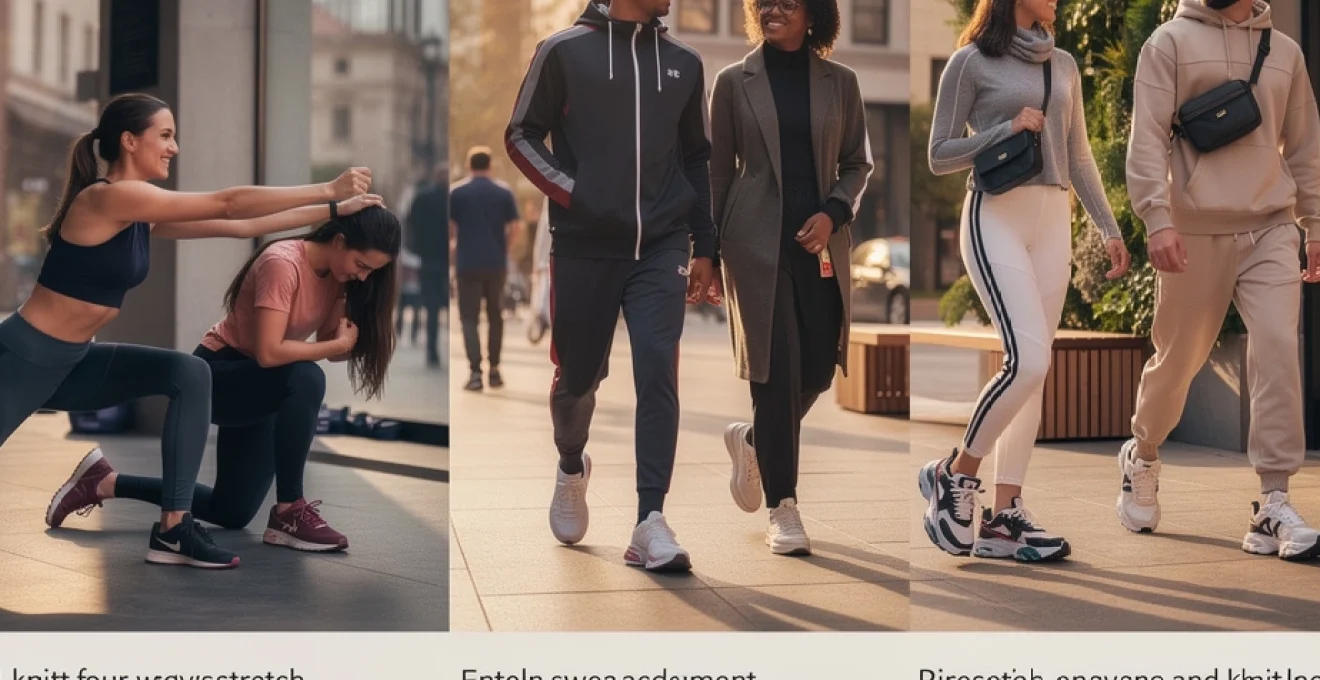
The fashion landscape has undergone a seismic shift over the past two decades, with one trend standing out as both revolutionary and enduring: athleisure. What began as functional gym wear has evolved into a global phenomenon that dominates wardrobes, runways, and street style alike. This transformation represents more than a passing fad—it signals a fundamental change in how society approaches clothing, prioritising comfort, versatility, and performance without sacrificing aesthetic appeal. Today, the athleisure market is projected to reach £793 billion by 2028, growing at a compound annual growth rate of 9.9% annually. This explosive growth reflects a cultural pivot towards wellness, flexibility, and a rejection of restrictive traditional dress codes that no longer serve modern lifestyles.
The rise of athleisure coincides with broader societal movements: the wellness revolution, the normalisation of remote work, the casualisation of professional environments, and the influence of social media on fashion democratisation. Performance fabrics that once belonged exclusively to athletes now appear in boardrooms, restaurants, and even luxury fashion shows. Designers who once scoffed at sportswear now incorporate technical textiles and athletic silhouettes into their collections. This convergence of sport, fashion, and lifestyle has created an entirely new category of clothing—one that refuses to be confined to a single context or occasion.
The origins of athleisure: technical sportswear meets urban fashion culture
The athleisure phenomenon didn’t emerge overnight. Its roots trace back to the late 19th century when sportswear first appeared as a distinct category, designed for activities like tennis and golf. However, these early iterations remained firmly separated from everyday fashion. The real transformation began in the 1920s when pioneering designers like Coco Chanel and Jean Patou started infusing sports elements into their collections, introducing more relaxed silhouettes that challenged the restrictive norms of the era. American designer Claire McCardell furthered this revolution by creating ready-to-wear clothes with utilitarian fabrics like cotton and denim, establishing the foundation for what would eventually become athleisure.
The fitness boom of the 1970s and 1980s marked a pivotal moment in this evolution. Jane Fonda-style workouts became cultural phenomena, driving demand for clothing specifically designed to fit well, wick perspiration, and look appealing. This period saw the invention of performance materials like Lycra and Spandex, which revolutionised both athletic wear and fashion possibilities. Yet even then, a clear distinction remained between proper sportswear and clothes that merely looked athletic. The true convergence wouldn’t occur until the 1990s, when celebrities like Princess Diana began wearing sports pieces in public settings, and designers such as Calvin Klein and Tommy Hilfiger infused streetwear with sportswear elements.
Lululemon’s wunder under leggings: catalysing the performance fabric revolution
When Lululemon was founded in 1997, the brand fundamentally altered the trajectory of athletic wear. The company’s Wunder Under leggings became more than just workout gear—they represented a new philosophy of clothing that could seamlessly transition from yoga studio to coffee shop to casual workplace. Lululemon’s innovation lay not just in their technical fabrics, which offered exceptional stretch, moisture management, and shape retention, but in their understanding that consumers wanted clothing that worked for multiple aspects of their lives. This multipurpose functionality became the cornerstone of athleisure’s appeal, addressing the practical needs of people who no longer wanted to change outfits multiple times per day.
The Wunder Under leggings showcased how premium materials could elevate everyday basics. Constructed with Lululemon’s proprietary Luon fabric—a blend of nylon and Lycra elastane—these leggings provided four-way stretch, sweat-wicking capabilities, and a softness that felt luxurious against the skin. The high waistband offered both support and a flattering silhouette, while the compression qualities provided muscle support during workouts. This combination of performance and aesthetics proved irresistible to consumers, establishing a template that countless brands would subsequently follow.
Nike’s tech fleece innovation and the blur between athletic and casual wear
Launched in 2013, Nike Tech Fleece exemplified this shift. By re-engineering traditional jersey with a lightweight, insulating foam layer sandwiched between cotton-blend fabric, Nike created hoodies and joggers that felt as cosy as loungewear yet looked sharp enough for everyday wear. The clean lines, slim cuts, and minimal branding spoke to a new aesthetic: performance-driven, but visually aligned with contemporary streetwear. Suddenly, you could wear a tracksuit on a long-haul flight, to a casual office, or to a weekend brunch without appearing underdressed.
Tech Fleece also helped cement the idea that technical details could be design features rather than hidden purely for function. Bonded zips, articulated knees, and ergonomically placed seams became part of the visual language of urban style. Nike’s success demonstrated to both consumers and competitors that athletic and casual wear were no longer separate wardrobes. Instead, they were different expressions of the same desire for comfort, mobility, and modern style—core principles that now define the athleisure evolution across demographics and price points.
Adidas originals and the trefoil’s transition from track to street
While Nike was refining performance silhouettes, Adidas was busy transforming its archive into a lifestyle powerhouse. The relaunch of Adidas Originals in the early 2000s repositioned the iconic trefoil logo from a purely sports symbol to a global streetwear badge. Classic pieces like the Superstar trainers, Stan Smiths, and the three-stripe tracksuit moved from athletics to everyday athleisure outfits, worn by musicians, skaters, and fashion-conscious consumers worldwide.
Adidas capitalised on this momentum through strategic collaborations and limited-edition drops that blurred the line between sportswear and collectible fashion. Partnerships with designers like Yohji Yamamoto (Y-3), streetwear labels, and celebrities helped embed Adidas Originals into urban culture. The brand’s ability to mine its heritage while updating fits, fabrics, and colourways created a template for athleisure streetwear: nostalgic, logo-centric, but adapted to the needs of modern city life.
Moisture-wicking textiles and compression technology in everyday garments
As athleisure gained traction, technologies once reserved for elite athletes migrated into daily wardrobes. Moisture-wicking textiles—engineered to draw sweat away from the skin and disperse it across the fabric’s surface—became commonplace in T-shirts, polo shirts, and even office-ready tops. This innovation allowed people to move between the gym, commute, and social engagements without feeling uncomfortable or dishevelled, reinforcing the idea that one outfit could serve multiple roles in a single day.
Compression technology followed a similar trajectory. Originally designed to improve blood flow, support muscles, and reduce fatigue, compression leggings, tops, and socks began appearing as style pieces in their own right. Worn under oversized hoodies, tailored coats, or denim jackets, these garments offered sculpting benefits and a sleek silhouette alongside performance advantages. In many ways, they symbolise the core promise of athleisure: clothing that quietly works hard in the background, so you don’t have to think about what you’re wearing while you navigate a busy, hybrid lifestyle.
Key fabric technologies driving athleisure market dominance
Behind every successful athleisure clothing line lies a blend of advanced fabric engineering and thoughtful construction. The category’s explosive growth isn’t just about style; it’s about materials that can handle a 10-hour day of commuting, meetings, errands, and a workout without losing shape or comfort. As you build or evaluate an athleisure wardrobe, understanding these key fabric technologies helps you distinguish between true performance wear and pieces that only look the part.
From four-way stretch spandex blends to odour-control finishes, these innovations collectively make athleisure a viable replacement for traditional casualwear. They also explain why consumers are willing to invest in premium athleisure wear: the garments simply perform better and last longer. So, what are the core technologies that separate a high-quality pair of leggings or joggers from a basic cotton alternative?
Four-way stretch spandex blends and movement-optimised construction
Four-way stretch fabrics are the backbone of modern athleisure outfits. Unlike two-way stretch, which only extends in one direction, four-way stretch moves both horizontally and vertically, mirroring the body’s natural range of motion. Typically achieved through blends of polyester or nylon with spandex (also known as elastane or Lycra), these textiles allow garments to stay close to the body without feeling restrictive. For leggings, fitted tops, and slim joggers, this is the difference between clothes that move with you and clothes you constantly need to adjust.
Movement-optimised construction complements these fabrics. Design features such as gusseted crotches, articulated knees, and strategically placed panels reduce strain points and prevent tearing during high-mobility activities. Flatlock seams minimise chafing, while wide waistbands provide secure yet comfortable support. Think of it as engineering for your wardrobe: every seam and panel is positioned to enhance performance, comfort, and fit—critical for athleisure wear that needs to handle both workouts and long days on the go.
Dri-fit, climalite, and proprietary sweat management systems
Moisture management systems such as Nike’s Dri-FIT and Adidas’s Climalite transformed expectations around what everyday clothing could do. These proprietary technologies use specially engineered yarns and fabric structures to pull moisture away from the skin and speed up evaporation. The result? You stay drier, cooler, and more comfortable during everything from high-intensity training to a stressful commute. For consumers, this is one of the most tangible benefits of investing in high-quality athleisure wear.
Other brands have developed their own sweat-wicking systems, often under unique marketing names, but the principle remains the same. By treating moisture like a design problem rather than an unavoidable inconvenience, these technologies make it realistic to wear the same base layers from morning to night. If you’ve ever wondered why some T-shirts feel clammy while others remain surprisingly fresh after a full day, proprietary moisture-wicking systems are usually the difference.
Seamless knitting techniques and bonded seam applications
Seamless knitting techniques have become a hallmark of premium athleisure wear for women and men alike. Instead of cutting panels from fabric and stitching them together, seamless garments are produced in a tubular form using advanced knitting machines. This approach drastically reduces the number of seams, decreasing friction points and improving overall comfort. It also allows designers to integrate varied compression zones, ventilation patterns, and textures within a single piece, almost like programming performance into the garment.
Bonded seam applications represent another leap forward. Rather than traditional stitching, seams are fused using heat and adhesive films, resulting in flatter joins that reduce bulk and improve aerodynamics. You’ll often see bonded seams on technical jackets, leggings, and performance tops where minimising chafing and drag is crucial. For the urban athleisure look, bonded seams also contribute to a sleeker, more minimal aesthetic—subtle evidence of technology at work beneath a clean, contemporary silhouette.
Anti-microbial treatments and odour-control fabric innovations
One of the biggest barriers to wearing athletic apparel all day has always been odour. Anti-microbial and odour-control fabric treatments directly address this issue, making athleisure far more practical for everyday life. These technologies typically involve embedding silver ions, zinc compounds, or plant-based treatments into the yarn or finishing the fabric with odour-neutralising agents. They inhibit the growth of bacteria that cause unwanted smells, allowing garments to stay fresher for longer even with repeated wear.
For consumers, this translates into fewer washes, longer garment lifespans, and increased confidence in social settings—key factors driving athleisure’s market dominance. As sustainability becomes more important, odour-control innovations also play a role in reducing environmental impact. By enabling you to wash your clothing less frequently without compromising hygiene, they help conserve water and energy, while extending the useful life of each piece in your athleisure collection.
Luxury fashion houses embracing performance wear aesthetics
What happens when haute couture meets hoodies and sneakers? Over the past decade, luxury fashion houses have answered that question by fully embracing performance wear aesthetics. Once fiercely protective of formal dress codes, these brands now send models down the runway in trainers, technical jersey, and logo-heavy tracksuits. This shift has legitimised athleisure at the highest levels of fashion, proving that comfort-focused design can coexist with luxury materials, meticulous tailoring, and eye-watering price points.
For everyday consumers, this convergence has two main effects. First, it normalises sporty silhouettes in traditionally formal spaces, from offices to upscale restaurants. Second, it accelerates the trickle-down effect, with high street and mid-range labels rapidly adopting the same athletic influences. Let’s look at how some key luxury players have shaped the luxury athleisure narrative.
Balenciaga’s triple S trainers and high-fashion sneaker culture
Balenciaga’s Triple S trainers, launched in 2017, became an instant symbol of high-fashion sneaker culture. With their exaggerated, chunky sole and layered upper, they turned the running shoe into a bold statement piece rather than a purely functional accessory. The design sparked a worldwide “dad sneaker” trend, influencing everyone from streetwear labels to fast fashion retailers and helping cement sneakers as acceptable footwear for almost any occasion.
The Triple S moment underscored a broader truth: footwear is often the gateway to incorporating athleisure elements into a wardrobe. Once consumers grew comfortable pairing oversized trainers with suits, dresses, and tailored coats, the psychological barrier to wearing more overt sportswear pieces—like technical joggers or hoodies—began to crumble. Balenciaga effectively demonstrated that athletic footwear could anchor a luxury look, accelerating the mainstream acceptance of athleisure styling.
Stella McCartney for adidas: bridging runway and running track
Stella McCartney’s long-running collaboration with Adidas has been pivotal in bridging the gap between runway aesthetics and genuine performance functionality. Unlike some high-fashion partnerships that focus mainly on branding, McCartney’s collections integrate technical fabrics, ergonomic pattern cutting, and sustainability goals while maintaining a distinctly feminine, polished aesthetic. The result is activewear that feels as considered as a designer ready-to-wear collection but performs like serious sports gear.
This partnership also highlights a key dimension of the athleisure evolution: the demand for pieces that align with ethical and environmental values. McCartney, known for her commitment to cruelty-free and eco-conscious fashion, has pushed for recycled materials and responsible production within the Adidas ecosystem. For consumers who care about both performance and principles, these collections offer a compelling blueprint for what modern athleisure can and should be.
Gucci’s technical jersey tracksuits and logo-centric sportswear
Gucci’s revival under Alessandro Michele placed vintage-inspired sportswear at the heart of its aesthetic. Technical jersey tracksuits with bold stripes, monogram prints, and retro colour palettes quickly became status symbols, worn by celebrities, influencers, and style leaders across the globe. These pieces showcased how a simple athletic silhouette—a zip-up jacket and matching trousers—could be elevated through luxurious fabrics, intricate detailing, and instantly recognisable branding.
By embracing logo-centric sportswear, Gucci tapped into the nostalgia of 1970s and 1980s athletic style while aligning it with contemporary desires for comfort and versatility. For many consumers, a Gucci tracksuit embodies the ultimate luxury athleisure piece: undeniably relaxed in fit and function, yet carrying the cultural cachet of high fashion. This fusion has encouraged a broader acceptance of branded athleisure outfits as legitimate “going-out” attire, rather than something to change out of before you leave the house.
Louis vuitton x nike collaboration and the luxury athleisure convergence
The Louis Vuitton x Nike Air Force 1 collaboration, overseen by the late Virgil Abloh, marked a watershed moment in the convergence of luxury and sport. By reimagining an iconic basketball sneaker through the lens of Louis Vuitton’s craftsmanship—think monogram embossing, premium leathers, and hand-finished details—the collaboration blurred the boundaries between streetwear, athleisure, and haute couture. Limited availability and high resale values turned the shoes into instant collectors’ items.
Beyond the hype, this collaboration symbolised a cultural shift. It validated sneakers not just as accessories, but as art objects and investment pieces, further embedding athletic footwear into the vocabulary of luxury fashion. For the athleisure category, it sent a clear message: technical silhouettes and performance roots are not barriers to luxury status; they can be the very foundation of it.
Celebrity endorsements and influencer-driven athleisure brands
As athleisure moved from gyms to global runways, celebrity endorsements and influencer-led brands amplified its reach. Social media turned off-duty looks into powerful marketing tools, with airport outfits and post-workout selfies often generating more buzz than red-carpet gowns. In this environment, it’s no surprise that some of the most influential athleisure brands have been shaped—or outright created—by cultural icons.
These collaborations and labels do more than sell leggings and hoodies. They communicate values around body positivity, inclusivity, gender expression, and lifestyle aspirations. When you buy into an athleisure brand fronted by a celebrity, you’re often buying into a narrative about what it means to live well, move freely, and express your identity. Three names in particular have been instrumental in this shift.
Beyoncé’s ivy park and the democratisation of performance fashion
Co-founded by Beyoncé, Ivy Park exemplifies how celebrity-led athleisure can democratise performance fashion. Initially launched in 2016 and later reimagined in partnership with Adidas, the brand offers size-inclusive, fashion-forward activewear that merges functionality with bold, statement design. Think sculpting leggings, sports bras with architectural lines, and outerwear that moves effortlessly from workout studio to streetwear staple.
Ivy Park’s campaigns emphasise empowerment, diversity, and self-expression, positioning athleisure as a tool for feeling strong and confident rather than conforming to a narrow fitness ideal. By pricing products within a more accessible range than traditional luxury houses—while still delivering premium performance fabrics—the brand helps bring high-quality athleisure within reach of a wider audience. In doing so, it reinforces the idea that you don’t need a runway budget to access design-led performance wear.
Kanye west’s yeezy season collections and minimalist athletic silhouettes
Kanye West’s Yeezy Season collections played a major role in popularising the minimalist, monochrome side of athleisure fashion. Characterised by earthy palettes, oversized hoodies, streamlined leggings, and sock-like sneakers, Yeezy blurred the line between loungewear, streetwear, and performance apparel. The silhouettes were subtly athletic—body-conscious bottoms, technical-inspired knits—but styled in a way that felt almost post-sport, as if performance wear had been reinterpreted for a sci-fi future.
This minimalist approach resonated strongly with consumers seeking athleisure outfits that felt elevated yet understated. By stripping away loud logos and overt performance branding, Yeezy collections highlighted the importance of proportion, texture, and tone-on-tone styling. The influence can be seen across the market today, from high street collections to independent labels offering neutral-toned, performance-ready basics designed for both studio and street.
Rihanna’s fenty puma line and gender-fluid sportswear design
Rihanna’s collaboration with Puma under the Fenty label injected a rebellious, gender-fluid energy into the athleisure space. Combining platform sneakers, corset-inspired hoodies, oversized track pants, and reimagined sports bras, Fenty Puma challenged traditional notions of who sportswear was for and how it should be worn. Runway shows often featured both men and women in similar silhouettes, reinforcing a more fluid approach to athletic style.
This perspective has had a lasting impact on athleisure wear for women and men alike. The rise of unisex hoodies, shared tracksuits, and inclusive sizing owes a great deal to pioneers like Fenty Puma. For consumers, it opened the door to experimenting with sporty pieces without feeling constrained by conventional gender codes, helping athleisure evolve into a more expressive and inclusive fashion category.
Sustainable manufacturing and eco-conscious athleisure production
As athleisure has grown into a multi-billion-pound industry, questions around sustainability have become impossible to ignore. Performance fabrics are often synthetic, derived from fossil fuels, and can shed microplastics into waterways during washing. At the same time, the very durability that makes athleisure attractive can pose challenges at the end of a garment’s life cycle. How can brands and consumers reconcile the desire for high-performing athleisure outfits with the need to reduce environmental impact?
A new wave of eco-conscious brands and initiatives is addressing this tension head-on. By incorporating recycled materials, natural fibres, and circular design principles, they’re proving that sustainability and performance don’t have to be mutually exclusive. Let’s explore a few leaders shaping this more responsible future for athleisure fashion.
Patagonia’s recycled polyester initiatives in active lifestyle clothing
Patagonia has long been a benchmark for sustainable activewear, and its recycled polyester initiatives have directly influenced the broader athleisure market. By converting post-consumer plastic bottles and textile waste into high-performance yarns, Patagonia reduces reliance on virgin petroleum while diverting waste from landfills. The brand’s fleeces, base layers, and outerwear demonstrate that recycled materials can match—or even exceed—the durability and comfort of traditional synthetics.
Beyond materials, Patagonia actively encourages responsible consumption through repair programs and transparent supply chain reporting. This ethos challenges the fast-fashion mindset and encourages consumers to see athleisure garments as long-term investments rather than disposable trends. As more brands adopt similar recycled polyester and circular design strategies, sustainable athleisure becomes not just a niche offering, but a realistic standard.
Girlfriend collective’s post-consumer plastic bottle yarn technology
Girlfriend Collective has built its reputation on turning post-consumer plastic bottles into sleek, supportive leggings, bras, and tops. Each piece is made from yarn spun from recycled PET, with transparent communication around how many bottles go into each garment. The brand pairs this innovative fabric technology with inclusive sizing and minimalist design, making sustainable athleisure feel aspirational yet accessible.
For consumers, Girlfriend Collective’s approach offers a tangible way to see the impact of their choices. Knowing that your favourite pair of leggings started life as discarded water bottles can be a powerful motivator to choose eco-conscious options. It also demonstrates that sustainable performance wear no longer has to compromise on colour saturation, opacity, or stretch—key concerns for anyone who has ever worn leggings to both a workout and a social event.
Allbirds’ merino wool and eucalyptus fibre athletic footwear innovation
Allbirds entered the market with a simple promise: radically comfortable, low-impact footwear. By using renewable materials such as merino wool, eucalyptus fibre, and sugarcane-based foam, the brand created trainers that function as both casual shoes and light-performance footwear. Breathable, moisture-wicking, and naturally odour-resistant, these materials align perfectly with athleisure’s emphasis on comfort and practicality.
Allbirds also set a precedent by publishing the carbon footprint of each product and investing in carbon offsetting and reduction initiatives. This level of transparency has nudged other athleisure and sneaker brands to disclose more about their own environmental impacts. For anyone building an athleisure wardrobe with sustainability in mind, Allbirds-style innovations show that it’s entirely possible to prioritise both performance and planet.
Athleisure market segmentation and consumer demographics
The global athleisure market is far from monolithic. It’s segmented across age groups, income levels, activity types, and style preferences, each with its own expectations and purchasing behaviours. Understanding these segments helps brands tailor product ranges and marketing, and it helps you as a consumer navigate the overwhelming choice. Who, exactly, is driving athleisure’s continued expansion—and how are their needs shaping the next wave of athleisure trends?
Broadly speaking, athleisure appeals to three overlapping demographic pillars: younger consumers seeking identity-driven style, working professionals prioritising comfort and flexibility, and wellness-focused individuals of all ages. While each group values performance and versatility, they approach the category from slightly different angles, influencing everything from colour palettes to price sensitivity.
| Segment | Key Age Range | Primary Motivation | Typical Athleisure Usage |
|---|---|---|---|
| Gen Z & younger Millennials | 16–30 | Self-expression & trend adoption | Streetwear, social media looks, campus wear |
| Working professionals | 25–45 | Comfort & versatility | Hybrid work outfits, travel, low-impact training |
| Wellness-focused consumers | 30–60+ | Health, mobility & longevity | Fitness classes, active commuting, leisure |
Gen Z and younger Millennials often gravitate toward logo-heavy, fashion-forward pieces and limited drops, driving demand for collaborations between sportswear giants, luxury labels, and influencers. Working professionals tend to favour muted palettes, elevated basics, and athleisure outfits that can pass in business-casual environments—think tailored joggers, technical blazers, and minimalist trainers. Wellness-focused consumers, on the other hand, prioritise support, durability, and comfort, often investing in higher-end performance fabrics and sustainable materials.
Across all these segments, one unifying trend stands out: the expectation that clothing should support a fluid, multi-tasking lifestyle. Whether you’re a student heading from lectures to the gym, a creative professional bouncing between co-working spaces and client meetings, or a parent squeezing in a run between school drop-offs, athleisure offers a toolkit for dressing once and doing more. As technology, sustainability, and design continue to evolve, we can expect this toolkit to become even more sophisticated—further blurring the lines between gym wear and streetwear essential.